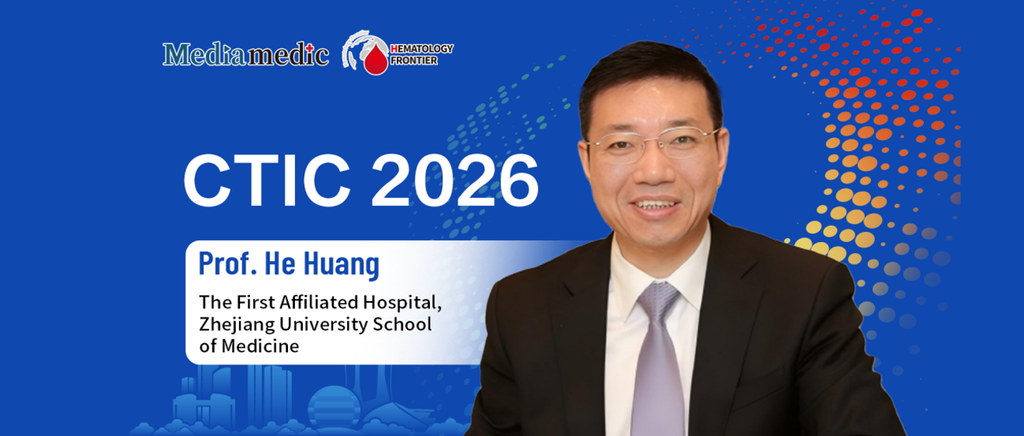
Gathering in Qiantang to Discuss Ideas and Shape the Future. From November 6 to 8, 2026, the 2026 Cellular Therapy and Immunotherapy Conference (CTIC 2026) was successfully held in Hangzhou. With a global perspective, the conference brought together leading experts and scholars from China and abroad to explore cutting-edge areas, including cell therapy, gene therapy, AI-enabled hematology, and industrial translation. Participants discussed clinical challenges and explored pathways toward high-quality development in the field. During the conference, Oncology Frontier – Hematology Frontier invited Professor He Huang, Conference Chair, from the First Affiliated Hospital of Zhejiang University School of Medicine, for an in-depth discussion on the conference's academic positioning, clinical challenges in cellular immunotherapy and hematopoietic stem cell transplantation, and the development of young professionals.Building a World-Class International Platform: Connecting Academia, Industry, Research, and Clinical Practice to Benefit Patients
Oncology Frontier – Hematology Frontier: As Chair of this conference, how would you describe its core value? Against the backdrop of rapid advances in global hematopoietic stem cell transplantation and cell therapy, what kind of international exchange platform does this conference aim to establish, and what areas of consensus does it hope to help translate into practice?
Professor He Huang: Cellular immunotherapy and gene therapy are among the fastest-developing fields of the past decade. They truly exemplify the entire innovation pathway: starting with clinical problems, progressing through breakthroughs in basic research, translating into new products, and ultimately reaching clinical application. These fields fully embody the “Four Orientations” proposed by President Xi Jinping: orienting scientific and technological innovation toward the frontiers of global science and technology, the main economic battlefield, major national needs, and the health of the people.
This conference is positioned as a comprehensive, high-level academic exchange platform. First, we have invited some of the world’s leading experts in this field, including Carl June and Michel Sadelain. Carl June is widely regarded as the “father of CAR-T therapy.” His team successfully treated the world’s first child with acute lymphoblastic leukemia to receive CAR-T therapy. Michel Sadelain, meanwhile, designed the second-generation CAR structure, introducing costimulatory signals that helped transform CAR-T from a laboratory concept into a viable clinical therapeutic tool. In addition, leading experts from around the world in hematopoietic stem cell transplantation, gene therapy, and immunotherapy will participate. Their presence is highly important for bringing advanced international experience to China.
At the same time, the conference has brought together China’s leading teams across basic research, product development, and clinical research. These teams are the core driving force behind China’s position at the international forefront of cellular immunotherapy. Across the entire innovation pathway—from clinical problems to breakthroughs in basic research, the development of innovative products, and ultimately clinical validation by physicians—China has already made advances in several areas that are at the international forefront. At present, eight cellular immunotherapy products for hematological malignancies and one for solid tumors have been approved in China, placing the country among the international leaders in this field.
More importantly, the applications of cellular immunotherapy have expanded beyond hematological diseases to include the treatment and investigation of autoimmune diseases and solid tumors. I believe this conference will truly fulfill our vision: to establish a world-class international platform that connects the entire pathway from basic research and product translation to clinical application, promote the continued maturation of China’s experience, expand its international influence, and ultimately ensure that innovative products can better serve patients.
Addressing Unmet Needs: Moving Treatment Earlier and Overcoming Bottlenecks in CAR-T Therapy and Transplantation
Oncology Frontier – Hematology Frontier: China has made rapid progress in haploidentical transplantation, CAR-T therapy, and other forms of cellular immunotherapy in recent years. What do you consider the most significant bottlenecks in the field today? Over the next one to three years, which areas are most likely to achieve clinical breakthroughs and benefit more patients with relapsed or refractory hematological diseases?
Professor He Huang: In the past, hematopoietic stem cell transplantation provided an effective treatment option for many patients with relapsed or refractory diseases. However, the clinical needs of some patients remained insufficiently addressed. The emergence of CAR-T cell therapy further improved outcomes for a considerable proportion of patients, but this approach still has several limitations.
First, the range of targets remains relatively narrow. Currently approved CAR-T products are primarily concentrated in B-cell malignancies. Second, there is still room to improve efficacy. For example, in lymphoma treatment, the complete response rate is approximately 50%, and further optimization is needed. Third, the development of off-the-shelf CAR-T products needs to be accelerated to meaningfully reduce the financial burden on patients. These represent important unmet needs in current clinical practice and are areas in which we must continue to explore and develop new products.
On the other hand, every new technology has its limitations. Although CAR-T therapy can induce remission in patients with relapsed disease, recurrence remains a major challenge when considering long-term survival. To address this, in our earlier research, we explored using CAR-T cell therapy as a bridge to hematopoietic stem cell transplantation.
Furthermore, we believe that CAR-T therapy could be moved earlier in the treatment pathway to patients at initial diagnosis. Studies have shown that a considerable proportion of treatment-naïve patients can achieve deep remission, and even potentially curative outcomes, after CAR-T therapy. In future work, we need to design more optimized clinical strategies and continue exploring how to use the most appropriate technologies to maximize patient benefit. This is also one of the central topics of discussion at this conference.
Throughout the three-day conference, all discussions were centered on clinical challenges. Basic scientists shared the latest research breakthroughs, innovative companies showcased cutting-edge technologies and products, while the ultimate validation of therapeutic efficacy will still need to be conducted by clinicians through clinical studies.
Message to Young Professionals: Embracing an Era of Transformation and Demonstrating China’s Contribution on the International Stage
Oncology Frontier – Hematology Frontier: Chinese hematopoietic stem cell transplantation teams continue to strengthen their influence on the international stage. What expectations and advice do you have for young clinicians and researchers in China working in hematology and transplantation?
Professor He Huang: The medical community is currently entering a period of accelerated transformation. Knowledge is evolving rapidly, while innovative products and new clinical technologies continue to emerge. In the field of hematological diseases, we have fully entered a new era of precision treatment involving targeted drugs, antibody-based therapies, and cell therapies. Both senior physicians and young doctors should actively adapt to this trend of transformation and keep pace with developments in the field.
In this process, continuously following international advances is essential. This conference provides an important platform for doing so, helping participants systematically understand the latest technological developments in the field.
At the same time, actively engaging in the international academic community is particularly important. Science knows no borders; only through continuous exchange can we learn from one another and make progress together. Young physicians, in particular, should continuously strengthen their academic capabilities and international communication skills in an open and rigorous academic environment, while examining their own work from an international perspective and with an awareness of the latest developments.
Furthermore, the technologies and achievements presented at this conference have clear practical clinical applications. Physicians need to continually distill experience from clinical practice and enhance their academic capabilities through clinical research. The fundamental goal of these efforts is to continuously optimize existing treatment strategies and bring greater benefits to patients. This is closely aligned with our original motivation for pursuing medicine, our mission in basic research, and our objectives in industrial translation.
I believe this conference will bring together more young physicians and scientists and use this platform to accelerate China’s progress from basic research to clinical translation.
Expert Profile
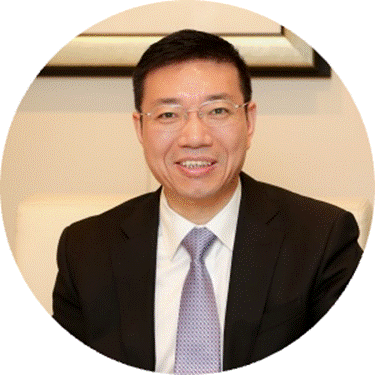
Professor He Huang
First Affiliated Hospital of Zhejiang University School of Medicine
- Qiushi Distinguished Professor, Zhejiang University
- Chief Scientist of the National Basic Research Program of China (973 Program)
- Chief Physician and Doctoral Supervisor
- Director of the Bone Marrow Transplantation Center, Department of Hematology, First Affiliated Hospital of Zhejiang University
- Director of the Institute of Hematology, Zhejiang University
- Chief Scientist of Liangzhu Laboratory
- Vice Chair, Hematology Branch of the Chinese Medical Association
- Director of the Zhejiang Provincial Engineering Research Center for Stem Cells and Cellular Immunotherapy
- Vice Chair, Expert Committee of the China Marrow Donor Program
- Vice Chair, Academic Committee of the Asian Cellular Therapy Organization
- Executive Committee Member, Asia-Pacific Blood and Marrow Transplantation Group
- Member, International Scientific Committee of the European Society for Blood and Marrow Transplantation
- President, Zhejiang Society for Immunology
Main Research Interests: Professor Huang’s primary research areas include basic stem cell research, the clinical application of hematopoietic stem cell transplantation, and cutting-edge technologies and translational research in cellular immunotherapy.
He received the Second Prize of the National Science and Technology Progress Award twice, in 2003 and 2015. As principal investigator, he has undertaken 27 research projects, including projects under the 973 Program, the 863 Program, key projects of the National Natural Science Foundation of China, and international cooperation and exchange projects supported by the National Natural Science Foundation of China.
As a corresponding author, he has published 278 SCI-indexed papers in journals including The New England Journal of Medicine, Nature, Cell Research, Nature Medicine, and The Lancet Haematology. He has received 15 provincial- or ministerial-level and higher scientific and technological awards and holds 21 authorized invention patents.
Over the past five years, he has served as a conference chair, invited speaker, or oral presenter more than 100 times at major international conferences. As Conference Chair, he hosted the Asia-Pacific International Bone Marrow and Hematopoietic Stem Cell Transplantation Conference in Hangzhou in 2005 and 2014.
He served as editor-in-chief of CAR-T Cell Immunotherapy, the first domestic textbook on CAR-T cell therapy published by People’s Medical Publishing House. He also served as editor-in-chief of the national postgraduate textbook Hematology published by People’s Medical Publishing House and contributed to 11 other books and textbooks.
He serves on the editorial boards of Bone Marrow Transplantation and Journal of Hematology & Oncology, two authoritative international journals in the field of hematopoietic stem cell transplantation.