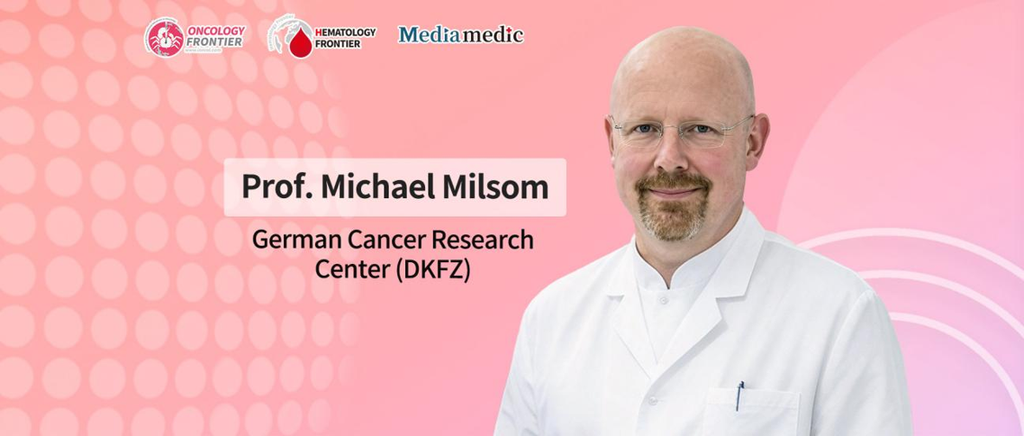
Editor's Note: Basic stem cell research, regenerative medicine, cell therapy, and the clinical application of research guidelines are among the most closely watched frontier areas in global hematology and regenerative medicine. Centered on these topics, The 10th International Forum on Stem Cells (IFSC) brought together leading experts and scholars from around the world to explore scientific discoveries and technological innovations, showcase the latest advances in basic, clinical, and translational research on hematopoietic stem cells, and promote collaborative innovation in the global stem cell field.During the meeting, Oncology Frontier – Hematology Frontier invited Professor Michael Milsom of the German Cancer Research Center (DKFZ) to discuss his team’s research on inflammation-driven accelerated aging of hematopoietic stem cells and pre-leukemic states, under the theme “Clonal Hematopoiesis and Pre-Leukemic Lesions: Premalignant Programming During Aging.” He shared the latest findings and insights from his research. The key points are presented below.
Oncology Frontier-Hematology Frontier:Your team has achieved representative results in the field of inflammation-driven accelerated aging of hematopoietic stem cells (HSCs) and pre-leukemic states. Could you share how the inflammatory microenvironment “preprograms” HSCs during aging, thereby increasing the risk of leukemic transformation?
Professor Michael Milsom: Yes, so we think that inflammation is a key driver of aged hematopoiesis. I think that there’s lots of data that shows that inflammation can drive both stem cell attrition and dysfunction, and can also potentially act as something that modulates the evolution of clonal hematopoiesis with the passage of time. With regard to the mechanistic drivers of that, I think that’s still quite an open question. I think that there are lots and lots of different possibilities for the effect that inflammation can have on the stem cells.
I mean certainly one of the things that we can see within the stem cell compartment that we isolate from mice that have been exposed to inflammatory stimulus is a long-lasting epigenetic memory of that exposure. So for example if you give the toll-like 3 agonist poly I:C, then you see persistent hypermethylation of type 1 interferon response genes. Now what’s the biological consequence of that, I think that’s a little more difficult to dissect, but it could be that that past exposure now primes the stem cell to a particular response, but that might actually make it less of a good all-rounder in terms of its capacity to execute for example multilineage differentiation.
We’ve also generated some data to show that stem cells acquire DNA damage following exposure to inflammatory stimulus or following exposure to infection. And recently we’ve just had a preprint out on bioRxiv that shows that this also accelerates the mutation rate acquisition within the stem cell. So of course that could be of quite significant consequence when we start to think about leukemogenesis. But together I think there are multiple mechanisms through which inflammation can potentially contract the stem cell pool, act as a selection mechanism for the outgrowth of resistant, potentially pre-leukemic clones. And I think there’s great work there from the likes of Grant Challen and Katherine King that shows that for example stem cell clones with DNMT3A mutations seem to preferentially be resistant and expand following inflammatory stimulus. Yeah so I think that inflammation can potentially impact in multiple ways to drive the evolution of a pre-leukemic phenotype.
Oncology Frontier-Hematology Frontier:Clonal hematopoiesis (CHIP) is considered the most cutting-edge “pre-malignant window” for hematological malignancies. Do you think there are sufficiently sensitive detection methods to translate CHIP into early screening products? Can the inflammatory “scoreboard” serve as an effective biomarker to guide monitoring of high-risk populations?
Professor Michael Milsom: Yeah so obviously over the past 10 or 15 years since the original publications characterizing clonal hematopoiesis, I think there’s been a lot of work there, both trying to understand the mechanistic implications of the different clonal hematopoiesis mutations, but also trying to understand the prognostic power that one can attribute to the presence of these clonal hematopoiesis mutations. And I think there’s been a lot of refinement, I think for example of some of the work from people like Liran Shlush who’ve looked at both the type of mutations and their variant allele frequency and their various combinations and how they relate to evolution of hematologic malignancies, and many others have also contributed towards this field.
So I think we’re in a stage now where there’s a refinement where we look at clonal hematopoiesis mutation variant allele frequency in peripheral blood and the type of mutations and the combination of mutations and I think there’s increasing predictive power. I think the really difficult question is now is that predictive power sufficient that one would then want to go into some kind of interventional strategy with those individuals to try and prevent onset of a particular disease. And I think there it all kind of relates to what the interventional strategy is and what kind of potential side effects that you would have there.
So if it’s along the lines of I don’t know treatment with aspirin or something like that on a daily basis then obviously that’s something that we know is well tolerated, but when you start to think about some of the other strategies that are potentially gonna be employed to treat clonal hematopoiesis or the downstream effects you probably wouldn’t get approval to be using those on individuals where it’s still far from uncertain whether they’re gonna develop an age-associated disease.
So I think that my understanding of where the field is at the moment, although I’m obviously not a clinician, is that the power of clonal hematopoiesis is potentially enrolling people on a watch and wait kind of protocol. But hopefully in the future as we develop additional biomarkers that give increased confidence of whether somebody is going to evolve a serious disease and how long that’s going to take, then maybe then we’ll be in a great position to try and use other interventional strategies.
Oncology Frontier-Hematology Frontier:Your institute, HI-STEM, focuses on the translation of stem cell technologies. In the process of translating basic research into startups or clinical products, what experiences from Germany’s academic-industry translation mechanisms are worth learning from for China?
Professor Michael Milsom: Yeah so with regard to clinical translation of basic findings, actually from my own research from my own laboratory, I haven’t seen so much of that. Actually I’ve seen translation of work that I did back when I was in Dave Williams’ lab in Boston, so I kind of saw the kind of highlights there. I think that one of the things that’s quite challenging in Germany is the kind of what seems to be increasing regulatory barriers that there are in place if you want to translate. And obviously generating sufficient preclinical data in things like animal models is also potentially a little bit of a restriction.
On the plus side I think that Germany is a really great place to do biomedical research and we’ve got a lot of fantastic institutions and a good critical mass of researchers. But actually if you look at the numbers, that kind of gap between basic science and translation into clinical trials isn’t amazing in Germany, even though we have a lot of biomedical companies and pharma there. So I think that this is an area where leaders within the German biomedical community — so I know that this is a focus at the cancer research center the DKFZ where I’m working — they want to kind of improve that, and I think that involves a really good dialogue with the regulators and trying to work together towards a common goal.
Expert Profile
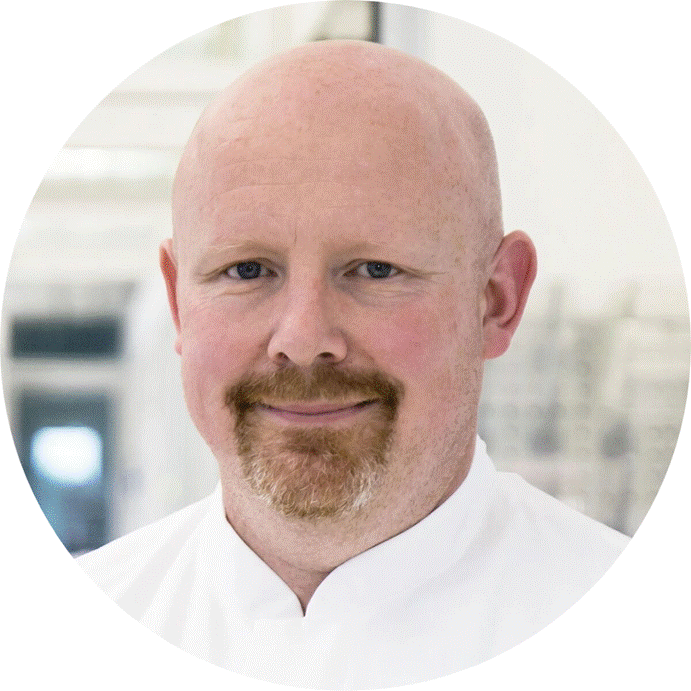
Professor Michael Milsom
German Cancer Research Center (DKFZ)
Head of the Experimental Hematology Department, German Cancer Research Center (DKFZ)
Professor Michael Milsom is the tenured Head of the Experimental Hematology Department at the German Cancer Research Center (DKFZ) and also leads a research group at the Heidelberg Institute for Stem Cell Technology and Experimental Medicine (HI-STEM).
He received his PhD from the University of Leeds in the United Kingdom in 2000. He subsequently conducted research on hematopoietic stem cells at Harvard Medical School and Cincinnati Children’s Hospital in the United States before joining HI-STEM in 2010 and assuming his current position in 2017.
His team focuses on the mechanisms underlying hematopoietic stem cell exit from quiescence, DNA damage responses, and inflammation-driven hematopoietic aging. Among its notable findings, the team has demonstrated how the inflammatory microenvironment promotes the evolution of pre-leukemic clones through epigenetic memory and clonal selection mechanisms.
Professor Milsom received the David B. Frohnmayer Award from the Fanconi Anemia Research Fund in 2016. Since 2018, he has served as an Editorial Board Member of Blood.