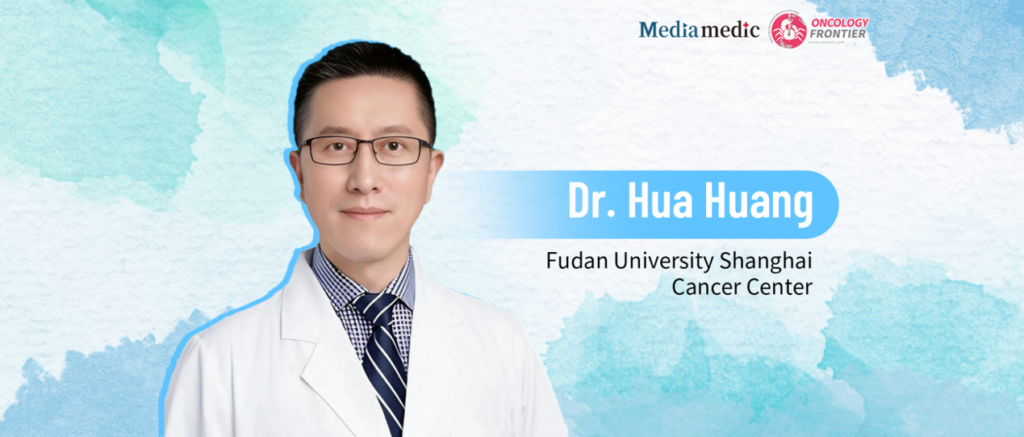
Autumn skies over Beijing welcomed distinguished experts from across the field. From September 11 to 13, 2026, the 20th Gastric Cancer Academic Conference of the Gastric Cancer Committee of the Chinese Anti-Cancer Association (CGCC 2026) was held in Beijing. Under the theme “Inheritance, Innovation, Standardization, and Improvement,” the conference continued its founding mission of providing a multidisciplinary academic exchange platform for the gastric cancer community. Through keynote presentations, thematic sessions, international exchange forums, clinical research discussions, and multidisciplinary team (MDT) sessions, the meeting focused on the latest advances in gastric cancer research, promoted standardized diagnosis and treatment, fostered interdisciplinary integration, and advanced translational research bridging basic science and clinical practice.At the conference, Oncology Frontier – Digestive Oncology had the privilege of interviewing Professor Hua Huang of Fudan University Shanghai Cancer Center. Professor Huang shared his clinical insights and forward-looking perspectives on several key topics: the challenge of identifying patients most likely to benefit from precision perioperative treatment for gastric cancer; the ALANO study, which is investigating the value of surgery following successful conversion therapy for peritoneal metastases; and the professional development of young and mid-career surgeons as they progress from being skilled operators to becoming “clinical scientists.” The highlights of the interview are presented below.
Oncology Frontier – Digestive Oncology: In recent years, immunotherapy, targeted therapy, and other treatments have increasingly been incorporated into the perioperative management of gastric cancer, giving clinicians a growing number of therapeutic options. However, as treatment options expand, a new challenge emerges: how to choose among them. In your view, should the current priority in perioperative gastric cancer treatment be to further intensify therapy, or to more precisely identify which patients need intensified treatment and which may be able to receive less treatment?
Professor Hua Huang: Specialists working in gastric cancer care have always faced challenges. In the past, the difficulty was the lack of effective drugs. Today, the challenge has shifted: with so many drugs available, deciding which ones to use has become a new source of difficulty. We continue to navigate this dilemma.
Perioperative treatment now offers a wide array of medications, but this abundance has also created considerable uncertainty. Therefore, the most pressing issue at present is how to accurately identify the patients who are most likely to benefit from perioperative treatment. Faced with so many drugs, we clearly cannot combine them arbitrarily, as if mixing a “cocktail.” Instead, we must precisely identify the patients who stand to benefit from treatment. This is crucial.
Gastric cancer is highly heterogeneous. Biological characteristics and biopsy findings may differ between patients and even between different tumor sites within the same patient. Consequently, accurately identifying relevant biological features and therapeutic targets, and then delivering treatment accordingly, remains a major challenge that has yet to be adequately resolved. Although a range of treatments is now available, including immunotherapy, targeted agents, and bispecific antibodies, existing biomarkers, such as the PD-L1 combined positive score (CPS) used in immunotherapy, still have substantial limitations. We still have a long way to go before we can reliably identify the patients most likely to benefit from specific treatments.
Therefore, whether from the perspective of basic research or clinical translation, scientists and clinicians working in gastric cancer prevention and treatment must devote greater effort to deeper and more comprehensive investigations in the years ahead.
Oncology Frontier – Digestive Oncology: As systemic treatment outcomes improve, some patients with gastric cancer and peritoneal metastases can become eligible for potentially curative surgery after conversion therapy. However, being able to undergo surgery does not necessarily mean that surgery is the right choice. The ALANO study directly compares radical surgery with nonsurgical treatment in patients who have successfully converted to surgical eligibility. What is the central question this study aims to answer? Going forward, which factors should guide us in determining whether an individual patient can truly benefit from conversion surgery?
Professor Hua Huang: Before conducting a clinical study, we must first clarify three things: why the study is needed, what question it should address, and how it should be conducted. The core value of research lies in resolving clinical scientific questions that challenge us. This is what gives research its purpose and lasting significance.
China has a high incidence of gastric cancer, particularly advanced-stage disease. Many patients with stage IV gastric cancer already have peritoneal dissemination at their initial diagnosis. Historically, effective treatment options for these patients were limited, and palliative treatment was often the most that could be offered.
With the rapid development of systemic therapies, however, some patients can achieve sufficient disease control through conversion therapy, moving from being considered inoperable to becoming eligible for surgery. Yet for patients who successfully convert, it remains unclear whether surgery can actually extend survival and improve quality of life. The 2025 Japanese Gastric Cancer Treatment Guidelines also explicitly noted the lack of randomized controlled clinical trial evidence addressing this question.
In clinical practice, we frequently observe two very different outcomes. Some patients who successfully convert to surgical eligibility achieve long-term survival after surgery and maintain a reasonable quality of life. Others experience rapid recurrence and die soon after surgery, having endured a very poor quality of life during their limited postoperative survival. These contrasting outcomes compel us to reconsider a fundamental question: Does surgery necessarily benefit these patients?
Against this background, we designed the ALANO study to identify the optimal treatment strategy for this patient population. The study enrolls patients with gastric cancer and peritoneal metastases who have successfully responded to conversion therapy and randomly assigns them to a surgery group or a nonsurgical treatment group. With strong support from senior leaders in the field of gastric cancer in China, we initiated this study.
As Academician Ji Jiafu has stated, “Successful conversion does not necessarily mean that surgery will confer a survival benefit. Surgery may offer an opportunity for survival benefit, but it may also be a source of harm.” We must therefore establish a clear answer for these patients.
Finally, we named the study “ALANO,” a name symbolizing good fortune. We hope that good fortune will favor patients with advanced peritoneal metastases and that this study will help us identify the best possible treatment strategy for them.
Oncology Frontier – Digestive Oncology: You have participated in and organized numerous multicenter clinical studies and currently serve as Head of the Young Experts Working Group of the Gastric Cancer Committee of the Chinese Anti-Cancer Association. For young and mid-career gastric cancer surgeons today, is mastering surgical techniques alone no longer enough? Starting with a clinical question, designing a study, coordinating collaboration, and ultimately generating evidence that can change clinical practice requires a broad range of skills. In your view, what capabilities do young physicians most urgently need to develop?
Professor Hua Huang: For a surgeon, performing surgery well is a fundamental requirement and an essential skill. Using our hands and surgical instruments to save more patients and families is a lifelong commitment. However, surgical proficiency alone is far from sufficient.
Even an exceptionally talented and hardworking surgeon can perform, at most, around 10,000 gastric cancer operations over an entire career—a remarkable achievement in itself. Yet there are many scientific questions in clinical practice that still need to be explored and answered. If we can find solutions to these problems, the beneficiaries will not be limited to 10,000 patients; we may be able to improve outcomes for countless people with gastric cancer. This is the value of clinical scientific thinking.
In our daily clinical work, we inevitably encounter numerous clinical scientific questions that challenge us. Taking the initiative to address these questions, designing studies, and seeking evidence-based answers is far more meaningful. Therefore, we should not be satisfied with becoming merely excellent “operators”—that is only a basic expectation for surgeons. We should strive to become outstanding clinical surgeons and, ultimately, aspire to become accomplished clinical scientists in surgery.
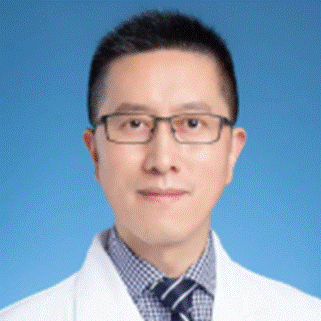
Professor Hua Huang