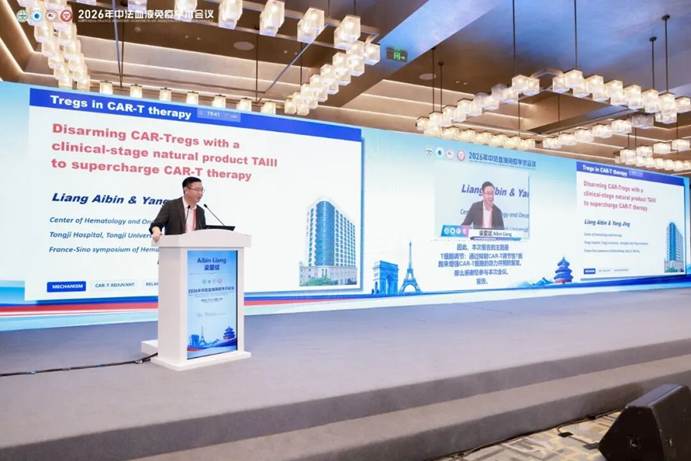
Editor's Note: 2026 China-France Scientific Symposium on Hematology and Immunology was held in Beijing from September 11 to 13, 2026. Building on the longstanding tradition of academic exchange between China and France in hematology, this year's conference further expanded its scope to the intersection of hematology and immunology, bringing together leading experts from both countries to explore cutting-edge developments and exchange scientific perspectives.On this occasion, Oncology Frontier – Hematology Frontier invited the team of Professor Aibin Liang and Professor Jing Yang at Tongji Hospital, Tongji University, to discuss the research rationale and clinical significance of an innovative strategy for enhancing CAR-T therapy using the A2AR-targeting natural product TAIII.
Drawing on the key content of their presentation, this article reviews the current landscape, research advances, and future directions of this approach to provide readers with an overview of this emerging therapeutic strategy.
Current Landscape: Why Does CAR-T Therapy Achieve Remarkable Responses Yet Often Fail to Provide Durable Remission?
Chimeric antigen receptor T-cell (CAR-T) therapy represents a landmark breakthrough in the field of hematologic malignancies in recent years. Through genetic engineering of a patient’s own T cells to enable precise recognition and killing of tumor cells, CAR-T therapy can often eliminate tumors within weeks in patients with relapsed or refractory B-cell malignancies, demonstrating remarkable efficacy. However, approximately 50%–60% of patients eventually experience relapse or develop resistance. The central reason for treatment failure is insufficient durability, rather than an inability of CAR-T cells to recognize tumor cells. Existing studies suggest that the underlying problem is not a failure to induce remission, but rather the limited expansion capacity and persistence of CAR-T cells in vivo.
Research has identified a specific cell population inadvertently present in the infused product—CAR-Tregs (FoxP3-expressing regulatory T cells)—as a key factor contributing to restricted CAR-T-cell expansion and suboptimal therapeutic efficacy . These cells normally suppress excessive immune responses, but in CAR-T products, they inhibit CAR-T-cell expansion and cytotoxic function, thereby compromising the durability of treatment.
More notably, even a CAR-Treg proportion of just 5% was sufficient to eliminate CAR-T-cell expansion and drive relapse in mouse models. This finding reframes the efficacy challenge of CAR-T therapy from a question of “cell dose” to one of “product composition”: therapeutic efficacy depends not only on how many CAR-T cells are infused, but also on what other cells are present in the infused product.
The tumor immune microenvironment suppresses CAR-T-cell function through two pathways: a cellular pathway involving tumor-infiltrating Tregs, myeloid-derived suppressor cells, and tumor-associated macrophages; and a soluble-factor pathway involving hypoxia-induced adenosine, interleukin-10, and other factors. Together, these mechanisms represent a set of potentially druggable targets .
Current Treg-depletion strategies have significant limitations. Antibody-based drugs lack selectivity and may inadvertently eliminate antitumor effector T cells alongside Tregs. Combination regimens, meanwhile, depend on administration strategies, and their toxicity can be difficult to control.
The central bottleneck is that no reversible small-molecule drug is currently available that can be directly added during CAR-T manufacturing to selectively eliminate CAR-Tregs. This unmet clinical need provided the starting point for the present study.
Research Advances: Discovery of TAIII and Its Mechanism of Action
To address these challenges, the research team adopted a phenotype-first screening strategy, screening more than 3,000 compounds for candidates capable of suppressing Treg function. This approach ultimately led to the identification of Timosaponin AIII (TAIII), a natural product in clinical-stage development .
The target of TAIII was identified as the adenosine A2A receptor (A2AR). Adenosine, an immunosuppressive molecule highly expressed in the tumor microenvironment, promotes CAR-Treg expansion by activating the A2AR–cAMP–PKA–CREB signaling pathway, which drives FoxP3 transcription.
TAIII allosterically blocks A2AR, causing CREB to dissociate from the FoxP3 promoter region. This ultimately reduces FoxP3⁺ CAR-Tregs, increases CD8⁺ T-cell cytotoxicity, and promotes the expansion of central memory T cells, thereby preventing relapse .
In vitro experiments showed that TAIII selectively depleted suppressive Tregs inadvertently present in CAR-T products, reducing their proportion by approximately 40% without affecting the proportions or functions of other T-cell subsets.
In the absence of tumor antigen stimulation, TAIII had no significant effect on CAR-T-cell proliferation or activity, suggesting that its effects are selective .
In vivo experiments demonstrated that TAIII monotherapy significantly inhibited tumor growth, achieving a tumor growth inhibition rate of 55.9% in the MC38 colon cancer model, while mouse body weight remained stable. When combined with anti-PD-1 therapy, the combination group showed significantly greater efficacy than either monotherapy group. The combination treatment was associated with increased intratumoral IFN-γ and IL-2 levels, decreased phosphorylated CREB, an increased proportion of central memory T cells among tumor-infiltrating lymphocytes, fewer FoxP3⁺ Tregs, and more CD8⁺ T cells.
It is important to emphasize that the target-screening process and all subsequent experimental findings described above remain at the preclinical research stage. Considerable work remains before TAIII can be applied in clinical practice.
The transition of TAIII from laboratory discovery to clinical application will require systematic safety assessments, dose optimization, and validation through prospective clinical trials. Its ultimate clinical value remains to be established through further research.
Future Directions: From Late Relapse to Clinical Translation
In the Raji-Luc animal model, CAR-T monotherapy eliminated tumors within one week, but relapse occurred after two weeks. In contrast, the combination of CAR-T therapy and TAIII significantly prolonged survival, increased the proportions of CAR-T cells and central memory T cells, and reduced suppressive Treg levels in the bone marrow and peripheral blood. These findings suggest that TAIII primarily targets the mechanisms underlying late relapse rather than initial tumor clearance.
In solid tumor models, the combination group achieved a tumor growth inhibition rate of 90%, while mouse body weight remained stable. The treatment was also associated with increased numbers of cytotoxic CD8⁺ T cells and reduced numbers of suppressive Tregs within the tumor.
In CAR-T products derived from eight patients, TAIII significantly enhanced cytotoxic activity, with killing efficiency increasing severalfold in some patients. IL-2 and IFN-γ secretion increased, while FoxP3 expression decreased
The consistency of these findings across different models and patient-derived products provides preliminary evidence supporting the potential clinical translation of TAIII.
This approach improves therapeutic efficacy by modifying the cellular composition of CAR-T products rather than altering the targets recognized by the CAR itself. Traditional CAR-T development has primarily focused on enabling CARs to recognize tumors with greater precision. In contrast, this study focuses on the composition of the product itself, enhancing the persistence and efficacy of CAR-T products by eliminating contaminating immunosuppressive regulatory T cells (Tregs).
From a clinical translation perspective, this strategy offers several advantages. First, the small-molecule drug can be added directly during the manufacturing process without changing existing CAR-T production workflows. Second, its effects are reversible, allowing for flexible regulation. Third, it does not alter the CAR target or compromise the antigen-specific recognition capability of CAR-T cells. Further studies are needed to prospectively validate A2AR-FoxP3 as a biomarker, clarify the responses of different cell types within the tumor microenvironment, and explore combination therapy with PD-1 blockade in patients . From a broader perspective, this strategy introduces a new dimension to quality control for cell therapy products.
In the future, CAR-T product release criteria may need to consider not only “how many CAR-T cells are present” but also “what else is mixed in.” This conceptual shift could have far-reaching implications for the manufacturing processes, quality control, and clinical evaluation systems of cell therapy products. Overall, the core of this strategy lies in modifying the cellular composition of the product rather than changing the CAR target. It offers a new approach to addressing the challenge of CAR-T persistence and opens up new directions for the further optimization and improvement of CAR-T products.
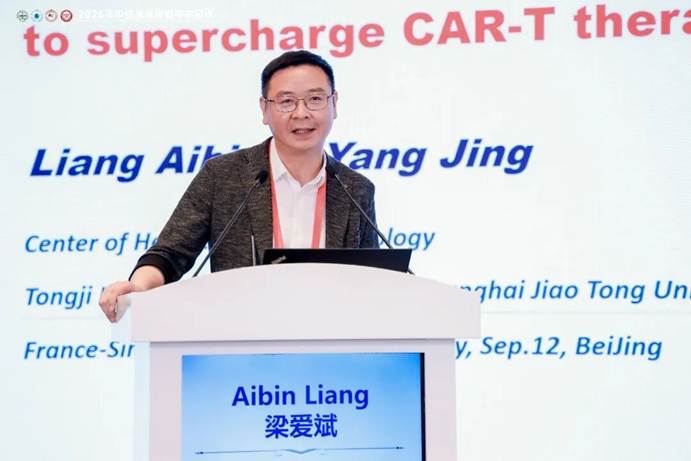
Expert Profile :

Professor Aibin Liang
Tongji Hospital, Tongji University
Chief Physician, Tongji Hospital, Tongji University
Doctoral Supervisor, Professor (Second-Level)
Director, Institute of Hematology, Tongji University
Director, Clinical Research Center for Hematologic Malignancies, Tongji University
Vice President, 6th Committee of the Hematology Physicians Branch, Chinese Medical Doctor Association
Vice Chair, Integrated Hematologic Oncology Committee, Chinese Anti-Cancer Association
Vice Chair, Professional Committee of Biotherapy, Chinese Research Hospital Association
Vice Chair, Experimental Hematology Committee, Chinese Society of Pathophysiology
National Committee Member, Hematology Branch, Chinese Medical Association
Standing Committee Member, Hematology Branch, Chinese Medical Doctor Association
Chair, Hematology Branch, Shanghai Medical Association
Vice Chair, Hematology Branch, Shanghai Anti-Cancer Association
Vice Chair, Hematology Immunology Committee, Shanghai Society for Immunology
Awards and Honors
First Prize, Shanghai Medical Science and Technology Award
National Distinguished Physician, High-Level Medical Talent Program
One of the Top 10 Medical Contributors of 2024
Principal Investigator of a National Key Research and Development Program
National Outstanding Young and Middle-Aged Expert, recipient of the State Council Special Government Allowance
National-level candidate of the National Hundred, Thousand and Ten Thousand Talent Project
St. Anthony–EBMT Young Leader
Recipient of the Fourth “National Distinguished Physician – Outstanding Role Model” title
“Benevolent Physician” Award, Shanghai Benevolent Physician Award
Advanced Worker of the National Health System and Labor Model of the Ministry of Health
“Person of the Year” in the 2018 Science China Person of the Year Awards
Shanghai Leading Talent
Model Hospital President, National Health Commission Stroke Prevention and Treatment Project
Gold Award for Hospital Management, Hospital Association
Second Prize, Silver Snake Award, the highest honor for young and middle-aged medical professionals in Shanghai’s medical system
Outstanding Worker of the Shanghai Health System
Selected for the “Morning Star Tracking” Program
Selected for the Ministry of Education’s “New Century Excellent Talents” Program
Shanghai Science and Technology Rising Star
Shanghai Shuguang Scholar
Recipient of the “Women’s Civilized Post” title
Recipient of the “Shanghai Model Worker Innovation Studio” title
Research and Academic Contributions
Professor Liang has led more than 30 national- and provincial-level research projects, received five scientific and technological achievement awards, and published more than 300 papers, including over 150 SCI-indexed articles. He has served as editor-in-chief of more than 10 hematology books, led the development of over 20 clinical guidelines and expert consensus statements, and spearheaded multiple clinical trials of CAR-T cell therapy.