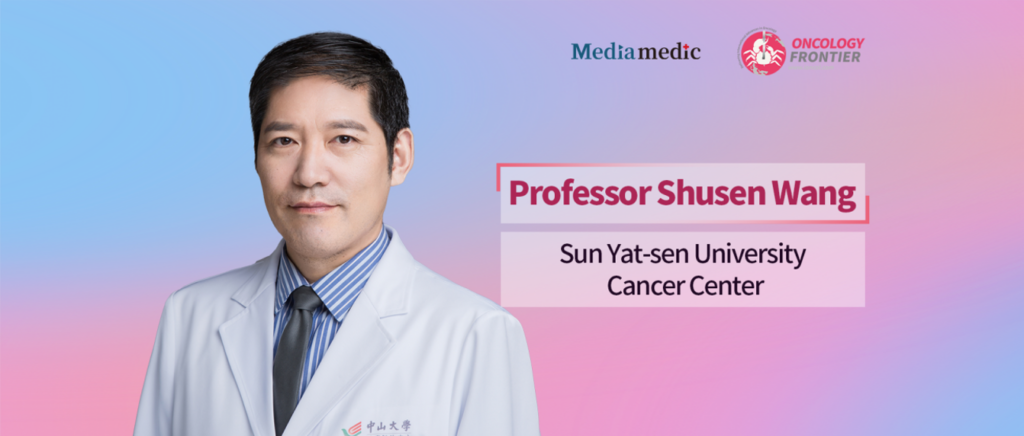
Editor's Note: Hormone receptor-positive, HER2-negative (HR+/HER2−) breast cancer is the most common molecular subtype of breast cancer. For decades, the combination of endocrine therapy and chemotherapy was considered a therapeutic “forbidden zone” because of its theoretical basis and early clinical evidence. With the emergence of novel endocrine agents, chemotherapeutic drugs, antibody–drug conjugates (ADCs), and evolving treatment strategies, this traditional view is gradually being challenged. In recent years, metronomic chemotherapy has emerged as a promising approach to combining chemotherapy with endocrine therapy because of its distinctive antiangiogenic and immunomodulatory mechanisms and favorable safety profile. The MECCA and SYSUCC-020 studies have provided important evidence supporting this strategy in the first-line setting and among patients previously treated with CDK4/6 inhibitors, respectively.The 17th Yanzhao Breast Cancer Forum was held in Shijiazhuang from August 26 to 30, 2026. During the meeting, Oncology Frontier invited Professor Shusen Wang of Sun Yat-sen University Cancer Center to discuss the evolution of the concept of combining endocrine therapy with chemotherapy, key practical considerations for metronomic chemotherapy, the clinical significance of the MECCA and SYSUCC-020 studies, and future research directions in this field.
01 | From “No Combination” to Synergy: How Has the Traditional Paradigm Changed?
Oncology Frontier: Looking back at the history of combining endocrine therapy with chemotherapy, the SWOG S8814 study helped establish the longstanding belief that chemotherapy and endocrine therapy should not be administered together. How was this therapeutic “forbidden zone” overcome? What key scientific discoveries underpinned the shift from “incompatible treatments” to “synergistic efficacy”?
Professor Shusen Wang: In hormone receptor-positive breast cancer, several studies, including SWOG S8814, suggested that endocrine therapy and chemotherapy might have antagonistic effects.
The theoretical basis came from preclinical research conducted in the 1980s, which found that commonly used endocrine agents such as tamoxifen could arrest tumor cells in the G0/G1 phase, reducing the proportion of cells in S phase. Because chemotherapy tends to be more effective against actively proliferating tumor cells, endocrine therapy could potentially reduce the number of cells susceptible to chemotherapy and thereby diminish its cytotoxic effect. This concern about reduced efficacy provided the rationale for studies such as SWOG S8814.
SWOG S8814 enrolled patients with hormone receptor-positive, node-positive early breast cancer and compared three strategies: tamoxifen alone, concurrent tamoxifen plus chemotherapy, and chemotherapy followed sequentially by tamoxifen. Both chemotherapy-containing groups had better outcomes than endocrine therapy alone. In the initial analysis, disease-free survival (DFS) was inferior with concurrent treatment compared with sequential treatment. However, long-term follow-up found no statistically significant differences in either DFS or overall survival (OS) between the two combination groups.
Despite these findings, the early theoretical concerns and clinical evidence sustained the belief that chemotherapy and endocrine therapy should not be combined for decades, making concurrent administration a therapeutic “forbidden zone” in hormone receptor-positive early breast cancer.
This paradigm has been challenged by scientific advances on several fronts. The development of newer endocrine agents, including aromatase inhibitors and fulvestrant, and newer chemotherapeutic drugs, such as capecitabine and taxanes, means that conclusions drawn from earlier studies using tamoxifen and anthracycline- or CMF-based regimens (cyclophosphamide, methotrexate, and fluorouracil) are no longer universally applicable.
Preclinical studies have demonstrated synergistic effects between letrozole and capecitabine. Some phase II neoadjuvant studies have also suggested that combination regimens do not necessarily produce antagonism and may instead enhance efficacy. Mechanistically, metronomic chemotherapy may increase hormone receptor expression, enhance sensitivity to endocrine therapy, or create synergistic effects by modifying the tumor microenvironment.
In summary, with the emergence of novel endocrine agents, chemotherapeutic drugs, and treatment strategies, combining chemotherapy with endocrine therapy is no longer a therapeutic “forbidden zone.” It has become a potential treatment option for patients with HR-positive, HER2-negative (HR+/HER2−) breast cancer.
02 | Metronomic Chemotherapy as an Ideal Partner for Endocrine Therapy
Oncology Frontier: In pivotal studies of endocrine therapy combined with chemotherapy, including MECCA and SYSUCC-020, metronomic chemotherapy has emerged as a promising partner for endocrine treatment. How does metronomic chemotherapy differ from conventional chemotherapy? What are the key differences in patient selection, dosing schedules, and adverse event management?
Professor Shusen Wang: Following the challenge to the traditional belief that chemotherapy and endocrine therapy should not be combined, our team conducted a series of preclinical investigations into this treatment strategy. Animal studies demonstrated synergistic effects between endocrine therapy and metronomic capecitabine. Cell-based experiments also suggested synergy between aromatase inhibitors and metronomic regimens involving fluorouracil (5-FU)-based agents. These findings established endocrine therapy combined with chemotherapy as an important research direction, with the choice of chemotherapy dosing strategy emerging as a key consideration.
The fundamental differences between metronomic and conventional chemotherapy involve three aspects: dosing schedule, mechanism of action, and safety.
Conventional chemotherapy generally uses the maximum tolerated dose, often resulting in substantial toxicity, including nausea, vomiting, myelosuppression, and potentially hepatic or renal impairment. These toxicities can limit its suitability as a partner for long-term combination treatment.
Metronomic chemotherapy, introduced around 2000, uses continuous or frequent administration of low doses of chemotherapy. Preclinical studies have shown that this approach can exert antitumor effects by inhibiting tumor angiogenesis. Subsequent research has identified additional mechanisms, including immunomodulation and metabolic reprogramming. Its substantially lower toxicity also makes long-term combination with endocrine therapy more feasible.
Building on this preclinical evidence, our team designed and conducted the MECCA study, a randomized phase III trial evaluating first-line treatment for HR+/HER2− advanced breast cancer.
Approximately one-third of the enrolled patients had secondary endocrine resistance, defined as disease progression during adjuvant endocrine therapy or within one year after its completion, following more than two years of adjuvant endocrine treatment. Patients with primary endocrine resistance were excluded.
Participants were randomized to two groups. The control group received the then-standard treatment of endocrine therapy alone with an aromatase inhibitor. The experimental group received an aromatase inhibitor combined with metronomic capecitabine.
The results showed that median progression-free survival (PFS) was 20.9 months in the experimental group versus 11.9 months in the control group (HR = 0.58, P = 0.0001), representing an absolute improvement of nine months with statistical significance. Median OS had not been reached in the experimental group, compared with 45.1 months in the control group (HR = 0.58, P = 0.022), indicating a statistically significant OS benefit as well.
Although these PFS results remain below those reported with current CDK4/6 inhibitor (CDK4/6i) plus endocrine therapy regimens, the differences in enrolled populations must be considered. Participants in pivotal CDK4/6i trials were predominantly endocrine-sensitive, whereas MECCA included patients with secondary endocrine resistance. The results therefore remain clinically meaningful.
However, MECCA has an important limitation related to the treatment era in which it was designed. At that time, endocrine therapy alone was the standard first-line treatment, whereas current domestic and international guidelines recommend endocrine therapy combined with a CDK4/6 inhibitor as the first-line standard.
This raises a new clinical question: Does endocrine therapy combined with metronomic chemotherapy still have a role in patients whose disease progresses on endocrine therapy plus a CDK4/6 inhibitor? To address this question, our team conducted the subsequent SYSUCC-020 study.
03 | SYSUCC-020: A New Combination Strategy After CDK4/6 Inhibitor Resistance
Oncology Frontier: Your team published the SYSUCC-020 study in Signal Transduction and Targeted Therapy (STTT) this April, introducing a new endocrine therapy–chemotherapy combination strategy for HR+/HER2− advanced breast cancer after CDK4/6 inhibitor treatment. Could you briefly summarize the main findings and explain how they may influence clinical practice?
Professor Shusen Wang: SYSUCC-020 builds directly on the findings of MECCA. MECCA addressed whether adding metronomic chemotherapy to first-line endocrine therapy could improve efficacy. SYSUCC-020, in contrast, tackles a more difficult problem in current clinical practice: treatment options after resistance to CDK4/6 inhibitors.
SYSUCC-020 was a small, proof-of-concept study in patients with CDK4/6 inhibitor-resistant disease. Available treatment options for these patients include endocrine therapy combined with the histone deacetylase (HDAC) inhibitor chidamide, endocrine therapy combined with other targeted agents, switching to another CDK4/6 inhibitor, and chemotherapy. Overall, median PFS with these approaches is approximately six months, leaving considerable room for improvement.
SYSUCC-020 added metronomic capecitabine to the combination of endocrine therapy and chidamide, creating a three-drug regimen. Patients were divided into two cohorts according to their prior endocrine therapy: a fulvestrant cohort and an aromatase inhibitor cohort.
The overall median PFS was 5.39 months. In the aromatase inhibitor plus chidamide plus metronomic capecitabine cohort, median PFS reached 6.93 months, comparable to results reported with other available later-line regimens.
As a proof-of-concept study, SYSUCC-020 had a limited sample size, and its findings require further validation in a larger randomized phase III trial. Nevertheless, this synergistic three-drug strategy offers a new direction for patients with CDK4/6 inhibitor-resistant disease.
Patients with endocrine resistance, particularly those with a high tumor burden, urgently need additional treatment options and more effective combination strategies. A growing number of studies investigating similar three-drug combinations are now underway. We hope these efforts will expand later-line treatment options for HR+/HER2− advanced breast cancer and provide clinicians with a broader range of therapeutic choices.
04 | Future Directions for Endocrine Therapy Combined With Chemotherapy
Oncology Frontier: Looking ahead, which studies in the field of endocrine therapy combined with chemotherapy deserve the most attention? What other areas require further exploration?
Professor Shusen Wang: The combination of endocrine therapy and chemotherapy has evolved from a longstanding therapeutic “forbidden zone” into a promising treatment strategy. Many avenues remain to be explored.
First, chemotherapeutic agents themselves are continuing to evolve. Treatment approaches have progressed from conventional maximum tolerated-dose chemotherapy to metronomic chemotherapy, and now to antibody–drug conjugates (ADCs), which open up new possibilities. ADCs can be regarded as a form of targeted chemotherapy, and there is growing interest in whether they can be combined with endocrine therapy.
Some early evidence is already emerging. For example, the DESTINY-Breast08 (DB08) study investigated the combination of the ADC trastuzumab deruxtecan (T-DXd) with endocrine therapy. Although the sample size was limited, the combination of T-DXd and an aromatase inhibitor achieved an objective response rate (ORR) exceeding 70% in a later-line population whose disease had progressed following prior endocrine therapy. These findings warrant further attention.
Second, endocrine therapy is also evolving. Earlier combination regimens were primarily based on aromatase inhibitors, whereas the emergence of novel oral selective estrogen receptor degraders (SERDs) provides additional treatment options. Oral SERDs have demonstrated advantages over conventional standard endocrine therapy in patients with ESR1 mutations. Combining these agents with metronomic chemotherapy, potentially with the addition of other targeted therapies, is another promising direction.
In addition, the range of combination strategies and clinical settings should be expanded. Future research may explore new agents and combinations, including doublet and triplet regimens. Their applications should not be limited to advanced disease; their potential roles in adjuvant and neoadjuvant treatment also deserve investigation.
In conclusion, the continued emergence of novel agents and increasingly diverse combination strategies is creating broader opportunities for research into endocrine therapy combined with chemotherapy. We look forward to further studies providing stronger clinical evidence and a wider range of treatment options for everyday practice.

Professor Shusen Wang