
Editor's Note: Precise suturing is a key foundation for high-quality reconstruction in minimally invasive surgery. During laparoscopic radical prostatectomy, vesicourethral anastomosis tests the surgeon's ability to control needle-holding angles and needle trajectories, while directly affecting procedural stability and reproducibility. In this interview, Oncology Frontier – UroStream invited Professor Zhenghua Ju of Fujian Cancer Hospital to discuss the technical challenges of laparoscopic vesicourethral anastomosis, the evolution of the 360° suturing theory into the “Three Fundamental Principles of Surgical Suturing,” and the clinical value of standardized dissemination and training.Clinical Challenges: Why Is Precise Vesicourethral Anastomosis Difficult to Achieve?
From your clinical experience, what are the most pressing technical challenges that still need to be addressed in laparoscopic radical prostatectomy?
Professor Zhenghua Ju: In my view, the prominent technical challenges in laparoscopic radical prostatectomy today are not limited to choices of surgical approach, such as intrafascial techniques, posterior approaches, or preservation of pelvic floor structures. Although these techniques do involve a certain degree of technical difficulty, the challenges are largely reflected in differences in the learning curve. With adequate and standardized training, most surgeons can gradually master them.
A more widespread challenge is how to achieve truly precise vesicourethral anastomosis under laparoscopy.
I have visited leading cancer centers in China for academic exchange and observed video recordings of more than 1,000 radical prostatectomy procedures. My experience is that even highly experienced surgeons may encounter discrepancies between the intended needle entry point, the expected exit point, and the actual exit point.
Take suturing at the 3 o’clock position as an example. In theory, the needle should enter at the 3 o’clock position and exit at the corresponding point. However, if the surgeon consistently maintains a 90° needle-holding angle and follows a fixed rotational maneuver, the actual exit point can easily shift toward the 5 o’clock position or even the 6 o’clock position.
The key issue has never been simply whether an individual maneuver can be completed successfully. Rather, it is whether the needle-holding angle, the needle’s rotational trajectory, and the intended suturing path are truly aligned.
Some colleagues believe that because existing teaching methods have been used for years without causing any obvious adverse effects in clinical practice, there is no need to pursue excessive improvements in teaching methods. In my view, however, progress in surgical techniques comes precisely from continuously examining every fundamental movement in greater depth: Why do we hold the needle in this particular way? What trajectory will the needle tip follow? Is there a more precise, stable, and reproducible method?
Theoretical Evolution: From 360° Suturing to the Three Fundamental Principles of Surgical Suturing
How do you understand the “fundamental principles” of surgical suturing? How has this concept evolved from the 360° suturing theory to the “Three Fundamental Principles of Surgical Suturing”?
Professor Zhenghua Ju: In simple terms, “fundamental” refers to the foundation upon which an entire system is built.
With regard to surgical suturing, I systematically reviewed a large body of literature and found that systematic research and in-depth reflection on the fundamental laws governing suturing movements remain limited in the academic community.
Traditional suturing techniques are largely based on the shapes of needle holders and needles, with ease of operation as the primary consideration. Surgeons rely on clinical intuition and the transmission of experience to perform suturing, with relatively little attention paid to the underlying principles governing needle movement.
This approach did not reveal any obvious shortcomings in the era of open surgery. However, even in the era of endoscopic surgery, suturing remains one of the most challenging fundamental skills in minimally invasive procedures.
After more than a year of iterative refinement, we have increasingly recognized that existing training systems tend to place excessive emphasis on technical proficiency while paying relatively less attention to suturing accuracy.
It is similar to shooting training: the focus should not be limited to movements and speed, but should also include whether the target is hit. From the perspective of first principles, the 90° needle-holding habit that has persisted for more than a century restricts the freedom of needle movement in the endoscopic environment and can lead to inefficient training and clinical practice.
In robotic surgery, wristed instruments offer a greater range of motion, which may partially mask this problem. In conventional laparoscopy, however, instrument mobility is limited, making the mismatch between needle-holding technique and rotational trajectory much more apparent.
Inspired by the superb laparoscopic suturing skills of Academician Xu Zhang, we formally introduced the 360° Endoscopic Suturing Theory at the CACA Urology Annual Meeting in November 2024.
The core of this theory is not to require surgeons to maintain a single fixed needle-holding angle. Instead, surgeons should adjust their needle-holding technique according to the intended needle entry and exit points and the suturing plane, so that suturing at different positions follows a unified movement logic.
This underlying logic can be summarized in two points:
- The needle should exit at the corresponding point to the one at which it entered.
- During needle entry, the direction of needle movement should remain aligned with the suturing plane to avoid deviations in the needle-tip trajectory caused by a fixed needle-holding habit.
The needle-holding angle should serve the intended suturing path, rather than forcing the suturing path to accommodate the needle-holding angle.
Building on this foundation, at the 2026 CACA Conference, we further refined the “360° Endoscopic Suturing Theory” into the “Three Fundamental Principles of Surgical Suturing.”
These fundamental principles seek to define, at a fundamental physical level, the essential characteristics of suturing movements in three-dimensional space.
Unlike classical surgical principles, which emphasize gentle tissue handling, meticulous hemostasis, tissue preservation, layered approximation, elimination of dead space, appropriate tension, and aseptic technique, these fundamental principles focus more directly on how the needle moves in three-dimensional space. They aim to provide more practical and intuitive operational guidance for the era of endoscopic and robotic surgery.
From a technical perspective, this approach is intended to improve the predictability, stability, and reproducibility of suturing paths, enabling surgeons to better understand needle-tip trajectories and perform more precise suturing across different directions, planes, and surgical scenarios.
Its effectiveness in training and its impact on clinical outcomes still require continued validation through standardized evaluation and further clinical research.
Dissemination of the Technique: Promoting Cross-Disciplinary Adoption Through Standardized Training
What significance does the dissemination of this suturing approach have for young surgeons, surgeons in primary-level hospitals, and the broader adoption of minimally invasive techniques, both in urology and in other surgical specialties?
Professor Zhenghua Ju: I believe that Chinese surgeons are fully capable of mastering this needle-holding and suturing method.
At the beginning of the learning process, it may feel unfamiliar because what we need to adapt to is not simply a new maneuver. We must also reconsider needle-holding habits and ingrained ways of thinking that have persisted for more than a century.
A technique with genuine potential for widespread adoption should be explainable, teachable, and assessable. It should also be reproducible across medical institutions at different levels.
Since the publication of the 360° suturing theory, colleagues from specialties beyond urology—including cardiac surgery, hepatobiliary surgery, and gastrointestinal surgery, where laparoscopic suturing is particularly demanding—have begun independently learning the technique through platforms such as Douyin and Bilibili.
We have conducted more than 30 specialized lectures nationwide, and the feedback from colleagues has been highly positive. We feel honored by this recognition, while remaining cautious and committed to further developing and refining both the theory and its training methods.
This theory seeks to break down techniques that traditionally depend on individual experience into fundamental principles that are easier to understand and can be practiced repeatedly. In this way, young surgeons and those working in primary-level hospitals can improve their laparoscopic suturing skills through standardized training.
If the approach can be effectively adopted across a wider range of surgical settings, it may also reduce the dependence of certain procedures on robotic equipment, provide a more accessible technical pathway for medical institutions that do not yet have access to robotic systems, and reduce the additional equipment-related costs incurred by patients.
The internet provides excellent opportunities for disseminating surgical techniques. I have always insisted on making the relevant educational content freely available because I hope that more surgeons will have the opportunity to access and learn precise suturing techniques.
For me, this is both a professional responsibility and a commitment to the surgical profession.
I am especially grateful to my mentor, Academician Xu Zhang. His exceptional laparoscopic suturing skills provided me with crucial inspiration and encouraged me to keep asking: Can we distill complex techniques into simpler, more universally applicable fundamental principles? And can we continuously refine and optimize these principles so that they truly serve clinical practice?
Conclusion
This interview focuses on the issue of precision in vesicourethral anastomosis during laparoscopic radical prostatectomy. Starting from the relationship between needle-holding angle, needle-tip trajectory, and the intended suturing path, Professor Zhenghua Ju further explains the meaning of “fundamental principles” and the evolution from the 360° Endoscopic Suturing Theory introduced in 2024 to the Three Fundamental Principles of Surgical Suturing in 2026.
The core objective is to shift the focus from technical proficiency alone toward a balance between proficiency and precision, while promoting cross-disciplinary dissemination through a standardized system that is explainable, teachable, and assessable.
At the same time, the effectiveness of this theory in training, its impact on clinical outcomes, and its applicability across different surgical settings remain to be further evaluated through continued practice and rigorous research.
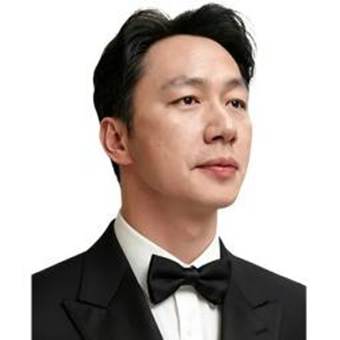
Professor Zhenghua Ju