

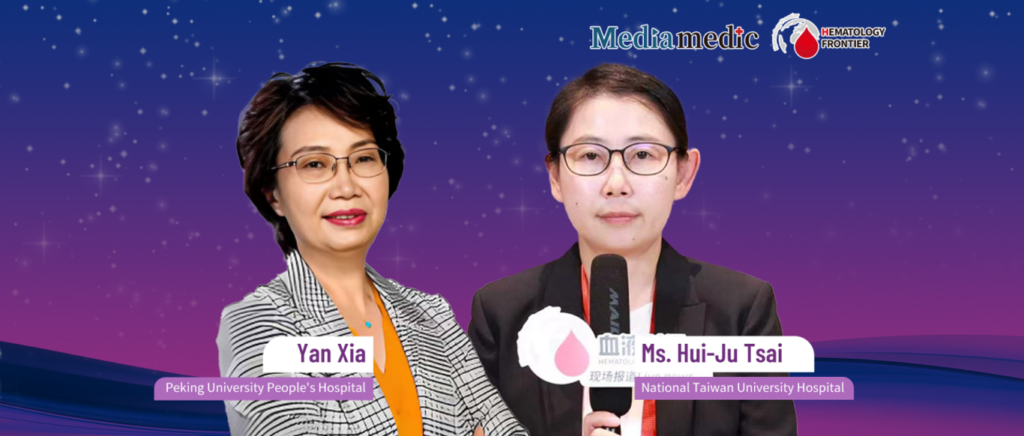
Editor's Note: In the golden autumn season, experts from across the Taiwan Strait gathered in Zhuhai. The 2026 Cross-Strait Hematology Academic Conference was held in Zhuhai, Guangdong, on August 21–22, bringing together hematology experts and scholars from both sides of the Taiwan Strait, as well as Hong Kong and Macao. The conference focused on cutting-edge developments and key areas of clinical practice, facilitating in-depth academic discussions and technical exchanges. A dedicated nursing session was held, featuring senior nursing experts from National Taiwan University Hospital (NTUH), who shared their clinical experience and provided a valuable platform for mutual learning, communication, and collaborative advancement in hematology nursing across the Taiwan Strait. During the conference, Oncology Frontier – Hematology Frontier invited Ms. Xia Yan from Peking University People's Hospital and Ms. Huiru Tsai from National Taiwan University Hospital to engage in an in-depth discussion on topics including the development of dedicated ICUs for hematology patients, infection prevention and control during CAR-T therapy followed by transplantation, and practical details of nursing care in laminar-flow rooms. Their discussion is summarized below for our readers.Building Critical Care Capacity
Exploring and Reflecting on Dedicated ICUs for Hematology Patients
Ms. Xia Yan first introduced Ms. Huiru Tsai, who currently serves as a bone marrow transplantation case manager at National Taiwan University Hospital. With extensive experience in case management, she also serves as a senior clinical nursing educator.
Ms. Huiru Tsai noted that the experience gained from participating in the Zhuhai conference was extremely valuable. Nursing Supervisor Ruiyi Chen and senior nursing colleagues from the TBMT team at her hospital were unable to attend because of scheduling conflicts with the seminar and had asked her to bring the conference experience back and share it with them. During the meeting, she not only shared National Taiwan University Hospital’s clinical nursing experience but also witnessed the solid specialty expertise and outstanding professional capabilities of nursing experts from hospitals on both sides of the Taiwan Strait. She found the exchange highly informative and inspiring.
Patients with hematologic diseases often have highly complex conditions and may require urgent medical support. Some hospitals in mainland China have already established specialized ICU care systems, providing valuable experience for reference. At present, National Taiwan University Hospital generally places hematology patients requiring such support in the general medical department, with ICU teams that are relatively familiar with transplant patients providing critical care support.
Regarding ICU organization, Ms. Xia Yan further explained the distinctive characteristics of critically ill hematology patients. Compared with critically ill patients in specialties such as respiratory medicine, hematology patients have greater requirements for comprehensive infection prevention and control, while critically ill hematology patients can also place considerable pressure on ICU resources. Given the widespread shortage of ICU beds, some hospitals have established dedicated ICU beds for hematology patients to improve the likelihood of clinical stabilization and recovery and to respond more flexibly to their specific needs.
Ms. Huiru Tsai agreed that ICU resources are extremely important for transplant patients. When patients develop infections after transplantation and their conditions progress rapidly, requiring intensive care, National Taiwan University Hospital, for example, can provide appropriate and timely medical care because of its comprehensive critical care resources as a medical center, extensive transplant experience, and integrated care system.
Moving Risk Prevention Upstream
Infection Prevention and Control Strategies for CAR-T Therapy Followed by Transplantation
Ms. Huiru Tsai explained that CAR-T immunotherapy has developed rapidly in recent years, and significant clinical benefits have been observed. However, in Taiwan, CAR-T therapy is not available for all diseases. Taiwan’s National Health Insurance system has clearly defined reimbursement criteria regarding both indications and types of CAR-T therapy, so patients must undergo a relatively rigorous review before treatment.
For patients who are eligible for CAR-T therapy but fail to achieve adequate disease control at the current stage, the medical team generally prefers to proceed with transplantation after achieving good disease control, thereby improving the likelihood of long-term survival. Consequently, CAR-T therapy is often used as a bridge to subsequent hematopoietic stem cell transplantation. Clinical observations have shown that this sequential treatment strategy can achieve significant efficacy in disease control.
At the same time, this combined treatment approach raises an important concern: CAR-T is itself an immunotherapy, and although proceeding to transplantation soon afterward may help consolidate treatment efficacy, it can substantially increase the risk of infection. Subsequent follow-up has shown an increased incidence of infection among these patients. In some cases, ordinary upper respiratory tract infections progress to pneumonia requiring hospitalization, leading to increased rates of outpatient visits and hospital admissions because of infection. Ms. Huiru Tsai therefore asked whether similar situations had been observed in mainland China.
Ms. Xia Yan responded that this is indeed one of the major challenges currently encountered in clinical practice. Sequential transplantation following CAR-T as a bridging strategy can increase infection rates in some patients. From a nursing perspective, infection prevention and control must therefore be strengthened in this population. Specific strategies and measures include:
- Local culture screening before admission to the laminar-flow room: All patients entering the laminar-flow room—not only those undergoing transplantation after bridging therapy—first undergo bacterial culture of sites including the nasal cavity, perianal region, and axilla to screen for potential risk factors such as colonization with drug-resistant organisms. Although the positivity rate is relatively low, this approach can still identify a subset of high-risk patients who require closer monitoring.
- Increase monitoring frequency: Existing nursing procedures are already relatively comprehensive, with prevention further strengthened primarily by increasing the frequency of monitoring and assessment. This includes closely monitoring changes in body temperature and measuring oxygen saturation three times daily to reduce the risk associated with delayed detection of abnormalities.
- Increase the frequency of care for infection-prone sites: If a patient tests positive upon admission to the laminar-flow room or is found to carry certain bacterial flora, this often indicates a higher risk of infection. Increasing the frequency of care for vulnerable sites can reduce the threat posed by colonizing organisms.
Ms. Huiru Tsai noted that this approach is similar to the workflow at National Taiwan University Hospital. On the first day of entering the transplant unit, patients undergo bathing, followed by culture testing of infection-prone sites such as the respiratory tract and perianal region. This is consistent with the pre-CAR-T screening approach described by Ms. Xia Yan, with the main difference being that the screening is performed at an earlier time point.
Ms. Xia Yan responded that the primary purpose is to prevent problems before they arise.
The two experts further reached consensus on the concept of prophylactic medication. Ms. Huiru Tsai explained that when it is known that the risk of fungal infection rises significantly during a particular stage of treatment, medication should not be delayed until symptoms of infection appear. Instead, intervention should be initiated in advance to prevent treatment from being delayed until clinical symptoms have already developed.
Ms. Xia Yan agreed, noting that prophylactic antibiotic use is relatively common in hematology. Waiting for culture results before initiating treatment is often too late. Because patients are immunocompromised, cultures may sometimes fail to produce positive results even when an infection is present. A negative culture therefore does not necessarily mean that no infection has occurred. Both experts agreed that this preventive approach is of considerable importance in clinical practice.
Excellence in the Details
Practical Experience in the Daily Nursing Care of Transplant Patients in Laminar-Flow Rooms
The discussion concluded by focusing on the details of daily nursing care for transplant patients in laminar-flow rooms.
Ms. Xia Yan asked about cleaning and bathing practices for transplant patients in laminar-flow rooms. Ms. Huiru Tsai explained that all transplant patients in the sterile unit are required to shower daily. If a patient is completely unable to get out of bed or is considered at high risk of falling, a bed bath is provided instead.
During a bed bath, a caregiver must remain with the patient throughout the entire procedure, and the cleaning process must be performed thoroughly to prevent repeated cross-contamination caused by excreta. Detailed protocols are in place for these procedures, including specifications regarding the type of body wash patients use every day. The purpose is to reduce the risk of infection caused by skin flora.
Regarding the specific requirements for body wash, Ms. Huiru Tsai confirmed that relevant regulations are in place. Some patients have commented that the requirements for entering the sterile unit are relatively strict. However, if infection-related risks can be effectively controlled, the overall treatment process will proceed more smoothly and treatment delays caused by infection can be avoided.
Ms. Xia Yan agreed and added that effective infection prevention and control can also help ensure successful engraftment, as infection can affect the time required for hematopoietic stem cell engraftment.
Conclusion
Although the discussion focused on specific nursing scenarios, it highlighted the strong alignment in the core principles underlying hematology nursing practice on both sides of the Taiwan Strait, while also providing an opportunity for both sides to validate and learn from each other’s accumulated experience.
From ICU resource allocation to infection prevention and control during CAR-T therapy followed by transplantation, and finally to the details of daily care in laminar-flow rooms, nursing teams on both sides face common challenges: hematology patients experience profound immune impairment and rapid disease progression, while infection prevention and control runs throughout the entire treatment process and represents a critical factor determining transplant success and long-term patient outcomes. Whether through local culture screening before admission to the transplant unit or risk-based prophylactic medication strategies, both sides share the same principle of “moving prevention upstream and preventing problems before they arise.” This also demonstrates how evidence-based nursing practice can converge toward similar approaches across different healthcare systems.
At the same time, the discussion highlighted differences in resource allocation pathways and healthcare systems on both sides. For example, Taiwan’s National Health Insurance framework means that some patients may have difficulty obtaining timely access to CAR-T therapy, whereas mainland China has accumulated more mature experience in the development of specialized ICUs. These differences are not barriers to exchange; rather, they constitute an important source of value for mutual learning. Although healthcare systems differ, the commitment to patient safety and quality of treatment remains shared.
Hematology nursing is a highly specialized field that requires meticulous management and continuous innovation. The rapid development of emerging therapies such as CAR-T has placed increasingly demanding requirements on nursing teams, particularly in infection prevention and control. This in-depth exchange between nursing experts from both sides was not merely an exchange and discussion of clinical experience; it also reflected their shared commitment to advancing the field and safeguarding patient health. Looking ahead, it is hoped that more regular exchange mechanisms can be established in hematology nursing, enabling both sides to learn from each other and continuously improve clinical practice while providing patients with safer and higher-quality care.
Expert Profiles

Ms. Xia Yan
Peking University People’s Hospital
- Former Chair, Nursing Committee, Asia-Pacific Blood and Marrow Transplantation (APBMT)
- Member, Nursing Committee, European Society for Blood and Marrow Transplantation (EBMT)
- Expert Consultant, Lymphoma Specialty Development Program, Capacity Building and Continuing Education Center, National Health Commission of China
- Chair, Hematology Nursing Branch, Chinese Medical Education Association
- Chair, Nursing Group, Anti-Lymphoma Alliance of the Chinese Society of Clinical Oncology (CSCO)
- Chair, Hematology Professional Committee, Beijing Nursing Association
- Chair, Hematology Nursing Branch, Beijing Society of Integrated Medicine
- Honorary Chair, Nursing Professional Committee, Hematology Working Committee, Beijing Cancer Prevention and Control Society
- Deputy Chair, Key Specialty Nursing Health Management Branch, China Health Promotion and Education Association
- Head, Hematology Group, Internal Medicine Professional Committee, Chinese Nursing Association, 25th and 26th terms
- Second Prize, Science and Technology Award of the Chinese Nursing Association (first recipient), 2025
- Honored Expert, Chinese Society of Hematology, Chinese Medical Association—the first nursing professional to receive this honor, 2024
- EBMT Outstanding Nursing Achievement Team Award, Hôpital Saint-Antoine, France, 2018
- Nursing Achievement Award / Nursing Science and Technology Progress Award, Beijing Nursing Association, 2013/2017/2018
- Recipient of the titles “Honoring Life · Glorious Medical Professionals,” “Beautiful Angel,” “Heroes of Life,” and “Everyday Heroes,” 2018
- Recipient of the First Capital Outstanding Nursing Professional Award, 2017
- Led the development of the Expert Consensus on the Whole-Course Management Model for Patients with Lymphoma (2021 edition), Expert Consensus on the Prevention and Nursing of Oral Mucositis in Hematopoietic Stem Cell Transplantation Patients (2022 edition), the nursing section of the National Health Commission’s Technical Specifications for the Clinical Application of Chimeric Antigen Receptor T-Cell Therapy Products (2022), the Expert Consensus on Whole-Course Management of Patients with Immune Thrombocytopenia (2023 edition), and the Expert Consensus on Nursing Practice in Autologous Hematopoietic Stem Cell Transplantation
- Author of four SCI-indexed papers, 11 monographs, and 74 academic papers
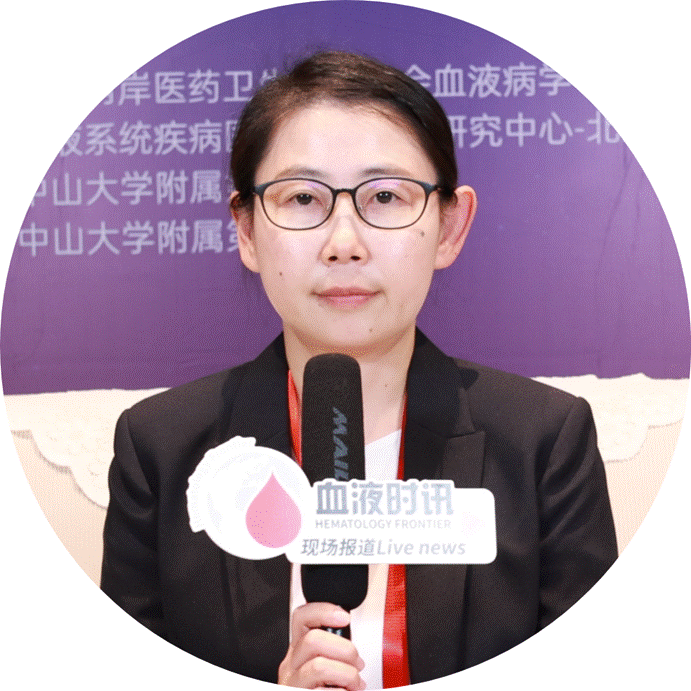
Ms. Huiru Tsai
National Taiwan University Hospital
Current Position: Bone Marrow Transplantation Case Manager, National Taiwan University Hospital
Department: Department of Nursing, National Taiwan University Hospital
Education: Department of Nursing, Taipei National University of Nursing and Health Sciences
Professional Experience:
- Mar 2002–Mar 2014: Clinical Nurse, Department of Hematology, National Taiwan University Hospital
- May 2018–Sep 2019: Clinical Research Nurse, Department of Hematology, National Taiwan University Hospital
- Oct 2019–Feb 2020: Clinical Nurse, Department of Oncology, National Taiwan University Hospital
- Mar 2020–Present: Bone Marrow Transplantation Case Manager, National Taiwan University Hospital
