Editor's Note: Peripheral T-cell lymphoma (PTCL) is highly heterogeneous and associated with poor prognosis, making the selection of an optimal first-line consolidation strategy a persistent clinical challenge. How can clinicians pursue deeper remission while balancing the graft-versus-lymphoma effect against the risk of non-relapse mortality? This lies at the heart of the clinical decision between autologous and allogeneic hematopoietic stem cell transplantation. During the 2026 Cross-Strait Hematology Conference, Prof. Wang Liang from Beijing Tongren Hospital, Capital Medical University, spoke with Oncology Frontier – Hematology Frontier about the positioning and selection of autologous versus allogeneic transplantation for first-line consolidation in PTCL based on evidence from evidence-based medicine. He also discussed prospectively how cellular immunotherapy may reshape future treatment paradigms.Oncology Frontier – Hematology Frontier: During the discussion on “First-Line Consolidation in Peripheral T-Cell Lymphoma: Autologous or Allogeneic Transplantation,” you argued in favor of autologous transplantation. First, could you explain the key rationale for considering autologous transplantation the preferred first-line consolidation strategy? In balancing efficacy and safety, where does autologous transplantation demonstrate its irreplaceable value?
Prof. Wang Liang: The overall prognosis of peripheral T-cell lymphoma (PTCL) remains poor. Except for patients with ALK-positive anaplastic large cell lymphoma, whose 5-year survival rate can reach 60%–70% or higher, the 5-year survival rate for most other PTCL subtypes is generally only 30%–40%. Therefore, for patients who achieve a response following first-line induction therapy, effective consolidation treatment is urgently needed to improve their prognosis.
At present, hematopoietic stem cell transplantation remains the main approach to first-line consolidation in PTCL, including autologous hematopoietic stem cell transplantation (auto-HSCT) and allogeneic hematopoietic stem cell transplantation (allo-HSCT). The international multicenter randomized controlled AATT study compared the efficacy and safety of these two transplantation strategies in the first-line consolidation setting. The results showed that although allogeneic transplantation significantly reduced disease relapse through the graft-versus-lymphoma effect, its non-relapse mortality (NRM) was also significantly higher, meaning that the long-term survival benefit was not particularly significant. In contrast, autologous transplantation has demonstrated definite therapeutic efficacy, together with favorable safety and greater clinical accessibility.
Large-scale data analyses from the Chinese Transplantation Working Group further confirmed that among patients who achieved a response to first-line therapy, autologous transplantation consolidation could significantly improve survival. These findings provide substantial evidence-based support for autologous transplantation as the preferred first-line consolidation strategy.
In terms of safety, autologous transplantation essentially involves high-dose chemotherapy followed by stem cell support, together with supportive measures such as platelet recovery support and infection prevention and treatment. The vast majority of patients can successfully pass through the transplantation period, with a very low NRM, generally no more than 5%. By comparison, the NRM associated with allogeneic transplantation was reported to be as high as approximately 30% in earlier international studies. Although advances in transplantation techniques in China have reduced this figure to below 10% in recent years, autologous transplantation remains advantageous when considering the overall factors of financial burden, hospital infrastructure requirements, and treatment accessibility. This is precisely where its irreplaceable value lies.
Oncology Frontier – Hematology Frontier: Although autologous transplantation is advantageous for most patients with PTCL, the graft-versus-lymphoma (GVL) effect of allogeneic transplantation remains highly anticipated in patients with extremely high-risk disease, inadequate depth of response following induction, or MRD positivity. Based on your clinical experience, are there specific subtypes or risk characteristics for which you would consider allogeneic transplantation as first-line consolidation?
Prof. Wang Liang: Although autologous hematopoietic stem cell transplantation is the preferred option for first-line consolidation in PTCL, its efficacy depends heavily on the depth of disease remission before transplantation. Clinically, we generally expect patients to achieve complete remission (CR) before transplantation, particularly a deep CR, to ensure the best possible transplantation outcomes. However, approximately 30%–40% of patients still fail to achieve CR following induction therapy. These patients often harbor chemotherapy-refractory minimal residual disease (MRD), and high-dose chemotherapy alone with autologous transplantation may be insufficient to overcome their poor prognosis. For this population, allogeneic hematopoietic stem cell transplantation can serve as an effective salvage strategy because of its potent GVL effect, which may further eliminate resistant disease.
In addition, some patients with PTCL develop hemophagocytic lymphohistiocytosis (HLH). These patients have an extremely aggressive disease course, with mortality exceeding 90% in the absence of effective intervention. Autologous transplantation alone is unlikely to substantially improve their poor prognosis. For young patients with extremely high-risk disease, particularly those with concomitant HLH, extensive systemic lesions, or central nervous system involvement, allogeneic transplantation should be considered the preferred strategy. Compared with autologous transplantation, allogeneic transplantation may provide greater long-term survival benefits for this extremely high-risk population.
Oncology Frontier – Hematology Frontier: In recent years, cellular immunotherapies such as CAR-T therapy have shown promise in relapsed/refractory PTCL, and your team has accumulated extensive experience with CD19/CD22 dual-target CAR-T research. With the rapid development of novel agents and cellular therapies, how do you view their potential impact on the current landscape of autologous versus allogeneic transplantation for first-line consolidation in PTCL? Could a new treatment paradigm of “chemotherapy induction – autologous transplantation consolidation – CAR-T maintenance/residual disease clearance” eventually emerge?
Prof. Wang Liang: CAR-T-cell therapy is currently regarded as a highly promising treatment approach, but its efficacy has so far been firmly established mainly in B-cell lymphomas and multiple myeloma. In T-cell malignancies, CAR-T therapies targeting CD7 or CD5 have already demonstrated significant efficacy in T-cell acute lymphoblastic leukemia. However, there are currently insufficient clinical data supporting CAR-T therapy for peripheral T-cell lymphoma. Although several centers are conducting studies of CD7-targeted CAR-T therapy in relapsed/refractory PTCL, mature data have yet to be reported. In the future, as technology continues to advance, more specific targets may be identified, potentially overcoming the “fratricide” challenge inherent in targeting malignant T cells and further improving the efficacy of treatment for T-cell lymphomas.
With regard to consolidation strategies, most patients currently still require allogeneic hematopoietic stem cell transplantation following CAR-T therapy, and CAR-T therapy has not yet completely replaced allogeneic transplantation. However, if more effective CAR-T products become available in the future and can further eliminate MRD, it is entirely possible that they could eventually replace allogeneic hematopoietic stem cell transplantation. CAR-T therapy may also potentially replace autologous hematopoietic stem cell transplantation as a consolidation strategy. Because conventional transplantation has age-related limitations, elderly patients who cannot tolerate intensive chemotherapy are currently often managed with “chemotherapy induction to achieve remission combined with CAR-T therapy to eliminate residual disease.” In the future, a second CAR-T infusion six months to one year after the initial treatment could even be considered to maintain treatment efficacy. Although considerable exploration remains necessary, these therapeutic possibilities may ultimately become reality as medicine continues to advance.
Expert Profile
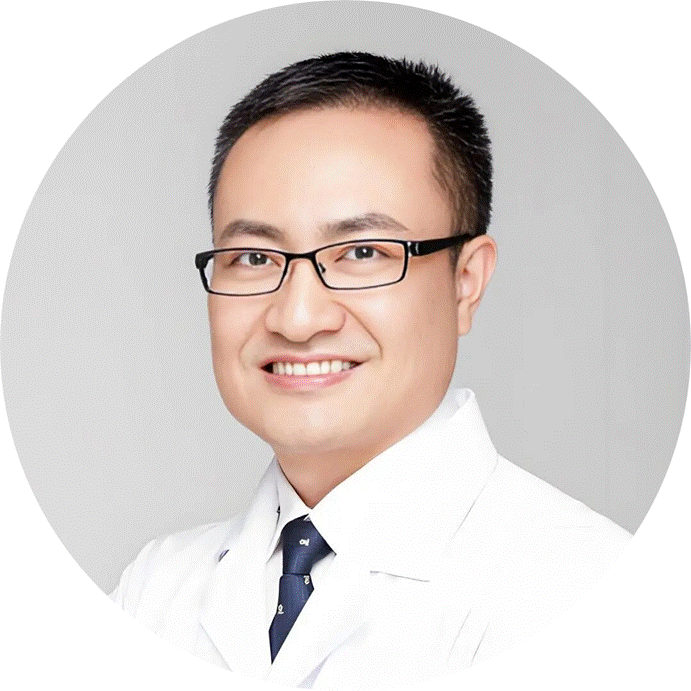
Prof. Wang Liang
Beijing Tongren Hospital, Capital Medical University
Director, Department of Hematology, Beijing Tongren Hospital, Capital Medical University
Chief Physician, Professor, Doctoral Supervisor
Member, Sixth Hematology Physicians Branch of the Chinese Medical Doctor Association
Member, Lymphocyte Disease Group, Hematology Branch of the Chinese Medical Association
Chair, Cellular Immunotherapy Professional Committee, China Health Technology Promotion Association
Leader, Chinese Ocular Lymphoma Collaborative Group (COLCG)
Chair-elect, Lymphoma Immunotherapy Professional Committee, Beijing Cancer Prevention and Control Society
Member, Hematology Branch of the Beijing Medical Association
Section Editor, Oncology Section, BMC Medicine
Associate Editor, Cancer Medicine
Specializes in the diagnosis and treatment of lymphomas and other hematologic malignancies
Principal investigator of 6 national-level research projects
Author of more than 60 SCI-indexed publications