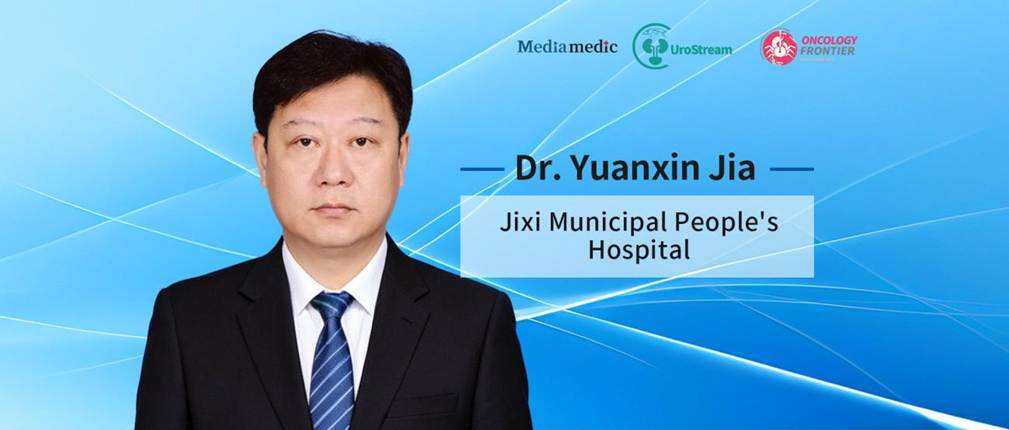
Editor's Note: With the accelerating aging of the population, health screening has been increasingly promoted across medical institutions at different levels. As a result, the early detection rates of urologic malignancies, including prostate, bladder, and kidney cancers, have improved, while standardized disease management has received growing attention. Against this backdrop, important challenges in clinical practice include how to achieve more precise diagnosis after a positive prostate cancer screening result while avoiding unnecessary biopsies and overtreatment; how to appropriately balance the clinical benefits of treatment against quality-of-life preservation in older patients; and how to strengthen the capacity of primary healthcare institutions for early detection and standardized initial diagnosis. At the 2026 academic meetings of the Chinese Anti-Cancer Association (CACA) focusing on urologic oncology, Oncology Frontier – UroStream invited Professor Yuanxin Jia from Jixi People's Hospital to share his clinical experience and perspectives on these key issues.Early Prostate Cancer Diagnosis: Standardizing PSA Monitoring and Integrating Imaging With Precision Biopsy
With the widespread adoption of prostate-specific antigen screening, the detection rate of early-stage prostate cancer has continued to increase. For individuals with abnormal PSA levels or suspected early prostate cancer, how should active surveillance be conducted, and when should further evaluation or intervention be considered?
Professor Yuanxin Jia: Prostate-specific antigen (PSA), as a key biomarker in prostate cancer screening and clinical diagnostic assessment, has long played an indispensable role in the early identification and management of the disease. As the global population continues to age, the incidence and disease burden of prostate cancer have been increasing, placing growing pressure on public healthcare systems. Against this background, early detection and diagnosis are becoming increasingly important, as timely intervention before the disease progresses to an advanced stage can provide a more favorable therapeutic window and ultimately improve patient outcomes and quality of life.
In my view, active surveillance does not simply mean waiting. The key is to conduct regular and standardized follow-up. One of the most straightforward approaches is to incorporate PSA testing into routine health examinations for men of appropriate age. Annual PSA monitoring is recommended for men over 45 years of age. For older individuals, those with abnormal PSA results, or those at higher risk, the interval between tests can be shortened according to their individual circumstances to facilitate the earliest possible identification of suspicious lesions.
When PSA levels fall within the 4–10 ng/mL diagnostic gray zone, serum PSA alone is insufficient to determine whether clinically significant prostate cancer is present. Imaging should therefore be incorporated into the overall assessment. Multiparametric magnetic resonance imaging (mpMRI) and the Prostate Imaging Reporting and Data System (PI-RADS) can provide important information for risk stratification. When the PI-RADS score reaches 3 or above, a suspicious lesion may be present. At this point, the need for prostate biopsy should be evaluated based on factors such as the patient’s age, family history, previous biopsy history, and life expectancy. This approach can help avoid unnecessary invasive procedures while ensuring that clinically significant tumors are not missed.
Prostate biopsy techniques are also continuing to evolve. Compared with the traditional transrectal approach, the transperineal route can effectively reduce the risk of infection and improve procedural safety. Meanwhile, emerging technologies such as MRI-ultrasound fusion imaging and artificial intelligence-assisted navigation can improve biopsy precision and, to some extent, enhance patient comfort during the procedure. Together, these diagnostic approaches form a comprehensive pathway from PSA screening and imaging-based risk stratification to definitive precision diagnosis.
Treatment Decisions in Older Patients: Assess Tolerance First, Then Individualize the Treatment Pathway
When treating older patients with bladder or prostate cancer, how should urologists balance curative treatment against preservation of quality of life?
Professor Yuanxin Jia: Urologic malignancies in older patients are common, with incidence increasing substantially with age. When these patients present for medical care, relatively limited health awareness or restricted access to healthcare resources may mean that their disease is already at a more advanced stage. At the same time, the presence of common chronic conditions such as hypertension and diabetes further complicates treatment decisions, requiring careful consideration of efficacy and safety.
Therefore, before developing a treatment plan, it is essential to comprehensively assess the patient’s overall physical condition, comorbidities, tumor stage, and ability to tolerate anesthesia and surgery. This ensures that the selected treatment strategy is both individualized and feasible.
If the patient’s physical condition permits, I still tend to recommend actively pursuing the possibility of curative surgery. In recent years, advances in anesthesia, perioperative management, and minimally invasive techniques have reduced the surgical trauma associated with laparoscopic and robot-assisted procedures compared with traditional open surgery, making surgical treatment feasible for an increasing number of older patients. Of course, the surgeon’s experience and the overall capabilities of the surgical team are also critical factors in determining whether surgery is appropriate.
For patients who genuinely cannot tolerate surgery, nonsurgical multimodal treatment can be selected according to tumor type and disease stage. For locally advanced bladder cancer, systemic treatments such as targeted therapy, immunotherapy, or antibody-drug conjugates (ADCs) may be considered. For prostate cancer, treatment options may include endocrine therapy, radiotherapy, and novel androgen receptor pathway inhibitors, depending on the individual clinical situation.
Overall, age alone should not be regarded as the sole reason to withhold active treatment. Clinical decision-making should incorporate the patient’s overall health status, tumor risk, available treatment technologies, and expected benefit. Patients who can tolerate surgery should be given the opportunity to pursue curative treatment whenever appropriate, while those who cannot tolerate surgery can receive standardized nonsurgical therapies to control the disease and maintain quality of life.
Early Detection at the Primary Care Level: Optimize Screening Strategies and Strengthen Referral and Communication
With population aging and the increasing adoption of health screening, regional hospitals are seeing a growing number of patients with urologic malignancies. What are the major barriers to early detection and standardized diagnosis of kidney, bladder, and prostate cancers, and how can public awareness and the diagnostic capabilities of primary healthcare institutions be improved?
Professor Yuanxin Jia: Urologic malignancies do have opportunities for early screening in clinical practice. Lesions of the kidneys and bladder can be relatively well detected by ultrasound, and many early-stage renal tumors are incidentally identified during routine health examinations. Although prostate cancer cannot be definitively diagnosed using ultrasound alone, patients with abnormal PSA levels or suspicious imaging findings are generally advised to undergo further evaluation, including blood tests and magnetic resonance imaging, to clarify the diagnosis.
To further improve detection rates, efforts are needed on two levels. First, healthcare professionals should continue to conduct public health education to help people develop the habit of regular health examinations and seeking medical attention when abnormalities arise, thereby promoting earlier detection. Second, professional health examination centers and primary healthcare institutions should develop more scientific and targeted screening strategies based on age and individual risk profiles. In terms of specific diagnostic tools, ultrasound can serve as a basic examination method for the urinary system, while the decision to proceed to CT or MRI should be based on initial findings and individual risk factors.
Ultimately, the value of early detection can only be realized through standardized diagnosis and treatment. Most early-stage kidney tumors can be treated surgically, while most non-muscle-invasive bladder cancers can be managed with procedures such as transurethral resection of bladder tumor (TURBT). Prostate cancer likewise has a range of established diagnostic and treatment options. Clinicians should strengthen communication with patients, guide them to complete appropriate evaluation promptly after abnormalities are identified, and encourage adherence to standardized treatment pathways so that patients can derive the greatest possible clinical benefit.
Conclusion
Professor Xin Jia emphasized that comprehensive urologic oncology management should establish a continuous, closed-loop pathway spanning early screening, risk stratification, and standardized treatment, ensuring close integration between each stage of care. In prostate cancer, for example, early diagnosis should not rely solely on PSA monitoring but should integrate multiparametric MRI, PI-RADS assessment, and precision biopsy to improve detection while reducing unnecessary invasive procedures.
For older patients, treatment decisions should be based on comprehensive assessment, balancing the opportunity for tumor control against treatment tolerance and quality-of-life considerations to achieve an individualized equilibrium and avoid both overtreatment and undertreatment. At the primary care level, improving early diagnosis requires screening strategies tailored to different populations, continued public health education, stronger awareness among high-risk individuals, and timely referral from abnormal screening results to standardized evaluation and treatment.
Through academic exchange and collaboration, disseminating the latest diagnostic concepts and technologies to primary healthcare institutions can help narrow regional disparities and steadily improve the overall quality and standardization of urologic oncology care in China.

Professor Yuanxin Jia