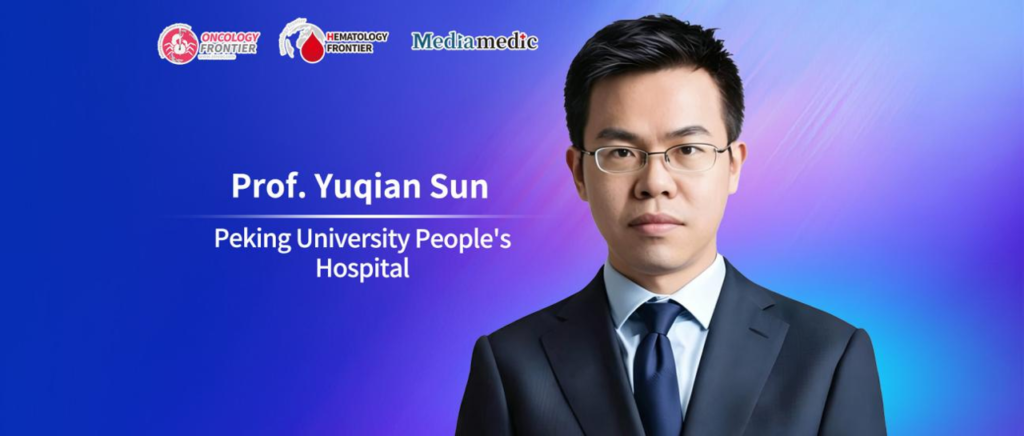
Editor's Note: Bringing together leading experts in Hebei and staying true to its mission for 14 years. On August 21, 2026,the 14th Lu Daopei Hematology Forum officially opened at Hebei Yanda Lu Daopei Hospital. Building on 14 years of academic experience, this year's conference focused on cutting-edge topics including hematopoietic stem cell transplantation, cellular immunotherapy, and precision diagnosis and treatment of hematologic diseases. Experts and scholars from across China gathered to discuss the development of the field, making the conference an important academic platform for advancing hematologic disease diagnosis and treatment in China. During the conference, Oncology Frontier – Hematology Frontier interviewed Professor Yuqian Sun of Peking University People's Hospital, who shared her expert insights on the current status of hematopoietic stem cell transplantation in older patients, as well as patient assessment and selection strategies.Oncology Frontier – Hematology Frontier: Your presentation at this conference focused on “HSCT in older patients.” With your extensive clinical research experience in transplantation for older patients with hematologic malignancies, how would you assess the current status of transplantation in older patients in China? How do transplant strategies differ between older and younger patients?
Professor Yuqian Sun: Hematopoietic stem cell transplantation in older patients in China is currently developing rapidly. Although older patients still account for a relatively small proportion of all transplant recipients, both the upper age limit for transplantation and the proportion of older patients undergoing transplantation are increasing rapidly.
At the same time, we must recognize the challenges we currently face. Compared with younger patients, older patients have a higher risk of transplant-related mortality, which is closely associated with greater frailty and poorer treatment tolerance. Meanwhile, we still need to further explore transplant strategies specifically suited to older patients. The key to developing these strategies lies in gaining a deeper understanding of the fundamental biological and pathogenic differences between older and younger patients. This will remain an important area of research in the future.
Oncology Frontier – Hematology Frontier: For elderly patients with hematologic malignancies, how should clinicians comprehensively assess their physiological condition and prognosis to identify appropriate transplant candidates? Have there been any new assessment tools or criteria in recent years that can assist clinical decision-making?
Professor Yuqian Sun: This is a key question of great concern to clinicians. Essentially, the goal is to identify patients who can derive the greatest possible benefit from hematopoietic stem cell transplantation while maintaining treatment-related toxicity within a manageable range. HSCT can reduce the risk of disease relapse, but it also carries treatment-related toxicity and may increase the risk of transplant-related mortality. Therefore, we need to precisely balance the potential benefits and risks.
The assessment system for transplant candidates has evolved progressively. In the early stages, assessment was relatively simplistic, relying entirely on an upper age limit or on physicians’ subjective judgment of a patient’s frailty and treatment tolerance. This was followed by the development of comorbidity assessments. Comorbidities are a strong predictor of transplant outcomes, but they are still insufficient to comprehensively assess a patient’s overall tolerance. We have now moved toward multidimensional comprehensive assessment, such as geriatric assessment, which incorporates multiple dimensions including comorbidities, physical function, frailty, psychological status, and social and economic support. Research is also exploring the potential value of biomarkers in patient assessment.
Overall, there is still no completely standardized and universally accepted assessment tool, and these systems continue to evolve and improve. At present, frailty assessment tools are among the most widely used approaches in clinical practice.
About the Expert
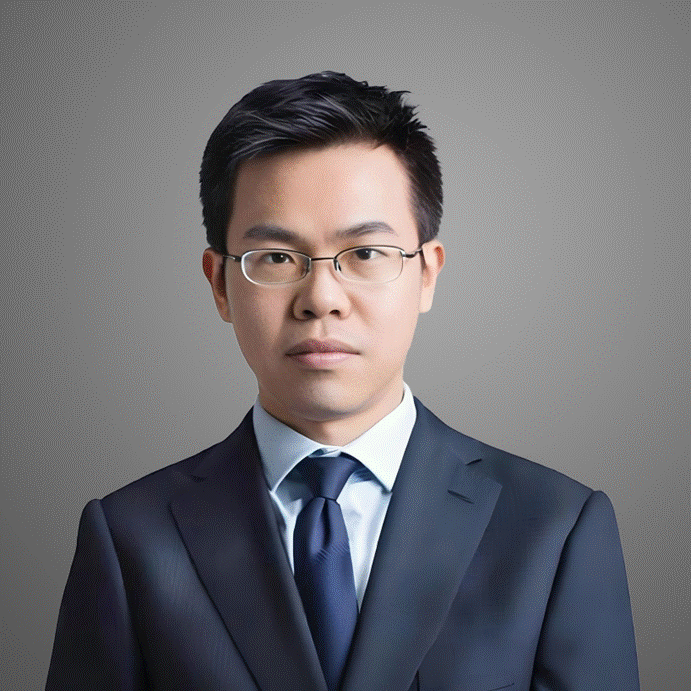
Professor Yuqian Sun
Peking University People’s Hospital
Department of Hematology, Peking University People’s Hospital
Chief Physician, Professor, Doctoral Supervisor, Ward Director
Chair, Hematology Branch, Beijing Association of Integrative Medicine
Committee Member, Chinese Medical Association Branch for the Prevention and Control of Bacterial Drug Resistance
Deputy Chair, Fungal Diseases Committee, Chinese Medical Education Association
Standing Committee Member, Infectious Diseases Committee, Chinese Medical Education Association
Senior Visiting Scholar, European Society for Blood and Marrow Transplantation (EBMT)
Areas of Focus: Hematologic diseases; hematopoietic stem cell transplantation