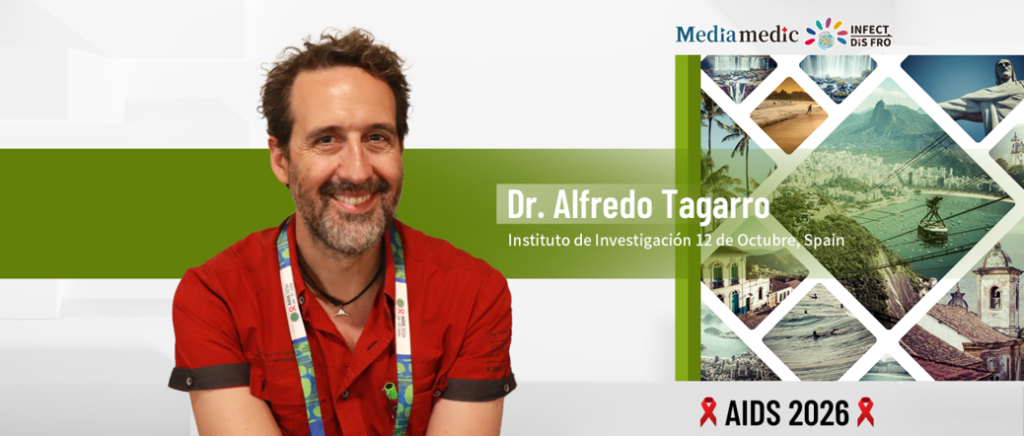
Editor’s Note: The 2026 International AIDS Conference (AIDS 2026) was successfully held in Rio de Janeiro, Brazil. The prevention and control of maternal, infant and pediatric HIV remained a key topic of discussion at this conference. We conducted an exclusive interview with Dr. Alfredo Tagarro from the Instituto de Investigación 12 de Octubre, Spain. Breaking free from the conventional analytical framework of mother-to-child transmission, his research proposes an innovative research perspective of “Moving Beyond Transmission”, focusing on immune characteristics, risk triggers and intervention strategies among HIV-exposed infants and young children. The in-depth discussion covers core directions including pediatric immune disparities, gaps in clinical screening, and pre-emptive family interventions, delivering cutting-edge research insights to optimize full-cycle health management for HIV-exposed infants and young children.
Infectious Disease Frontier: Your presentation put forward the core research perspective of “Moving Beyond Transmission”. Compared with traditional studies that only focus on HIV mother-to-child transmission and pediatric infection outcomes, what do you believe are the core cognitive breakthroughs in research on HIV-exposed infants and young children? What understudied exposure risk scenarios and influencing factors have long been overlooked?
Dr. Tagarro: I believe one major research gap at present is that we have not fully clarified whether these children suffer from physiological and molecular-level immunosuppression. The vast majority of existing studies have confirmed that HIV-exposed children face elevated risks of mortality, various infectious diseases and adverse clinical outcomes. However, careful analysis reveals that most of these poor outcomes are strongly linked to mothers failing to receive antiretroviral therapy and persistent maternal inflammatory status.
This demonstrates that HIV-related conditions and maternal health during pregnancy exert profound impacts on the offspring’s immune system. If a mother achieves effective viral suppression prior to conception, receives comprehensive social support, practices breastfeeding, and has access to safe drinking water, proper sanitation and a favorable social environment, such children will face no higher disease risks than HIV-unexposed peers. Therefore, we urgently need to clarify whether all adverse outcomes in children stem solely from maternal prenatal factors and external environmental factors, or whether inherent immunosuppressive alterations truly exist within the children’s own immune systems.
Infectious Disease Frontier: Unlike adults with HIV exposure, infants and young children possess immature physiological and immune systems. What unique traits do they exhibit in terms of HIV infection risk, disease progression and hidden harms following HIV exposure? Given the special characteristics of pediatric populations, what shortcomings persist in current clinical screening and early intervention systems?
Dr. Tagarro: There are striking disparities between the immune systems of infants/young children and adults. The so-called “immaturity” of the pediatric immune system in the context of HIV infection may conversely serve as an advantage in HIV cure research, as their immune response mechanisms lean more toward innate immunity rather than adaptive specific immunity. This represents a vital research avenue worthy of further investigation — for instance, how to activate and boost B-cell function to drive the production of HIV-specific immune responses. While academia has carried out sufficient research on immune characteristics of both children and adults, a core shortfall in current research is that the field has failed to fully prioritize and consistently explore the central value of pediatric populations in HIV cure strategy research. In fact, children constitute the optimal study population for evaluating HIV cure approaches.
Infectious Disease Frontier: Based on your in-depth research on HIV-exposed infants and young children presented at this conference, what optimization recommendations would you put forward for family-based interventions and pediatric health management?
Dr. Tagarro: In my view, the most effective intervention is to facilitate early and robust HIV viral control among women of childbearing age, with the optimal intervention window extending as far back as the preconception stage. Comprehensive achievement of sustained maternal viral suppression will drastically reduce the risk of acute HIV infection in infants to an extremely low level, while nearly eliminating subsequent infectious disease risks among HIV-exposed but uninfected children. For this reason, I consistently stress that standardized prenatal diagnosis, treatment and health management for mothers must be prioritized as the cornerstone of safeguarding infant health and mitigating harms associated with HIV exposure.