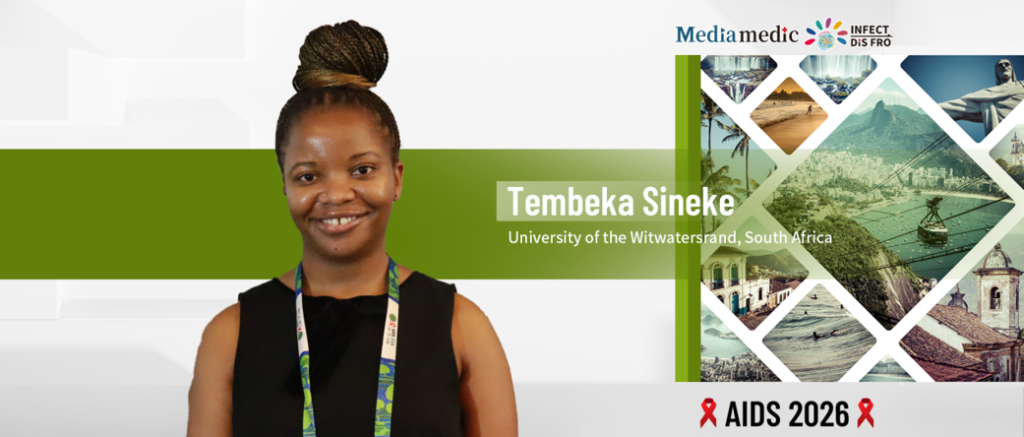

Editorial Note: The 2026 International AIDS Conference (AIDS 2026) was held in Rio de Janeiro, Brazil. HIV care for adolescents and the rollout of the Undetectable = Untransmittable (U=U) framework emerged as key discussion priorities at the conference. Young populations across sub-Saharan Africa bear a dual burden of HIV infection and pervasive social stigma. Integrating U=U interventions into routine clinical care serves as a critical pathway to improve their disease literacy, psychological wellbeing, and reduce high-risk sexual behaviours. A research team led by Tembeka Sineke from the University of the Witwatersrand conducted a randomized controlled trial among adolescents and young adults (AYA) in Cape Town to examine the practical value of digital intervention tools. Infectious Disease Frontier features an in-depth interview with Tembeka Sineke, covering intervention outcomes, local barriers to education outreach, service model optimization, and prerequisites for regional scale-up. The insights provide contextually grounded practice references for integrated youth HIV care across Africa and globally, alongside actionable strategies for large-scale implementation of similar intervention programmes.
Infectious Disease Frontier: This randomised trial explored integrating U=U interventions into clinical care pathways. What key changes were observed in the intervention arm regarding participants’ knowledge levels, psychological well-being, and sexual risk behaviours among people living with HIV?
Tembeka Sineke: Study participants were randomly allocated into two arms: the intervention group received access to a custom-built mobile application for U=U education, while the control group only received standard routine HIV care. Comparative analysis revealed multifaceted positive outcomes for the intervention group, with benefits sustained through the six-month follow-up period.
In terms of HIV knowledge, the digital intervention app significantly strengthened participants’ disease literacy. Adolescents developed clear, accurate understanding of HIV transmission risks and mastered the core U=U principle: people living with HIV who achieve sustained viral suppression via consistent antiretroviral therapy pose zero risk of HIV transmission to others. This accurate knowledge was retained stably across the six-month follow-up window.
Regarding psychological wellbeing, all participants demonstrated generally sound baseline mental health, yet high levels of internalized and anticipated HIV stigma were prevalent at enrolment. Following U=U intervention delivery, follow-up assessments documented marked reductions in all measured stigma outcomes, confirming the intervention’s efficacy in alleviating psychological distress among people living with HIV.
For high-risk sexual behaviours, participants exhibited strengthened self-protection awareness and behavioural improvements. At study baseline, we collected data on participants’ sexual partners over the preceding six months, consistent condom use, and awareness of their partners’ HIV status. Six-month follow-up reviews found substantial reductions in risky sexual conduct among the intervention cohort; participants consistently adopted proactive harm-reduction practices to avoid transmission risks.
Infectious Disease Frontier: Adolescents and young adults face unique social pressures alongside relationship and fertility aspirations, while being vulnerable to stigma. Within the local context of Cape Town, what barriers were encountered during the rollout of U=U education? Which groups are more prone to misunderstand or question the U=U message?
Tembeka Sineke: Prior to developing our digital intervention tool, we held consultations with local healthcare providers. While clinical staff possessed robust professional knowledge of U=U principles, they lacked accessible, population-tailored educational resources and outreach channels for community dissemination. In response, we designed a dedicated mobile application that delivers stigma-free, simplified U=U science in plain language, with self-paced learning functionality accessible to all users. This drastically streamlined on-the-ground education delivery, so our programme encountered no major implementation barriers during local rollout.
That said, nationwide U=U outreach across South Africa faces fundamental systemic obstacles. South Africa officially endorsed the U=U policy statement in 2024. Two years on, however, the country still lacks standardized national guidelines for messaging and community education. Individual healthcare facilities and civil society organizations run independent outreach initiatives with inconsistent educational content and divergent messaging. Conflicting, uneven public information generates widespread misconceptions about U=U across communities. We advocate for unified national education standards to enable consistent, standardized dissemination of U=U evidence nationwide moving forward.
Infectious Disease Frontier: Based on the findings of this randomised trial, if U=U interventions are to be routinely embedded into standard HIV care for AYA, which components of existing service models do healthcare facilities need to restructure? Does this intervention model have the potential for scale-up to other African cities, and what additional supporting resources are required?
Tembeka Sineke: During the trial’s initial phase, our research staff delivered all U=U intervention sessions. The study has since entered its second stage, where intervention delivery has been fully transferred to frontline HIV counsellors. Deploying dedicated on-site counselling staff to address patient questions in real time forms the core strategy to institutionalize this intervention model, while the underlying intervention framework requires no structural overhauls—it is already fully mature for routine clinical integration.
Furthermore, the model features high flexibility and iterative adaptability. Educational content can be readily updated to suit local needs, such as translating materials into regional languages or adding supplementary educational video content. Many participants requested more real-life case studies of serodiscordant couples (partners with differing HIV statuses), and such content expansions can be implemented rapidly. The entire system can be dynamically adjusted to meet diverse local requirements.
This intervention framework holds strong scalability for other geographic regions. Its multilingual functionality supports full localization: written text can be translated, and audio voiceovers re-recorded to match regional languages—for example, Swahili for Tanzanian settings or German for European contexts—enabling broad cross-border applicability.
Nevertheless, successful national and pan-African scale-up demands targeted capacity building and hardware investment. Our intervention relies on tablet devices for delivery, so governments must prioritize equipment procurement and distribution to fully stock clinical facilities across all regions.
This hardware infrastructure is indispensable. Standardized U=U education administered at the critical first consultation empowers patients with accurate, evidence-based information immediately upon entry to care. This boosts sustained clinical engagement and reduces loss to follow-up after initial clinic visits by addressing barriers that often undermine retention in care, including internalised, anticipated, and enacted HIV-related stigma, concerns about HIV status disclosure, and anxiety about potentially transmitting HIV to sexual partners. Delivering foundational U=U education during first-time consultations improves appointment adherence and antiretroviral therapy compliance, ensuring patients fully grasp that consistent treatment leading to undetectable viral load eliminates HIV transmission risk—ultimately enhancing long-term clinical outcomes for youth living with HIV.