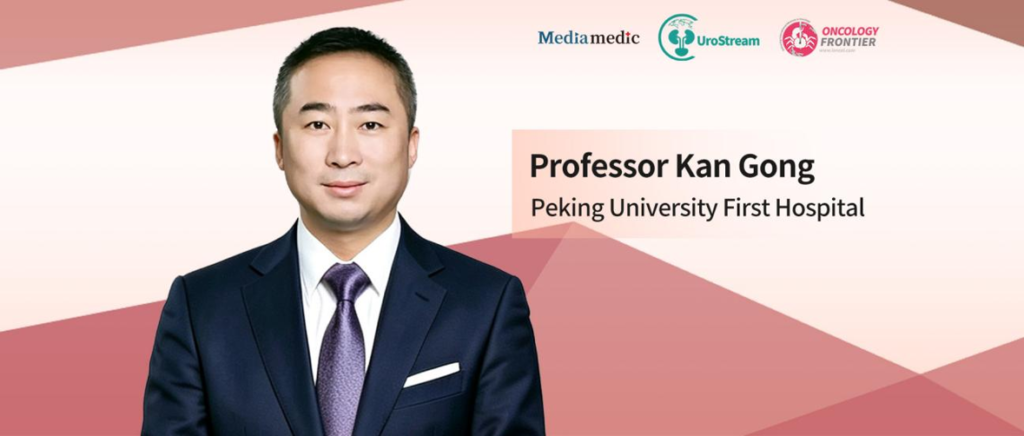
The 19th Chinese Urological Association (CUA) Genitourinary Oncology Conference was successfully held in Beijing on July 3–4, 2026. Centered on the theme "Advancing Frontiers, Standardizing Care, and Driving Collaborative Innovation," the meeting featured in-depth discussions on precision oncology, early screening and prevention of prostate cancer, and the development of a robust domestic clinical research ecosystem, highlighting both the latest advances and the key challenges facing urologic oncology in China.During the conference, Oncology Frontier – UroStream interviewed Professor Kan Gong of Peking University First Hospital. The discussion focused on three major topics: the role of artificial intelligence in urologic oncology over the next three to five years, the growing burden of prostate cancer in an aging population, and the importance of establishing a China-specific evidence base to guide clinical practice.
Oncology Frontier – UroStream: Artificial intelligence is advancing rapidly, and some believe it will eventually replace urologists in diagnosis and treatment. Based on your team’s work in AI-assisted prostate cancer diagnosis, what meaningful breakthroughs do you expect AI to achieve over the next three to five years? How should we view the relationship between AI and clinicians?
Professor Kan Gong:
Recently, there has been considerable discussion suggesting that artificial intelligence will eventually replace physicians—even surgeons—and that patients may one day complete their entire diagnostic and treatment journey simply by scanning a card or QR code.
From my perspective, however, this is an unrealistic expectation, at least in the foreseeable future.
Over the next three to five years, AI will certainly continue to make significant progress, but it is highly unlikely to replace physicians entirely. In fact, I believe that even over the next 30 to 50 years, artificial intelligence will struggle to independently deliver comprehensive medical care.
Medicine is fundamentally a human-centered profession. Caring for patients’ physical and emotional well-being, communicating with families, and providing long-term quality-of-life management all require empathy and human interaction—qualities that machines cannot replicate.
Moreover, based on the current state of AI technology, it is not yet capable of independently managing the complete diagnostic and therapeutic process.
That said, AI has tremendous value as a powerful clinical support tool. It can help reduce subjective variability, compensate for limitations in physician experience, alleviate heavy workloads, and improve diagnostic consistency.
Our own team has been actively developing AI-assisted approaches for prostate cancer diagnosis. At Peking University First Hospital, approximately half of the preliminary MRI screening reports for prostate cancer are now generated initially by AI, after which they are reviewed, revised when necessary, and formally approved by senior radiologists.
For primary healthcare institutions facing shortages of experienced specialists and increasing clinical workloads, AI systems trained on extensive expert knowledge can substantially improve diagnostic efficiency while reducing physicians’ workload and benefiting patients.
There remains considerable room for further technological refinement, and we will continue advancing this area of research. Nevertheless, over the next three to five years, AI should be viewed as a clinical assistant rather than an independent practitioner.
Oncology Frontier – UroStream: As China’s population continues to age and prostate cancer incidence rises, what major changes are you seeing in disease burden and clinical challenges in genitourinary oncology?
Professor Kan Gong:
According to publicly available statistics, China’s population aged 65 years and older has now exceeded 300 million, marking the country’s transition into a deeply aging society.
Because prostate cancer is predominantly a disease of older men, it has become the fastest-growing malignancy among Chinese men and is now the second leading cause of cancer-related death in the male population. This represents a major public health challenge that requires coordinated efforts from both the healthcare system and society as a whole.
Unfortunately, our current clinical reality remains far from ideal.
Among patients newly diagnosed with prostate cancer in outpatient practice, fewer than one-third are still eligible for curative treatment, while more than one-third already have multiple distant metastases at the time of diagnosis.
These figures clearly demonstrate that China’s systems for early detection, screening, and timely intervention remain inadequate.
Achieving the objectives outlined in the Healthy China 2030 initiative—including a substantial improvement in five-year cancer survival rates—will require sustained long-term effort.
Moving forward, our highest priority must be strengthening standardized screening and early diagnosis. The earlier prostate cancer is detected and treated, the greater the improvement in overall survival. This represents one of the most important strategies for enhancing China’s national system for urologic cancer prevention and control.
Oncology Frontier – UroStream: What do you consider the greatest strengths and current shortcomings of China’s urologic oncology community? Looking ahead, is there a need to establish an independent, comprehensive Chinese evidence base for urologic oncology?
Professor Kan Gong:
This question goes directly to the heart of our field’s future development.
At present, China’s urologic oncology community faces what might be described as three “90%” realities.
Approximately 90% of innovative diagnostic and therapeutic technologies originate overseas; 90% of clinical guidelines are based primarily on data from Western populations; and 90% of anticancer drugs, surgical equipment, and diagnostic reagents continue to rely on imports.
At the same time, there remains substantial room for improvement in implementing guideline-based, standardized care throughout primary and regional healthcare institutions across China.
Against this backdrop, developing consensus recommendations and clinical guidelines that truly reflect the characteristics of Chinese patients has become one of the core priorities of the Chinese Urological Association (CUA) and was an important topic of discussion at this year’s meeting.
We hope to see more high-quality clinical evidence generated by Chinese institutions and multidisciplinary research teams. We also encourage experts nationwide to collaborate in conducting multicenter clinical studies that produce robust real-world data from Chinese patient populations. Such evidence will allow us to optimize prostate cancer management strategies specifically for Chinese patients.
At the same time, China possesses several unique advantages.
First, with a population of 1.4 billion people, we have access to an unparalleled volume of clinical cases in urologic oncology. Transforming these enormous clinical resources into scientific discoveries and better patient care represents one of our greatest opportunities.
Second, China has established a standardized healthcare system in which multidisciplinary, precision-based treatment models have become widely adopted. The dedication and professionalism of Chinese healthcare workers also provide a strong foundation for continued progress.
In addition, an increasing number of international multicenter clinical trials are now being conducted in China, reflecting our abundant patient resources, population advantages, and relatively efficient clinical research infrastructure. These strengths will continue to drive advances in Chinese urologic oncology.
Finally, building a robust China-specific evidence base will require large-scale, multicenter, prospective clinical studies with long-term follow-up.
Generating these data will require strategic planning and sustained support from the Chinese Urological Association and other professional organizations over many years.
Only by producing high-quality clinical evidence derived from Chinese patients can we continue improving the diagnosis and treatment of urologic malignancies and establish an academic legacy that truly reflects the contributions of China’s urologic oncology community.
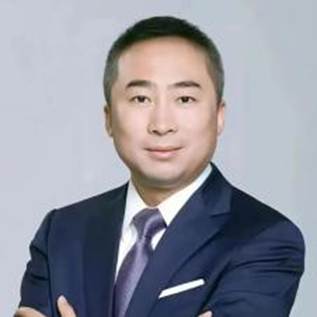
Professor Kan Gong
Department of Urology
Peking University First Hospital