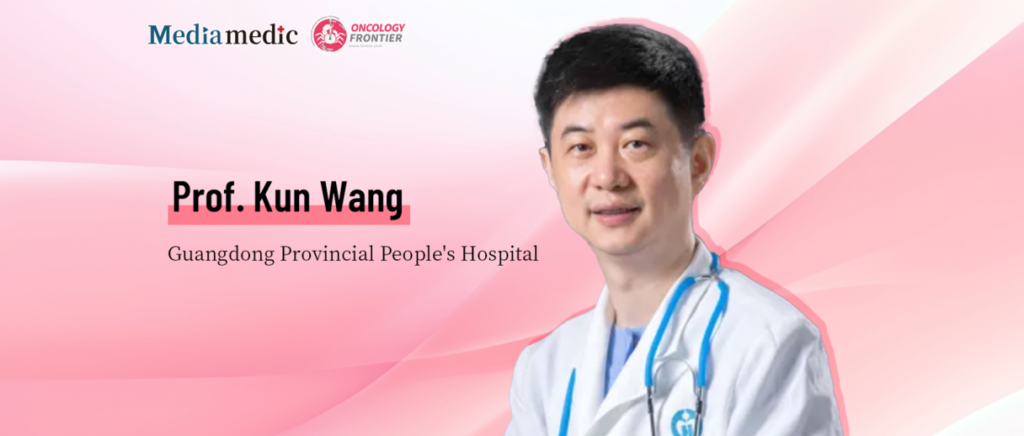
The 2026 Lingnan Breast Cancer Forum was recently held in Guangzhou, bringing together breast cancer specialists from across China to discuss the latest advances in prevention, diagnosis, treatment, and survivorship. Centered on the concept of whole-course breast cancer management, the meeting integrated the year's most important international breakthroughs with a comprehensive scientific program covering early detection, precision diagnosis, individualized treatment, innovative therapies, and postoperative rehabilitation.During the forum, Oncology Frontier interviewed Professor Kun Wang, Conference Chair and Director of the Department of Breast Oncology at Guangdong Provincial People’s Hospital, to discuss the meeting’s scientific highlights, the integration of clinical care and public health prevention, and the guiding principles behind the development of his department.
Oncology Frontier: Could you introduce the key highlights and academic focus of this year’s forum? In particular, how was the concept of integrating prevention and clinical care (“医防融合”) reflected in the scientific program?
Professor Kun Wang:
The scientific program for the 2026 Lingnan Breast Cancer Forum was designed around the concept of comprehensive breast cancer management across the entire patient journey—from prevention, screening, diagnosis, and treatment to rehabilitation. At the same time, we incorporated many of the most significant international advances presented this year in breast cancer research.
Guided by this framework, we organized a series of high-level scientific lectures covering every major aspect of breast cancer care, including early detection, precision diagnosis, personalized treatment strategies, novel therapeutics, and postoperative rehabilitation. Our goal was to provide participants with a comprehensive educational experience spanning basic science, clinical practice, technological innovation, and patient-centered care.
To promote a model that truly integrates prevention with treatment, this year’s meeting focused on three major areas.
First, recognizing the unique characteristics of Asian populations—particularly the higher prevalence of dense breast tissue and the younger age at diagnosis among Chinese women—we invited leading experts in epidemiology and breast imaging to discuss how best to combine ultrasound, mammography, and artificial intelligence-assisted screening. The objective is to develop screening strategies better suited to Chinese women and to translate the concept of prevention into practical clinical implementation.
Second, we devoted considerable attention to the landmark studies presented at the 2026 ASCO Annual Meeting. Experts provided in-depth reviews of emerging therapies, including CDK4/6 inhibitors, antibody-drug conjugates (ADCs), and immunotherapy-based combination regimens. We also organized a “Clinical Controversies” session to discuss how these cutting-edge data can be translated into treatment strategies that are both effective and accessible for Chinese patients, creating a more seamless connection between prevention and treatment.
Third, for the first time, we incorporated nurse-led individualized survivorship and rehabilitation management into the scientific program. These sessions addressed psychological support, lymphedema prevention, adherence to endocrine therapy, and lifestyle interventions. Through multidisciplinary collaboration and digital follow-up platforms, we hope to provide comprehensive, long-term monitoring of patients’ quality of life after treatment, extending care beyond the hospital and supporting patients throughout the entire continuum of survivorship.
Oncology Frontier: Breast cancer care is evolving from simply treating disease to providing comprehensive long-term management. As a breast cancer specialist, how do you believe clinical medicine and public health prevention should work together more effectively within this new paradigm?
Professor Kun Wang:
If we look at the history of breast cancer treatment, one fact is very clear: the more advanced the disease at diagnosis, the poorer the patient’s prognosis.
By contrast, patients diagnosed with ductal carcinoma in situ (DCIS) can achieve cure in the vast majority of cases. This highlights why prevention and early detection are so critically important.
Accordingly, many presentations at this meeting focused on these topics. We discussed how radiomics and multi-omics technologies can improve early detection of breast cancer, as well as how public education and healthy lifestyle interventions can encourage scientifically sound screening and prevention practices.
I believe these discussions represent one of the major highlights of this year’s forum.
Oncology Frontier: During the meeting, you also presented a lecture on the development of the Department of Breast Oncology at Guangdong Provincial People’s Hospital. As the department chair, what principles have guided your approach to building the program, and how are those principles reflected in both day-to-day operations and long-term planning?
Professor Kun Wang:
As Director of the Department of Breast Oncology at Guangdong Provincial People’s Hospital, I have focused on several fundamental priorities.
First, we strive to build a high-quality academic platform that enables every young physician to grow professionally.
Second, we are committed to creating an environment that supports talent development by providing opportunities in clinical practice, scientific research, and medical education.
Ultimately, however, every technological advance must serve a single purpose: benefiting our patients. Our multidisciplinary model of care is firmly centered on the patient, ensuring that every innovation contributes to improved outcomes across the entire continuum of care—from prevention and screening through diagnosis, treatment, rehabilitation, and long-term survivorship.
The philosophy that has guided our department from the beginning can be summarized in a simple statement:
Patient interests come first. Professional excellence is our foundation. Everything we do is dedicated to serving our patients.
This remains the core mission of the Department of Breast Oncology at Guangdong Provincial People’s Hospital.
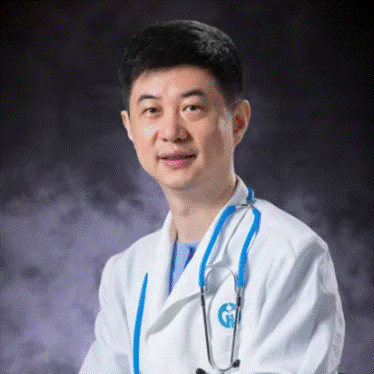
Professor Kun Wang
Department of Breast Oncology
Guangdong Provincial People’s Hospital