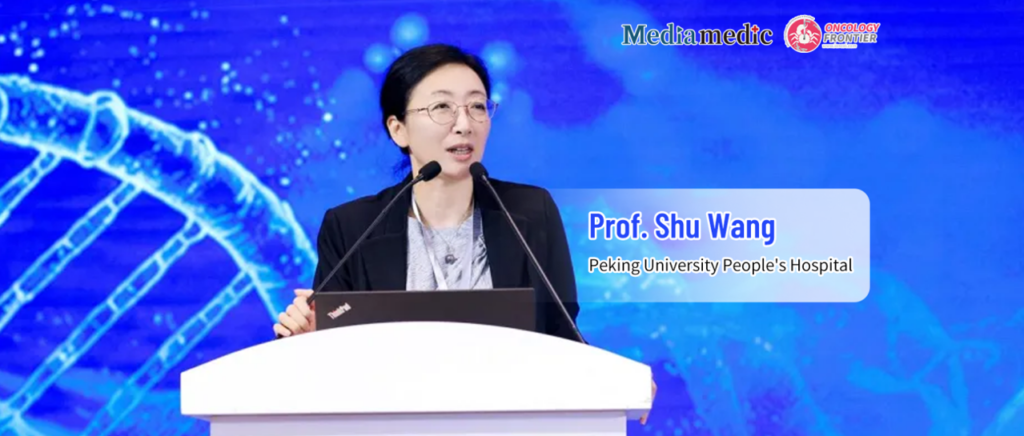
In June, Beijing became a vibrant hub for academic exchange as the 2026 Beijing Breast Cancer Forum and Beijing Breast Reconstruction Forum—hosted by the Beijing Breast Disease Prevention and Treatment Society and organized by the Breast Center of Peking University People's Hospital—was held as a week-long scientific meeting from June 23 to 28, 2026.During the conference, Oncology Frontier interviewed Professor Shu Wang, Conference Chair and Director at Peking University People’s Hospital, who shared the key highlights of this year’s forum, including its focus on specialist training, multidisciplinary collaboration, and international exchange. She also discussed the current status of breast reconstruction surgery in China, the development of oncoplastic breast surgery teams, and her vision for the future of high-quality breast surgical care.
A Week of Academic Exchange: From Hands-On Workshops to International Collaboration
Oncology Frontier:
As Chair of the 2026 Beijing Breast Cancer Forum and Beijing Breast Reconstruction Forum, could you introduce the key themes and highlights of this year’s meeting?
Professor Shu Wang:
This year’s forum was organized as a comprehensive academic week featuring a series of educational activities that systematically covered multiple aspects of breast cancer diagnosis and treatment. Feedback from participants indicated that the program provided substantial clinical value.
From June 23 to 26, we hosted dedicated training courses on breast reconstruction and minimally invasive breast surgery, aiming to provide surgeons with standardized and systematic professional training.
On the opening day, June 23, three progressive hands-on workshops were organized, covering the entire spectrum of breast surgical technologies—from the fundamentals of breast imaging, to ultrasound-guided reconstructive interventions, and finally robot-assisted minimally invasive surgery. Beginning with foundational imaging interpretation in the morning, followed by practical ultrasound-guided procedures and advanced robotic simulation training in the afternoon, the curriculum was designed to meet the needs of both junior physicians seeking standardized training and experienced surgeons pursuing cutting-edge techniques.
Throughout the following days, additional courses focused on the latest advances in breast reconstruction, endoscopic surgery, robotic surgery, and oncoplastic reconstruction. Experts from mainland China, Taiwan, and Malaysia participated in a multidimensional educational program that combined live surgical demonstrations, didactic lectures, expert panel discussions, and simulation-based workshops, providing breast surgeons across China with highly practical, clinically applicable training.
Because multidisciplinary team (MDT) management is fundamental to breast cancer care, we dedicated a separate MDT session on June 26, during which complex clinical cases were reviewed through case presentations and expert discussions. Participants explored individualized treatment strategies for particularly challenging patients.
The main scientific sessions, held on June 27 and 28, focused on the latest advances in breast cancer treatment, including novel anticancer drug development, updates to the CSCO Guidelines, precision oncology, breast-conserving therapy, and advances in surgical management. Multiple interactive discussion sessions provided attendees with a comprehensive scientific program spanning basic research, clinical practice, surgery, and multidisciplinary care.
Overall, this year’s forum successfully combined detailed technical training with forward-looking discussions on future directions in breast cancer treatment. We invited internationally recognized experts to deliver keynote lectures while also emphasizing practical case-based discussions directly relevant to everyday clinical practice.
Another highlight was our international roundtable discussion involving both Chinese and overseas experts. These exchanges revealed important differences between China and Western countries in areas such as breast surgeon training systems, patient epidemiology, and surgical techniques. Such international dialogue provides valuable opportunities for mutual learning and shared progress.
Looking ahead, we hope to translate these exchanges into practical educational initiatives by developing a systematic training pathway in oncoplastic breast surgery that reflects the realities of Chinese clinical practice and the professional development needs of Chinese surgeons, thereby providing sustained momentum for the specialty.
In systemic therapy for breast cancer, Chinese investigators have progressed from following international developments to standing alongside—and increasingly leading—the field. I believe breast surgery will follow a similar trajectory. China has a large population of breast cancer patients and an exceptionally talented surgical workforce. Our surgeons possess tremendous creativity, and I am confident they will continue to make significant contributions in both surgical innovation and evidence generation.
Through collaborative platforms such as this forum, I believe we will continue to produce important scientific advances and develop more “China solutions” that ultimately benefit patients.
Integrating Breast Surgery and Reconstructive Surgery: From Multidisciplinary Collaboration to Internal Team Integration
Oncology Frontier:
This year’s forum placed breast surgery at its core, with dedicated sessions on breast reconstruction, endoscopic surgery, and robotic surgery. You also presented a lecture entitled “Building and Sustaining Oncoplastic Breast Surgery Teams.” Based on the current state of breast surgery in China, could you discuss the implementation of breast reconstruction across different hospital settings? In addition, could you share your experience in building an oncoplastic breast surgery team and your future plans?
Professor Shu Wang:
In breast cancer management, we have always emphasized multidisciplinary collaboration. Traditionally, however, this has mainly referred to cooperation among radiologists, pathologists, surgeons, and medical oncologists. In reality, even within surgery itself, we must integrate multiple skill sets.
An excellent breast surgeon should also possess strong expertise in breast imaging to accurately determine which patients are suitable for different surgical approaches, while simultaneously evaluating whether reconstructive procedures should be incorporated into treatment planning. Therefore, even within breast surgery, integrating multidisciplinary expertise is essential.
Looking back over more than a century of breast surgery, the prevailing trend has consistently been treatment de-escalation. At the same time, patients increasingly prioritize quality of life, hoping to preserve their appearance, minimize surgical trauma, and return to work and family life as quickly as possible.
These expectations require us to evaluate patients from a broader perspective. For individuals who were traditionally considered unsuitable for breast-conserving surgery, we should consider whether more sophisticated imaging assessment, tumor downstaging through systemic therapy, oncoplastic techniques using local tissue flaps, or even total mastectomy combined with implant-based or autologous vascularized flap reconstruction can simultaneously achieve oncologic safety and satisfactory cosmetic outcomes. This represents an important direction for continued collaboration between breast surgeons and reconstructive surgeons.
Through discussions with international colleagues, we have found that both China and other countries face similar challenges regarding cooperation between breast surgery and plastic surgery.
Currently, two primary models have emerged. The first involves close collaboration with plastic surgeons during surgery, allowing immediate breast reconstruction following tumor resection. The second involves training breast surgeons themselves to acquire reconstructive surgical expertise. Both approaches have advantages and can achieve excellent patient outcomes when supported by an effective collaborative framework.
Based on our center’s experience, however, developing reconstructive expertise within the breast surgery department offers greater overall efficiency. This allows surgical planning—including incision design and the extent of resection—to be coordinated from the outset, enabling surgeons to select reconstruction techniques that minimize surgical trauma while maximizing functional and cosmetic benefits. The entire surgical process becomes more streamlined and efficient.
Accordingly, the purpose of my lecture was to introduce the concept of integrating oncologic safety with reconstructive and aesthetic assessment into routine breast surgical practice. We hope to help breast surgeons maintain rigorous oncologic standards while simultaneously optimizing cosmetic and functional outcomes, ultimately delivering higher-quality care for patients.
Looking forward, I believe we will continue to develop reconstructive strategies that are better suited to Chinese patients and contribute further to the high-quality development of breast surgery in China.
Professor
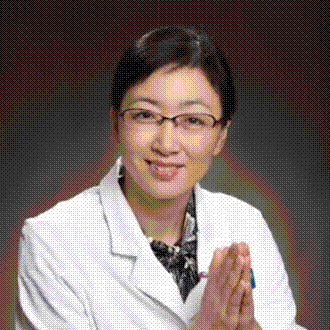
Shu Wang
Peking University People’s Hospital