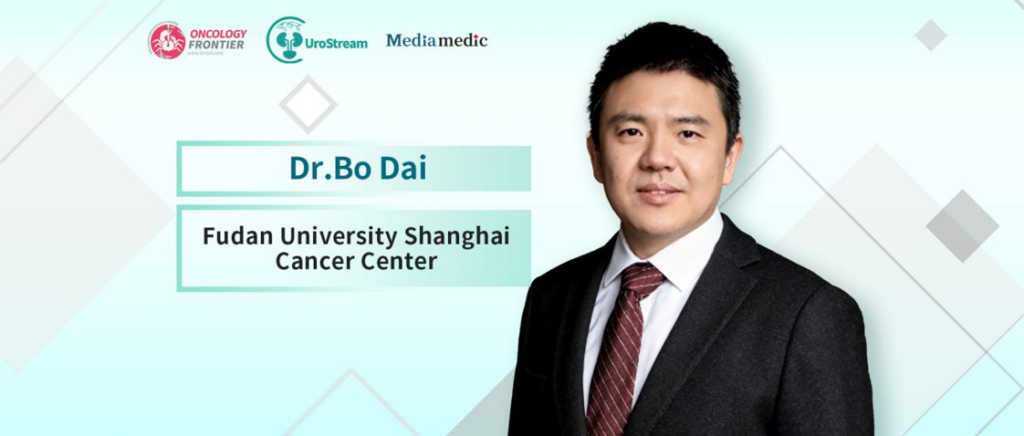
The 2026 Pujiang Prostate Cancer Conference was successfully held in Shanghai under the theme "Standardization, Precision, Chinese Innovation, and Global Collaboration," with the goal of advancing standardized prostate cancer care and promoting innovation in key surgical techniques in China.Following the meeting, UroStream invited Prof. Bo Dai from Fudan University Shanghai Cancer Center to discuss the advantages of the Hood technique for robot-assisted radical prostatectomy (RARP), appropriate patient selection, and the learning curve associated with this advanced procedure, with the aim of helping more patients achieve optimal functional and oncologic outcomes.
UroStream:
The hallmark of the Hood technique is the complete preservation of pelvic floor structures involved in urinary continence. Based on current evidence and your clinical experience, how does it improve early urinary continence recovery compared with conventional robot-assisted radical prostatectomy?
Prof. Bo Dai:
The Hood technique is an advanced surgical approach that successfully preserves the pelvic floor structures. Its value lies not only in achieving radical oncologic resection but also in preserving the critical tissues located anterior and lateral to the prostate. These tissues contain both the neurovascular structures essential for erectile function and the small vascular networks that support the pelvic floor musculature.
By preserving these anatomical structures, patients have the potential to achieve more rapid and higher-quality recovery of both urinary continence and sexual function.
It is important to emphasize that the Hood technique is not suitable for every patient. Careful patient selection is essential. In general, the procedure is best suited for patients with early-stage prostate cancer confined within the prostatic capsule. Once the tumor extends beyond the capsule, the extent of local invasion may make this technique inappropriate.
Therefore, urologists must not only master the surgical technique itself but also carefully evaluate each patient’s disease characteristics and strictly select appropriate candidates to maximize postoperative preservation of urinary continence and sexual function.
Our own experience, together with previously published studies, provides strong supporting evidence. Following a successful Hood procedure, most patients regain urinary continence immediately after catheter removal. Some younger patients are able to achieve complete continence without requiring urinary pads.
Recovery of sexual function generally takes longer because its physiological basis is more complex. In addition to preserving the neurovascular bundles, successful recovery also depends on restoration of local blood supply. Patients with favorable recovery may regain normal erectile function within two to three months after surgery.
Overall, I hope patients will approach prostate cancer with confidence and optimism. When detected and diagnosed early, prostate cancer is not only potentially curable, but modern surgical techniques also allow us to preserve physiological function to the greatest extent possible, thereby maintaining patients’ quality of life and helping them regain both health and dignity.
UroStream:
Patient safety always comes first. For high-risk patients, such as those with pT3 disease or anterior prostate tumors, does the Hood technique increase the risk of positive surgical margins?
Prof. Bo Dai:
This is a very important clinical question.
Appropriate patient selection is the key to ensuring both oncologic efficacy and functional preservation with the Hood technique.
Take patients with T3 prostate cancer as an example. If the tumor is located in the anterior (ventral) portion of the prostate, the Hood technique is generally not appropriate. The defining feature of the Hood technique is complete preservation of the anterior periprostatic tissues. Applying this approach in patients with anterior T3 tumors could leave microscopic residual disease, resulting in incomplete tumor resection. This would conflict with the fundamental principle of prostate cancer surgery: oncologic control must always take priority over functional preservation.
In clinical practice, we therefore apply strict selection criteria. The preferred candidates are patients with T2 disease or earlier, whose tumors remain confined within the prostate capsule. The tumor should also be relatively small and should not be located immediately adjacent to the capsule. Even if imaging suggests that the capsule remains intact, discrepancies between imaging findings and final pathology may reveal extracapsular extension after surgery.
To ensure optimal oncologic outcomes, we therefore preferentially select patients whose tumors remain organ-confined and are not closely abutting the capsule.
Does this mean that patients with T3 disease have no opportunity for structure-preserving surgery? Not necessarily.
For these patients, we can adopt modified approaches, such as the modified Hood technique or the Veil of Aphrodite (VIP) technique. Rather than preserving all anterior tissues, these procedures preserve only the lateral structures. Although the amount of preserved tissue is reduced, patients can still achieve favorable recovery of urinary continence and sexual function, albeit over a longer period.
For example, urinary continence typically recovers within two to three months after these modified procedures, whereas patients undergoing the standard Hood technique may regain continence immediately after catheter removal.
Similarly, erectile function after modified procedures generally recovers within three to six months or longer, whereas patients undergoing the standard Hood procedure often recover within two to three months.
Overall, we now have multiple surgical options that enable us to cure prostate cancer while preserving patient function as much as possible, thereby achieving better clinical outcomes and improved quality of life.
UroStream:
The Hood technique has a significant learning curve. What practical training recommendations would you offer to young urologists who wish to master this procedure?
Prof. Bo Dai:
This is another highly relevant clinical question.
The Hood technique—robot-assisted radical prostatectomy with complete preservation of the pelvic floor—is undoubtedly an excellent and innovative procedure. However, it is technically demanding and requires both an in-depth understanding of pelvic anatomy and substantial surgical experience.
For surgeons who are just beginning to perform robot-assisted radical prostatectomy, I do not recommend using the Hood technique as their starting point.
A solid foundation is essential before attempting advanced procedures. Young surgeons should first focus on mastering standard radical prostatectomy, with complete tumor removal as the primary objective. Performing conventional procedures, including in patients with relatively advanced disease, allows surgeons to build technical proficiency and operative experience.
Once they have become highly skilled in conventional radical prostatectomy, they can gradually progress to modified procedures, such as the VIP (Veil of Aphrodite) technique, which preserves part of the pelvic floor and surrounding periprostatic structures. Only after mastering these intermediate techniques should they move on to the complete pelvic floor-preserving Hood procedure.
This stepwise progression is the proper pathway for acquiring advanced surgical skills.
Attempting to perform the Hood technique simply after watching instructional videos, without first developing the necessary surgical foundation, is not only impractical but also potentially dangerous. It may result in major intraoperative bleeding, other serious complications, or even necessitate conversion to open surgery, causing irreversible harm to the patient.
For these reasons, I strongly recommend that surgeons adopt a progressive learning strategy, advancing from simpler to more complex procedures. By building expertise step by step, they can safely master this advanced technique and ultimately provide patients with the highest standard of surgical care.

Prof. Bo Dai