At ASCO 2026, investigators presented the pre-specified menopausal subgroup analysis from the lidERA BC trial. Compared with standard endocrine therapy, the oral selective estrogen receptor degrader (SERD) giredestrant reduced the risk of distant recurrence by 42% in premenopausal women with HR+/HER2− early breast cancer (HR=0.58), while also reducing the risk by 24% in postmenopausal patients (HR=0.76). These findings offer renewed optimism for adjuvant endocrine therapy, an area that has seen few major advances over the past decade.Because breast cancer patients in China are generally diagnosed at a younger age and a larger proportion are premenopausal, ovarian function suppression (OFS) plus endocrine therapy has become the current standard of care. Will oral SERDs combined with OFS challenge the established OFS plus aromatase inhibitor (AI) or tamoxifen (TAM) strategy? What lessons does lidERA BC offer regarding treatment adherence, quality of life, and clinical trial design?
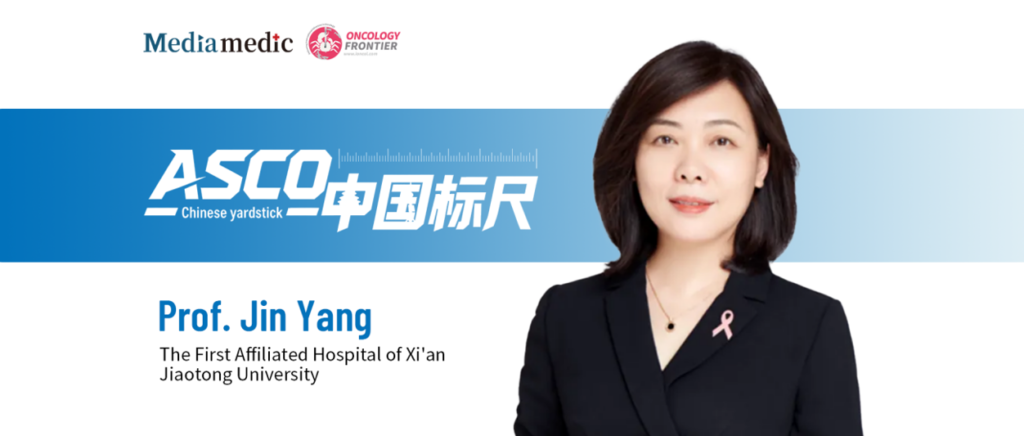
To discuss the implications for Chinese clinical practice, Oncology Frontier invited Jin Yang from the First Affiliated Hospital of Xi’an Jiaotong University for the “ASCO China Perspective” series.
Oncology Frontier: Could the lidERA BC results change the treatment landscape for premenopausal patients in China?
Jin Yang:
The menopausal subgroup analysis was pre-specified, and the ASCO 2026 results are certainly exciting. Giredestrant reduced the risk of distant recurrence by 42% in premenopausal patients, representing an important milestone for oral SERDs in the adjuvant setting.
However, I do not believe it will immediately replace the current standard of OFS plus AI or tamoxifen in China. Instead, it is more likely to redefine treatment for carefully selected high-risk premenopausal patients through a stepwise, risk-adapted approach.
There are several reasons for this.
Current Chinese guidelines already provide clear recommendations according to recurrence risk. High-risk patients receive OFS plus AI, intermediate-risk patients generally receive OFS plus tamoxifen, while tamoxifen alone remains appropriate for lower-risk disease. These regimens are fully reimbursed, widely available, and supported by long-term real-world evidence.
In addition, although lidERA BC is a global Phase III randomized trial, Chinese-specific subgroup analyses and long-term follow-up data are still lacking. Guideline changes in China typically require mature Phase III evidence, extended survival outcomes, and reimbursement approval before widespread adoption.
Cost is another practical consideration. Giredestrant has not yet been approved in China, and its price is expected to exceed that of current endocrine therapies, limiting broad implementation in the near term.
Nevertheless, as the first oral SERD to demonstrate positive results in adjuvant HR+/HER2− early breast cancer—particularly with a 42% reduction in distant recurrence risk among premenopausal patients—giredestrant has the potential to become an important option for high-risk patients.
Several patient populations may benefit most in the future, including women who experience significant toxicity with OFS plus AI, those with ESR1 mutations or other features associated with early relapse, and very young patients with multiple positive lymph nodes or high Ki-67 expression. For these groups, OFS plus an oral SERD may eventually replace OFS plus AI as an individualized treatment strategy.
Should future bridging studies confirm these findings in Chinese patients and reimbursement become available, OFS plus giredestrant could become a recommended first-line adjuvant option for high-risk premenopausal patients.
Oncology Frontier: Could oral SERDs improve long-term treatment adherence and quality of life for Chinese patients?
Jin Yang:
Long-term adherence remains a major challenge in China. Surveys suggest that only around 60% of patients successfully complete the recommended five years of adjuvant endocrine therapy.
The primary reason is treatment-related toxicity. Aromatase inhibitors frequently cause arthralgia, osteoporosis, dyslipidemia, and menopausal symptoms, while tamoxifen is associated with endometrial thickening, abnormal uterine bleeding, and thromboembolic events. Approximately 30–40% of patients discontinue treatment because of adverse effects, increasing their long-term recurrence risk.
The lidERA BC study demonstrated several potential advantages for giredestrant.
Compared with AI therapy, it substantially reduced musculoskeletal toxicity, addressing one of the leading causes of treatment discontinuation in China. It also avoided persistent lipid abnormalities commonly associated with AI therapy, making it particularly attractive for patients with cardiovascular risk factors.
Unlike tamoxifen, giredestrant lacks estrogen agonist activity, resulting in fewer gynecologic adverse effects such as endometrial stimulation and abnormal vaginal bleeding. As an oral therapy, it is also well suited for long-term home-based management.
Importantly, fewer patients discontinued giredestrant because of adverse events than those receiving AI therapy, suggesting improved treatment adherence. Menopausal symptoms such as hot flashes and night sweats also appeared better controlled, potentially improving quality of life for women receiving OFS.
That said, affordability will remain a critical issue. Until reimbursement becomes available, treatment costs may still limit access despite these clinical advantages.
Oncology Frontier: What lessons does lidERA BC provide for future oral SERD development in China?
Jin Yang:
The enthusiastic response to the lidERA BC presentation reflects how urgently the field has been waiting for advances in adjuvant endocrine therapy.
Several aspects of the study deserve attention.
The trial prospectively stratified patients by menopausal status, avoiding the limitations of post hoc subgroup analyses. Given the relatively high proportion of premenopausal breast cancer patients in China, future domestic studies could specifically enrich for high-risk premenopausal populations to generate locally relevant evidence more rapidly.
The investigators also selected an appropriate active control, comparing giredestrant against current standard endocrine therapy rather than placebo.
Another important strength was the collection of baseline tissue and circulating tumor DNA, enabling future analyses of biomarkers such as ESR1 mutations, ER expression, Ki-67, and nodal status. This creates opportunities for biomarker-driven precision medicine.
The study also adopted meaningful endpoints. While invasive disease-free survival (iDFS) served as the primary endpoint, distant recurrence-free interval (DRFI) provided a clinically important measure of metastatic risk. Patient-reported outcomes—including joint pain and menopausal symptoms—were incorporated to evaluate quality of life and treatment adherence, while overall survival remains an important long-term endpoint.
Future research in China should also explore new combination strategies. OFS will likely remain the backbone of treatment for premenopausal patients, but combinations of oral SERDs with CDK4/6 inhibitors deserve further investigation. Sequential strategies—such as switching from AI therapy to an oral SERD when ctDNA detects emerging ESR1 mutations or early molecular relapse—may also become valuable approaches.
The study does have limitations. The control arm combined AI and tamoxifen, making it difficult to determine whether giredestrant offers greater benefit over one specific comparator. Biomarker collection was not mandatory across all patients, limiting precision analyses, and evidence remains limited for special populations such as very young patients or those with impaired liver or kidney function.
Overall, lidERA BC addresses one of the most pressing unmet needs in HR+/HER2− early breast cancer: reducing recurrence risk while maintaining treatment tolerability and quality of life. The encouraging efficacy, improved adherence, and favorable safety profile observed with giredestrant suggest that oral SERDs may gradually reshape future adjuvant endocrine therapy, particularly for high-risk premenopausal patients.
Professor

Jin Yang
First Affiliated Hospital of Xi’an Jiaotong University