
At the 2026 American Society of Clinical Oncology (ASCO) Annual Meeting, Zhenzhen Liu and colleagues from Henan Cancer Hospital presented four studies from the HELEN clinical research program (Abstracts #1009, #509, #1054, and #609), spanning key breast cancer subtypes including triple-negative breast cancer (TNBC), HER2-positive disease, and HR+/HER2+ breast cancer.The studies focused on treatment de-escalation while maintaining efficacy and advancing precision neoadjuvant therapy. Among them, HELEN-Trio 011 evaluated an anthracycline-free immunotherapy regimen for TNBC, while HELEN HER-013 demonstrated the non-inferiority of a chemotherapy de-escalation strategy in HER2-positive disease.
Oncology Frontier spoke with Zhenzhen Liu at the ASCO meeting to discuss the rationale, study designs, key findings, and future directions of the HELEN program.
Oncology Frontier: Your team presented four breast cancer studies at this year’s ASCO meeting. Could you introduce these studies and their major findings?
Zhenzhen Liu:
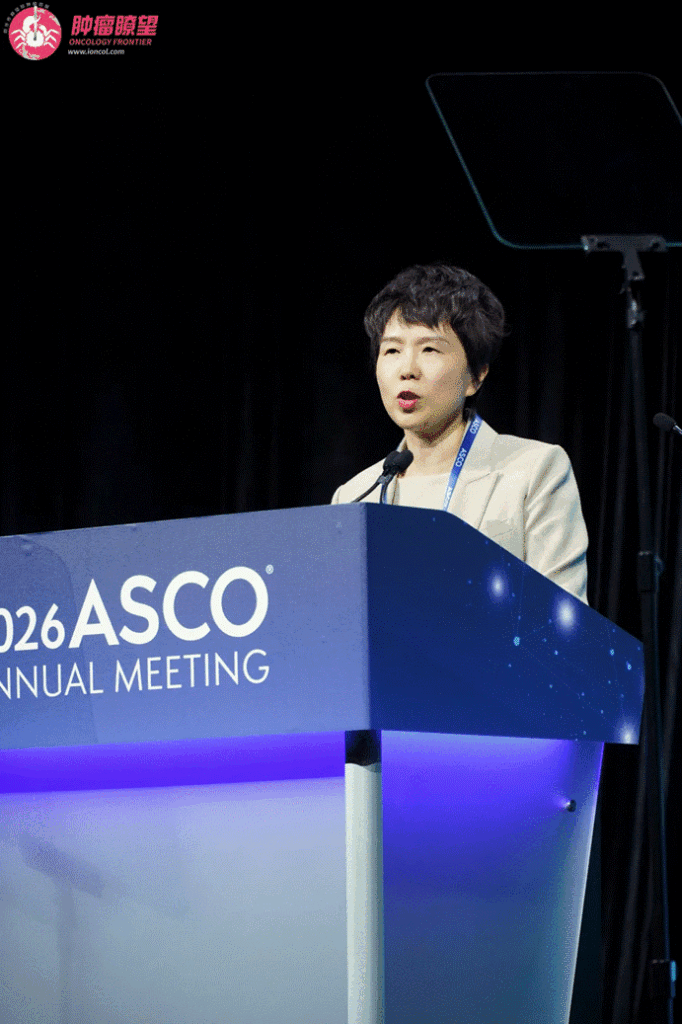
This year, our team presented four studies across different breast cancer subtypes, including one Clinical Science Symposium oral presentation (Abstract #1009), one Rapid Oral Abstract (Abstract #509), and two poster presentations (Abstracts #1054 and #609).
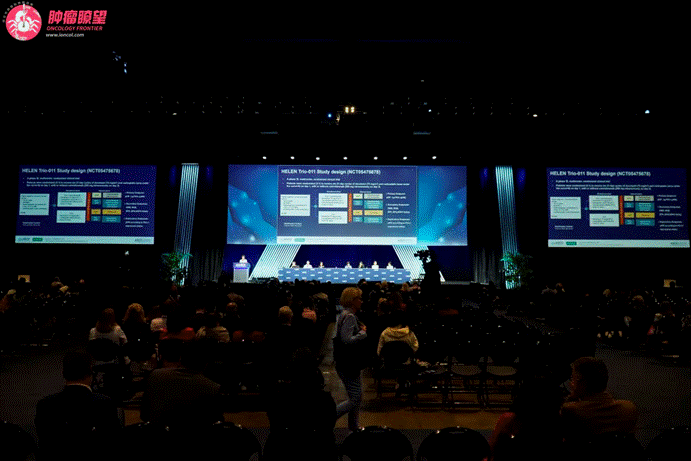
The Clinical Science Symposium presentation featured HELEN-Trio 011, a multicenter, randomized, open-label Phase III trial (NCT05475678) enrolling previously untreated women aged 18–70 years with Stage II–III TNBC.
Patients were randomized 2:1 to receive six cycles of docetaxel plus carboplatin, with or without camrelizumab. The primary endpoint was pathological complete response (pCR).
Between December 2022 and June 2025, 369 patients from 14 Chinese hospitals were randomized, and 352 patients were included in the modified intention-to-treat population.
The addition of camrelizumab significantly improved pCR, achieving 57.5% versus 45.4% with chemotherapy alone, representing an absolute improvement of 12.2% (95% CI, 1.4–22.9; one-sided P=0.014).
The benefit was particularly pronounced in patients with PD-L1 CPS ≥1, where pCR increased to 69.8% versus 51.9%. In contrast, the PD-L1-negative subgroup showed a numerical but not statistically significant improvement.
Although follow-up is currently limited to approximately 22 months, an encouraging trend toward improved 2-year event-free survival has already emerged. Longer follow-up will be needed to determine the survival benefit.
Our Rapid Oral presentation highlighted HELEN HER-013, a multicenter, randomized, open-label Phase III non-inferiority trial conducted across 15 centers in China.
The study compared an anthracycline-sparing regimen consisting of nab-paclitaxel, trastuzumab, and pyrotinib (nab-PHPy) against the standard TCHP regimen in patients with previously untreated Stage II–III HER2-positive breast cancer.
Among 589 patients included in the modified intention-to-treat analysis, pCR was achieved in 63.1% of patients receiving nab-PHPy compared with 59.2% in the TCHP group, meeting the predefined criterion for non-inferiority.
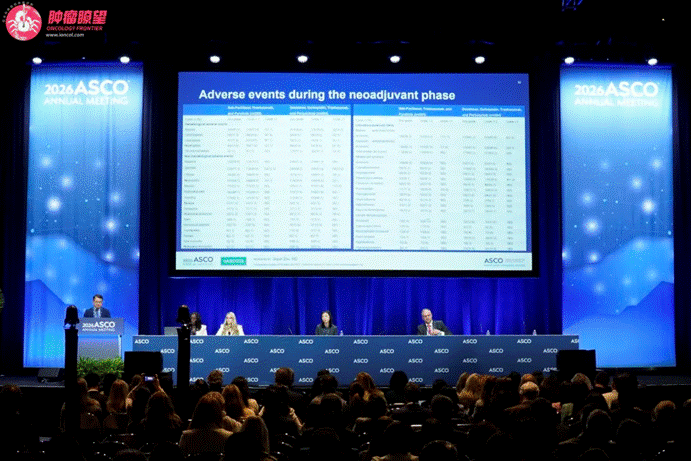
The two regimens demonstrated different toxicity profiles. Nab-PHPy substantially reduced hematologic toxicity because nab-paclitaxel was the only chemotherapy agent used, meaning many patients did not require prophylactic granulocyte colony-stimulating factor. Conversely, diarrhea occurred more frequently with nab-PHPy but was concentrated within the first two treatment cycles and was generally manageable with dietary guidance and supportive medications.
For patients who are particularly vulnerable to hematologic toxicity, nab-PHPy may represent an attractive treatment alternative.
The first poster, HELEN HER2-017 (Abstract #1054), evaluated a response-guided neoadjuvant strategy for patients with HR+/HER2+ breast cancer.
Patients initially received dalpiciclib, letrozole, trastuzumab, and pertuzumab. MRI assessment was performed after two treatment cycles. Patients achieving partial or complete responses continued the same regimen, whereas non-responders switched to TCHP chemotherapy.
At this interim analysis, 20 patients had been enrolled. Fifteen patients (75%) achieved MRI responses after two cycles and continued endocrine-targeted therapy. Overall, 8 patients achieved pCR, corresponding to a 40% pCR rate, while treatment remained well tolerated without treatment discontinuations or Grade ≥3 cardiac toxicity.
These encouraging results met the predefined efficacy threshold and support progression to the second stage of the study.
The second poster, HELEN-B 018 (Abstract #609), investigated serplulimab combined with nab-paclitaxel and epirubicin in patients with high-risk early-stage HR+/HER2-negative breast cancer.
Among 101 enrolled patients, the overall pCR rate reached 22.8%, increasing to 44.4% in patients with PD-L1-positive tumors.
Grade ≥3 treatment-related adverse events occurred in 29.7% of patients, with elevated liver enzymes and diarrhea being the most common severe toxicities. No treatment-related deaths were observed.
These findings support further evaluation of this regimen in the ongoing randomized HELEN-B 018 PLUS trial.
Oncology Frontier: HELEN-Trio 011 evaluated an anthracycline-free neoadjuvant regimen combining camrelizumab, docetaxel, and carboplatin. What was the rationale behind eliminating anthracyclines, and how might this influence future treatment strategies for early-stage TNBC?
Zhenzhen Liu:
Neoadjuvant treatment for early-stage TNBC has now entered the immunotherapy era. Based on studies such as KEYNOTE-522, pembrolizumab combined with taxane-, platinum-, and anthracycline-based chemotherapy has become the standard approach.
However, combining four chemotherapy agents with immunotherapy produces considerable hematologic toxicity, making treatment management challenging in clinical practice.
Similarly, the Phase III Camrelief study demonstrated that camrelizumab significantly improved pCR when added to sequential neoadjuvant chemotherapy, but it also employed a four-drug chemotherapy backbone.
At the same time, before immunotherapy became standard, platinum-plus-taxane regimens had already shown relatively high pCR rates. This prompted us to investigate whether camrelizumab combined with only docetaxel and carboplatin could provide comparable efficacy with lower toxicity.
Another distinctive feature of HELEN-Trio 011 was the timing of immunotherapy administration. Camrelizumab was given three days after chemotherapy, based on preliminary evidence suggesting chemotherapy may create an immunologically favorable window that enhances antitumor immune activation. Although this concept requires further validation, we considered it a worthwhile strategy to explore.
Patients who did not achieve pCR were subsequently recommended to receive standard adjuvant capecitabine.
Oncology Frontier: Beyond these studies, what are the next directions for the HELEN research program?
Zhenzhen Liu:
Breast cancer treatment is becoming increasingly personalized, and future treatment strategies must be driven by biomarkers.
Our ongoing research is therefore focused on precision medicine.
As breast cancer treatment evolves from conventional chemotherapy to immunotherapy and now into the era of antibody-drug conjugates (ADCs), we are actively exploring ADC-based neoadjuvant strategies in HER2-positive disease, including studies of SHR-A1811 and trastuzumab deruxtecan (T-DXd).
For HR-positive breast cancer, we are also developing studies involving immunotherapy and ADCs.
In TNBC, one of our major goals is to determine whether anthracyclines can be safely omitted. We have therefore designed a randomized trial comparing the current four-drug standard regimen with a simplified two-drug approach to evaluate both pathological complete response and long-term survival outcomes.
We look forward to seeing how these studies contribute to the continued evolution of precision treatment for breast cancer.
Expert Profile

Zhenzhen Liu, Henan Cancer Hospital