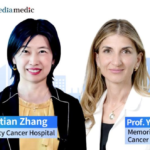
The 2026 European Hematology Association (EHA) Annual Meeting was grandly held in Madrid, Spain. As one of the most influential academic events in the global hematology field, the application of allo-HSCT in myeloid neoplasms remains a focus of academic debate and innovation. This specialized session, chaired by Professor Anna Sureda (Catalan Institute of Oncology, Barcelona, Spain), focused on post-transplant molecular monitoring, refinement of prognostic strategies, and algorithm optimization for refractory cases in acute myeloid leukemia (AML) and myelodysplastic syndromes (MDS). Research teams from China, Switzerland, Sweden, Spain, and other countries shared five milestone academic reports, providing new evidence-based medical grounds for clinical precision transplantation. Part 1 Dynamic Evolution of Post-Transplant DTA Mutations and Their Relationship with Molecular Relapse
Speaker: Dr. Widmer (University Hospital Basel, Switzerland)Corinne Widmer
In the non-transplant field, mutations in the DNMT3A, TET2, and ASXL1 (DTA) genes are usually regarded as markers of clonal hematopoiesis of indeterminate potential (CHIP). However, in the context of allo-HSCT, does the persistence of these mutations predict disease relapse or merely represent benign residue? Dr. Widmer shared a retrospective real-world study.
Study Design and Data GranularityThe study included 823 adult patients who received transplants at the center between 2018 and 2024, ultimately screening 232 myeloid neoplasm patients carrying DTA mutations. The study monitored mutational dynamics before and after transplantation (at months 3, 6, 12, and 24) using ultra-deep next-generation sequencing (NGS).
Core Findings:
- Ubiquity and Low-level Presence: Approximately 80% of DTA-positive patients could detect mutational residue within 3 months after transplantation, but the variant allele frequency (VAF) was usually extremely low (median <1%).
- Correlation between DTA and non-DTA MRD: 70% of relapsed patients simultaneously showed DTA positivity and non-DTA measurable residual disease (MRD) positivity.
- Differences in Prognostic Value: Isolated DTA persistence does not directly lead to a high risk of relapse. Data showed that in the AML subgroup, the survival prognosis of DTA-positive patients after transplantation was significantly worse than that of negative patients, but this effect was primarily driven by the co-existing non-DTA MRD.
- Warning Window: The median interval from the detection of DTA positivity to the emergence of non-DTA MRD positivity was approximately 2.6 months.
Expert Commentary:Dr. Widmer pointed out that the re-detection of DTA mutations after transplantation is very common and early. Although it is not equivalent to a traditional leukemia relapse marker in itself, an increase in VAF levels should be regarded as a “DTA Alert.” Clinically, real high-risk relapse populations should be identified through more frequent longitudinal monitoring combined with chimerism and non-DTA MRD status, rather than blindly performing interventions.
Part 2 Validation of ELN 2022 in Secondary AML and Identification of the “Ultra-Adverse” Group
Speaker: Professor Yang Nan (Institute of Hematology & Blood Diseases Hospital, Chinese Academy of Medical Sciences)
Secondary AML (sAML) still faces extremely high relapse challenges after transplantation. Although the 2022 European LeukemiaNet (ELN) stratification system is widely used in newly diagnosed AML, is it equally precise in the sAML population in a transplant setting? Professor Yang Nan’s team conducted a deep validation of this.
Study Logic and Subgroup ConstructionThe study retrospectively analyzed 126 sAML patients who received myeloablative conditioning (MAC) transplantation. According to ELN 2022 standards, most sAML cases were classified into the Adverse Risk group.
Key Data:
- Limited Stratification: The study found that the ELN 2022 standards had limited differentiation (P-value not significant) in distinguishing the 3-year overall survival (OS) and cumulative incidence of relapse (CIR) of the tested population.
- Significance of MDS-Related Cytogenetics (MRCG): Comparison revealed that the prognosis of patients carrying MRCG abnormalities (such as -5/5q-, -7/7q-, chromosome 17 abnormalities) was significantly worse than those only carrying MDS-related gene mutations (MRGM).
- Definition of Ultra-Adverse Group: Professor Yang proposed defining patients carrying chromosome 5, 7, 17 abnormalities, complex karyotype, MECOM rearrangement, or TP53 mutation as the “Ultra-Adverse Group.”
Prognostic Comparison:
- Ultra-Adverse Group: OS and relapse-free survival (RFS) were significantly reduced, while CIR was significantly increased.
- Standard Adverse Risk Group: Showed relatively better transplant outcomes.
Clinical Significance:Professor Yang emphasized that for sAML patients, simple ELN adverse stratification is insufficient to guide transplant decisions. Identifying the “Ultra-Adverse” subgroup helps clinicians introduce intervention strategies such as maintenance therapy or donor lymphocyte infusion (DLI) earlier after transplantation.
Part 3 Prognostic Role of FLT3-ITD in Core Binding Factor AML Transplantation
Speaker: Dr. Jordi Estève (Hospital Clínic de Barcelona, Spain / EBMT Acute Leukemia Working Party)
Core Binding Factor AML (CBF-AML) is generally considered a favorable prognosis group. However, when accompanied by FLT3-ITD mutations, does the risk of relapse increase, and can transplantation overcome this adverse impact? Dr. Jordi Estève shared large-scale study results on behalf of EBMT.
Study Scale and Conclusion:The study included 725 CBF-AML patients (inv16 or t(16;16)) in first complete remission (CR1), of whom 24% were accompanied by FLT3-ITD.
Core Data Points:
- Survival Benefit: The 2-year OS (76% vs 74%) and leukemia-free survival (LFS) (68% vs 69%) of the two groups were almost identical.
- Relapse and Non-Relapse Mortality: There was no statistical difference in CIR between the FLT3-ITD positive and negative groups (18% vs 17%), and non-relapse mortality (NRM) was also similar.
- Transplant Effect: Compared with previous non-transplant data, allo-HSCT significantly improved the survival of FLT3-ITD positive CBF-AML, bringing it to the same level as the negative group.
Future Outlook:Dr. Jordi Estève believes that although CBF-AML generally performs excellently after transplantation, FLT3-ITD should no longer be regarded as a contraindication or a strong negative factor for this specific subtype of patients. Future research should further explore the incremental value of combining FLT3 inhibitors with transplantation in this subgroup.
Part 4 Swedish Multicenter Study: Real-World Challenges of allo-HSCT in the Treatment of TP53-Aberrant Myeloid Neoplasms
Speaker: Dr. Andreas Björklund (Karolinska Institutet, Sweden / Scandinavian BMT Group)
TP53 mutation is recognized as the most difficult “fortress” to conquer in myeloid neoplasms. Dr. Andreas Björklund presented real-world multicenter data from the Scandinavian region, exploring whether transplantation can truly bring long-term survival to these patients.
Study Details:Included 169 AML or MDS transplant patients carrying TP53 mutations. Median age was 62 years.
Important Conclusions:
- Overall Survival: The 3-year OS for the entire group was 37%. While higher than non-transplant reports, it remains far lower than that of patients in regular stratification.
- Subgroup Differences: The MDS low blasts group had the best prognosis (3-year OS reached 55%), while AML and MDS with increased blasts had poorer prognoses (3-year OS 33%).
- Lethality of Bi-allelic Aberrations: In the MDS subgroup, the prognosis of patients with bi-allelic TP53 aberrations was significantly inferior to those with mono-allelic aberrations.
- Dominance of Relapse: The vast majority (58%) of transplant failures were attributed to disease relapse, mostly occurring within 1 year after transplantation.
Clinical Commentary:Dr. Andreas Björklund pointed out that MAC conditioning failed to significantly improve the relapse rate in this population and instead increased the risk of early death. For TP53-aberrant patients, the post-transplant optimization path should shift toward enhancing the graft-versus-leukemia (GVL) effect and developing novel maintenance treatment methods.
Part 5 R/R AML Transplantation: A New Prognostic Model Based on an Integrated Genetic-Clinical Algorithm
Speaker: Professor Jing Jingyue (Peking University People’s Hospital / Peking University Institute of Hematology)
For relapsed/refractory AML (R/R AML), transplantation is the last chance for a cure, but how to screen patients most likely to benefit? Professor Jing Jingyue, representing the Peking University Institute of Hematology team, proposed an innovative stratification algorithm.
Model Construction Logic:The model integrates genetic characteristics (DTA, TP53, MECOM, complex karyotype) with clinical indicators (pre-transplant status, donor age, recipient age).
Risk Stratification Data:In the derivation cohort consisting of 301 patients, the model divided patients into four groups:
- Low-Risk Group: 2-year OS as high as 95%.
- Intermediate-Low Risk Group: 2-year OS 78%.
- Intermediate-High Risk Group: 2-year OS 55%.
- High-Risk Group: 2-year OS only 17%.
External Validation:The model demonstrated excellent predictive consistency (C-index reached 0.756) in an independent external validation cohort of 297 patients.
Core Contributions:
- Multidimensional Integration: For the first time, donor age (>60 years as a deduction item) was deeply integrated with genetic abnormalities.
- Precise Diversion: This algorithm can effectively identify those patients who can still achieve long-term survival (>90% OS) through transplantation even in an R/R state, while also screening out extremely high-risk populations with very low transplant benefit, providing quantitative support for individualized treatment.
【Conclusion】
This allo-HSCT session at EHA 2026 conveyed a clear signal: transplant treatment for myeloid neoplasms is entering a new era of “refined prognosis.” Whether it is the scrutiny of DTA mutation dynamics or the optimization of genetic algorithms for sAML, TP53 mutations, and R/R AML, the core objective points toward early warning and precise interception of relapse.
Professor Anna Sureda emphasized in the meeting summary that future academic directions will no longer be satisfied with “whether transplantation is possible,” but rather will use high-precision tools such as NGS and model algorithms to clarify how “post-transplant reinforcement measures” should be precisely implemented. These valuable data from China and Europe will surely reconstruct the clinical transplant path for myeloid neoplasms and bring longer survival hope to patients.