At the 2026 American Society of Clinical Oncology (ASCO) Annual Meeting, the treatment landscape for ALK-positive non-small cell lung cancer (NSCLC) continued to evolve, with major updates from landmark studies including CROWN, ALKOVE-1, and TRIDENT-1 reshaping global competition among ALK inhibitors. As one of China’s pioneering homegrown oncology drugs expanding into international markets, how is ensartinib, developed by Betta Pharmaceuticals, positioning itself in an increasingly competitive global ALK arena? At ASCO 2026, Oncology Frontier interviewed Prof. Li Mao, President of Research & Development and Chief Medical Officer of Betta Pharmaceuticals, to discuss ensartinib’s differentiated clinical profile and the company’s global development strategy.
Standing Out in a Crowded Global ALK Landscape
Oncology Frontier: This year’s ASCO meeting featured important updates from several ALK studies, including CROWN, ALKOVE-1, and TRIDENT-1. How do you assess ensartinib’s competitive strengths within today’s global ALK inhibitor landscape?
Prof. Li Mao: This year’s ASCO presented impressive data across multiple targeted therapies. For example, the CROWN study demonstrated excellent intracranial disease control with the third-generation ALK inhibitor lorlatinib. Meanwhile, several fourth-generation ALK inhibitors also reported encouraging early clinical results.
However, one consistent observation is that once patients develop resistance to second- or third-generation ALK inhibitors, subsequent progression-free survival (PFS) remains relatively limited. Therefore, establishing an evidence-based sequencing strategy among the growing number of available ALK inhibitors remains an important clinical challenge.
Ensartinib has been available in China for several years and has earned broad physician and patient confidence because of its favorable efficacy and safety profile. In contrast, the U.S. market has long been dominated by alectinib, which has been established for nearly a decade, while lorlatinib has also become widely adopted. As a later entrant, ensartinib naturally faces significant market competition.
From the standpoint of patient benefit and clinical need, however, ensartinib offers two distinctive advantages that support a differentiated positioning.
The first is its unique safety profile, which provides physicians with greater flexibility when selecting first-line therapy. Every currently available ALK inhibitor carries its own characteristic adverse-event profile. Alectinib and lorlatinib each require monitoring for specific toxicities, whereas ensartinib’s most common treatment-related adverse event is rash, resulting in a different overall toxicity spectrum. During the first two years of first-line treatment, approximately 25%–30% of patients will still experience disease progression. Since tolerability varies considerably between individuals, ensartinib’s differentiated safety profile offers clinicians an additional personalized treatment option.
The second—and perhaps more significant—advantage lies in the adjuvant setting. The ELEVATE study evaluating ensartinib as postoperative adjuvant therapy will soon be published in full. Compared with the ALINA study of alectinib, our trial differed in two important aspects.
First, the enrolled population included patients with stage IB-IIIB disease. Second, approximately 70% of patients received standard postoperative adjuvant chemotherapy before being randomized to ensartinib, closely reflecting routine clinical practice worldwide.
The results demonstrated that patients who had already completed adjuvant chemotherapy still achieved substantial survival benefit with sequential ensartinib treatment. At present, ensartinib is the only ALK inhibitor supported by high-level, Level I evidence demonstrating clinical benefit in patients who receive adjuvant chemotherapy before postoperative targeted therapy. This addresses a significant unmet need in routine clinical practice.
Leveraging ASCO to Advance Betta Pharmaceuticals’ Global Strategy
Oncology Frontier: You have led both ensartinib’s domestic approval and its global clinical development. As President of R&D and CMO, how do you plan to leverage ASCO to accelerate ensartinib’s international commercialization and multinational clinical development?
Prof. Li Mao: During this year’s ASCO meeting, we organized a scientific advisory meeting involving leading lung cancer experts from both China and the United States. These discussions helped us better define ensartinib’s future positioning in the U.S. market while also providing valuable insight into the differences between Chinese and American clinical practice.
One important observation was that, thanks to the widespread adoption of early screening programs in China, an increasing proportion of Chinese patients are diagnosed with lung cancer at an earlier stage. In contrast, the United States continues to face challenges related to healthcare costs and the implementation of nationwide lung cancer screening. As a result, low-dose CT screening has not been adopted as broadly, and the proportion of patients diagnosed with early-stage lung cancer remains lower than in China.
Based on these differences, we have refined our international commercialization strategy.
Following publication of the ELEVATE adjuvant study, we will focus on medical education for thoracic surgeons in the United States, helping them better understand the clinical value of ensartinib in early-stage ALK-positive lung cancer.
At the same time, we hope to promote broader awareness of early diagnosis through continued scientific exchange and educational activities. Earlier detection, combined with appropriate postoperative targeted therapy, has the potential to substantially improve long-term outcomes for many patients.
Since launching our “Five-Year Betta Transformation Plan” last year, we have restructured our research and development platform and focused our pipeline on differentiated, next-generation innovative therapies. Our global development programs continue to expand, and we remain committed to our long-term vision of building a truly multinational pharmaceutical company headquartered in China.
Expert Profile

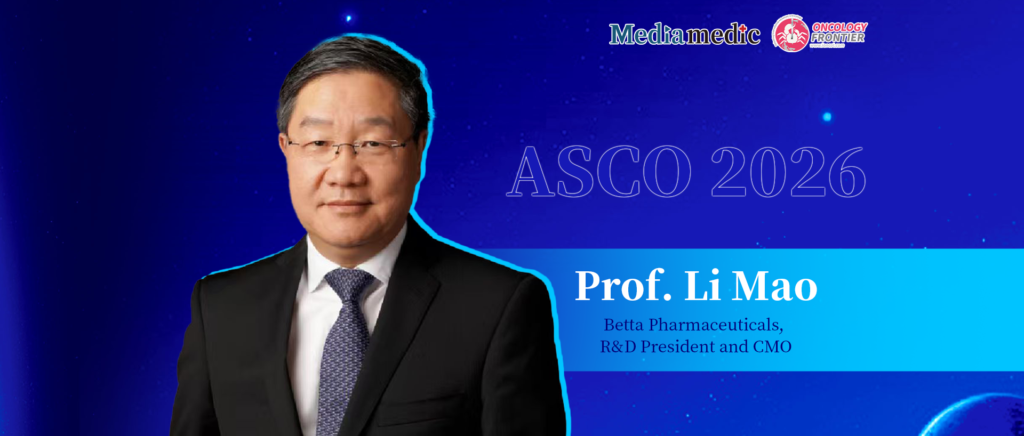
Prof. Li Mao
President of Research & Development and Chief Medical Officer (CMO)
Betta Pharmaceuticals