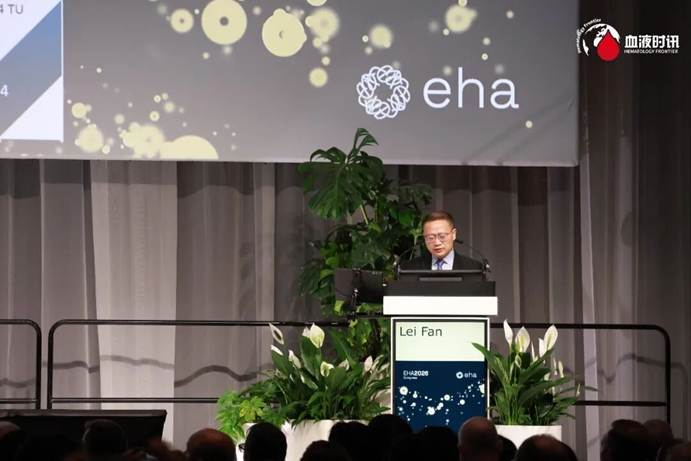
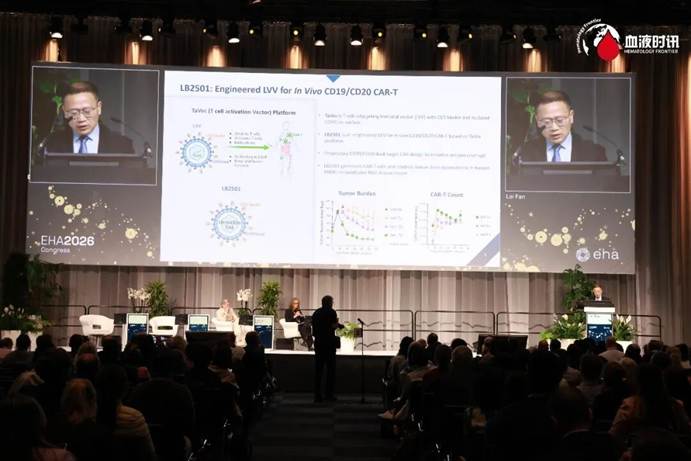
At the 2026 European Hematology Association (EHA) Congress, the field of cellular therapy witnessed a landmark breakthrough. During a prestigious Late-Breaking Oral Session, Professor Lei Fan from Jiangsu Provincial People's Hospital presented the first-ever clinical proof-of-concept data for LB2501, the world's first in vivo CD19/CD20 dual-target CAR-T therapy, in patients with relapsed/refractory B-cell non-Hodgkin lymphoma (R/R B-NHL).The study attracted widespread international attention and highlighted how Chinese innovation is increasingly reshaping the global treatment paradigm for hematologic malignancies. Oncology Frontier – Hematology Frontier invited Professor Fan to discuss the innovative mechanism and clinical value of LB2501, as well as the broader future of in vivo CAR-T technology in hematologic cancers and beyond.
A New Generation of CAR-T Therapy Without Ex Vivo Manufacturing
Oncology Frontier – Hematology Frontier:
First of all, congratulations on your study being selected for the EHA 2026 Late-Breaking Oral Session. As the world’s first in vivo CD19/CD20 dual-target CAR-T therapy to enter clinical development, LB2501 demonstrated encouraging safety and efficacy without requiring ex vivo cell manufacturing or lymphodepletion. What do you consider the most important innovation of this study, and how might it influence the future evolution of CAR-T therapy?
Professor Lei Fan:
The treatment of relapsed/refractory B-cell non-Hodgkin lymphoma (R/R B-NHL) remains a major clinical challenge. Although standard immunochemotherapy regimens are widely used, approximately one-third to one-half of patients eventually experience relapse, refractory disease, progression, or death.
Currently, CD19-directed autologous CAR-T therapy has demonstrated meaningful clinical efficacy in these patients, but it also has several limitations. First, autologous CAR-T therapy requires peripheral blood mononuclear cell collection and chemotherapy-based lymphodepletion prior to infusion, which can lead to significant treatment-related toxicities such as cytokine release syndrome (CRS) and bone marrow suppression. Second, the manufacturing process is lengthy and costly, limiting patient accessibility.
To address these challenges, our team initiated a Phase I clinical study of LB2501.
LB2501 is an in vivo CAR-T therapy fundamentally different from conventional autologous CAR-T approaches. Instead of manufacturing CAR-T cells outside the body, genetically engineered viral particles are administered intravenously and directly transduce immune cells in vivo, generating CAR-T cells within the patient that subsequently target and eliminate tumor cells.
The major advantage of this approach is that it eliminates the need for both peripheral blood cell collection and chemotherapy-based lymphodepletion, thereby substantially reducing treatment-related toxicity.
We believe this innovation has the potential to provide a new therapeutic option for patients with relapsed/refractory B-cell non-Hodgkin lymphoma and may ultimately transform the treatment landscape in this field.
Evaluating the Feasibility and Safety of In Vivo CAR-T Technology
Oncology Frontier – Hematology Frontier:
Traditional CAR-T therapy requires a complex process involving cell collection, ex vivo manufacturing, and reinfusion. LB2501 generates CAR-T cells directly within patients through a lentiviral platform, creating a true “off-the-shelf” CAR-T model. Based on the pharmacokinetic and transduction data observed so far, how do you assess the feasibility and safety of this technology?
Professor Lei Fan:
Our ongoing Phase I clinical trial has enrolled 12 patients across two dose levels: a low-dose cohort (DL1) and an intermediate-dose cohort (DL2).
From a safety perspective, all 12 patients tolerated treatment well. No severe treatment-related toxicities, severe cytopenias, or treatment-related deaths were observed. Furthermore, infusion-related reactions and CAR-T-associated toxicities, including CRS, were generally mild.
Regarding efficacy and pharmacokinetics, we observed robust in vivo CAR-T expansion following administration of the viral particles. This was particularly evident in the DL2 cohort, where all six patients demonstrated clear CAR-T expansion and subsequently achieved meaningful clinical responses.
In this group, the overall response rate (ORR) reached 100%, while the complete response (CR) rate was 83.3%. At the current follow-up, all responding patients remain in remission.
Taken together, the preliminary Phase I results indicate that LB2501 possesses an excellent safety profile and highly encouraging early efficacy.
Expanding Beyond Lymphoma
Oncology Frontier – Hematology Frontier:
The DL2 cohort achieved a 100% overall response rate and an 83.3% complete response rate, offering new hope for patients with relapsed/refractory B-cell non-Hodgkin lymphoma. Looking ahead, what key challenges remain for in vivo CAR-T technology? Beyond B-cell lymphoma, could this platform eventually be applied to other hematologic malignancies or even autoimmune diseases?
Professor Lei Fan:
In vivo CAR-T therapies such as LB2501 represent a highly innovative treatment modality. However, because this field is still in its infancy, clinical experience remains relatively limited.
At our center, we have observed highly encouraging early safety and efficacy signals in the first 12 treated patients. Nevertheless, as with any emerging therapy, larger patient populations and longer follow-up periods will be necessary to confirm its long-term safety and durability.
From a mechanistic standpoint, LB2501 targets B-cell antigens such as CD19 and CD20. Therefore, it theoretically has the potential to cover virtually all B-cell lymphoma subtypes and may also be applicable to B-cell-driven autoimmune diseases.
As a result, future studies are expected to expand into broader populations of B-cell lymphoma patients as well as patients with B-cell-mediated autoimmune disorders.
We hope that innovative products such as in vivo CAR-T therapies will ultimately benefit a much wider range of patients.
Expert Profile
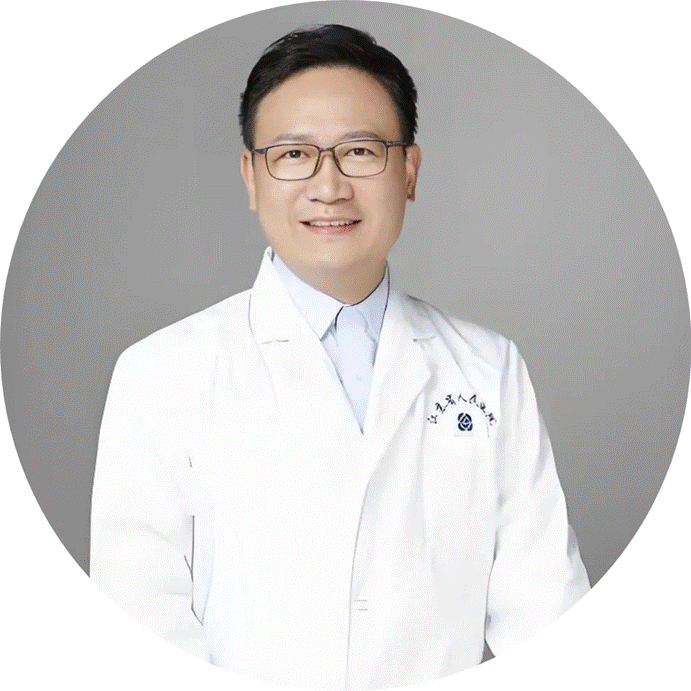
Professor Lei Fan
Jiangsu Provincial People’s Hospital
Director, Department of Hematology, Jiangsu Provincial People’s Hospital
Chief Physician, Professor, and Doctoral Supervisor
Vice Chair, Hematologic Malignancies Committee, Chinese Anti-Cancer Association
Deputy Head, Lymphoid Diseases Group, Hematology Branch, Chinese Medical Association
Committee Member, Hematology Branch, Chinese Medical Doctor Association
Chair, Lymphoma Committee, Jiangsu Medical Doctor Association
Vice Chair, Hematology Branch, Nanjing Medical Association
Postdoctoral Fellow, NewYork-Presbyterian Hospital, affiliated with Columbia University and Cornell University, New York, USA
Research Interests
Professor Fan’s research focuses on the precision diagnosis and treatment of lymphoid malignancies.