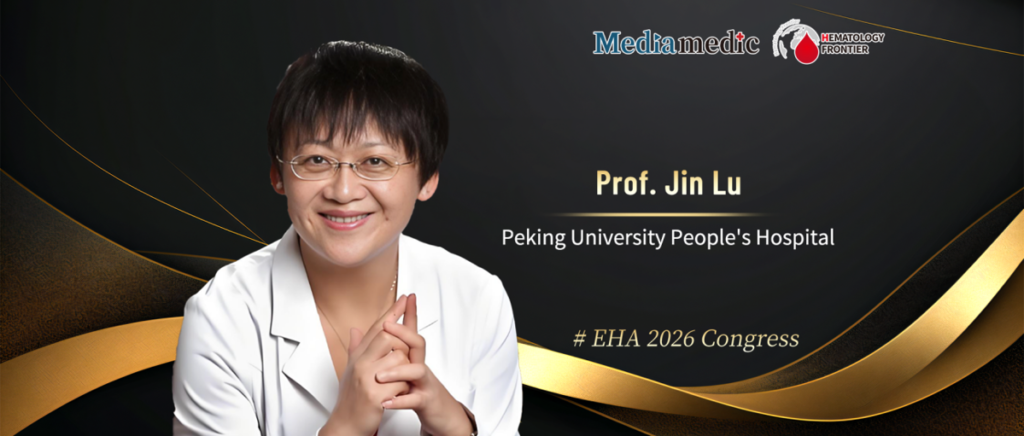
As the 2026 Congress of the European Hematology Association (EHA 2026) prepares to open in Stockholm, Sweden, the global hematology community is once again gathering to share the latest scientific advances and shape the future of blood disease research and treatment.This year, Professor Jin Lu’s team from Peking University People’s Hospital has achieved remarkable international recognition, with six studies selected for presentation at EHA 2026, including two oral presentations as well as several poster and publication-only abstracts. Covering multiple myeloma, classical Hodgkin lymphoma, and amyloidosis, these studies span cutting-edge mechanistic investigations and clinically relevant treatment strategies, highlighting China’s growing contribution to innovation in plasma cell disorders and lymphoma while providing valuable evidence for personalized hematologic care worldwide.
Oral Presentations
Abstract S186
The Dynamic Landscape of the Immune Environment for MM Patients Receiving T-Cell Redirecting Therapies
First Author: Haimeng Li Corresponding Author: Professor Jin Lu
This study explored dynamic changes in the immune microenvironment of patients with multiple myeloma receiving T-cell–redirecting therapies, providing important insights into mechanisms of response and resistance.
The investigators found that although the transition from effector T cells (Tef) to effector memory T cells (Tem) represents a shared mechanism underlying the efficacy of both T-cell engagers (TCEs) and CAR-T therapies, the mechanisms driving treatment resistance differ fundamentally between the two approaches.
Resistance to TCEs appeared to be primarily associated with intrinsic acquired T-cell exhaustion characterized by TIGIT-positive T cells, whereas resistance to CAR-T therapy was linked to extrinsic myeloid-mediated immunosuppression involving CD16-negative monocytes and CSF1R signaling. In addition, a 1q21-driven S100A8-positive clone emerged as a common immune escape mechanism across both treatment modalities.
These findings provide a strong biological rationale for future precision combination strategies, including anti-TIGIT therapy alongside T-cell engagers and CSF1R blockade in combination with CAR-T therapy.
Abstract S223
Interim PET/CT-Adapted PD-1 Inhibitor Incorporation to Avoid High-Dose Chemotherapy and Radiotherapy in Classical Hodgkin’s Lymphoma
First Author: Shenmiao Yang Corresponding Authors: Professor Jin Lu and Professor Norbert Schmitz
This study evaluated a PET-adapted treatment strategy incorporating PD-1 inhibition for patients with classical Hodgkin lymphoma (cHL) who failed to achieve complete metabolic remission during interim PET/CT assessment.
The results demonstrated encouraging efficacy in both early-stage and advanced-stage patients with unfavorable prognostic features. The benefit was particularly pronounced among patients with a Deauville Score of 4 at interim PET/CT evaluation.
The findings suggest that introducing a PD-1 inhibitor into standard chemotherapy for patients with inadequate metabolic response may help improve outcomes while potentially reducing the need for high-dose chemotherapy and radiotherapy.
Poster Presentations
Abstract PF822
The Interval and Risk Factors from Loss of Complete Response to Definite Relapse in Newly Diagnosed Multiple Myeloma After Autologous Stem Cell Transplantation
First Author: Yang Liu Corresponding Author: Professor Jin Lu
This real-world study investigated the interval between loss of complete response (LoCR) and confirmed relapse in patients with newly diagnosed multiple myeloma who underwent autologous stem cell transplantation (ASCT).
The analysis showed that the median time from LoCR to definitive relapse was eight months. Revised International Staging System (R-ISS) stage and the duration from complete response to LoCR were identified as significant risk factors for rapid disease progression.
The authors emphasized that larger prospective studies will be needed to validate these observations.
Abstract PS1887
A Prospective Study of Optimizing Therapy Based on dFLC Reduction at Week 1 for Improved Outcomes in Patients with t(11;14) Amyloidosis
First Author: Yang Liu Corresponding Author: Professor Jin Lu
This prospective study examined response-adapted treatment optimization in patients with t(11;14) AL amyloidosis.
For patients who demonstrated inadequate response after one week of first-line treatment with Dara-CyBorD or DaraBD, early conversion to a daratumumab-plus-venetoclax regimen resulted in an impressive complete response rate of 90.9%.
The findings suggest that this strategy represents an effective and safe therapeutic option for patients with t(11;14) AL amyloidosis and may warrant broader clinical adoption.
Publication-Only Abstracts
Abstract PB3349
Risk Stratification, Treatment Patterns, and Survival Outcomes in Newly Diagnosed Multiple Myeloma Patients: A Real-World Analysis from the Chinese Myeloma Committee
First Author: Xuelin Dou Corresponding Author: Professor Jin Lu
This large real-world analysis validated the effectiveness of the 2025 Chinese Genomic Staging (CGS) system in an Asian patient population.
The study demonstrated that increasing standardization of treatment practices has significantly improved survival outcomes in real-world settings. At the same time, it highlighted the persistently poor prognosis of patients harboring multiple CGS risk factors, underscoring an important unmet clinical need in newly diagnosed multiple myeloma.
Abstract PB4399
A Case Report and Literature Review of Renal Injury Associated with Crystalline Cryoglobulinemia
First Author: Yang Liu Corresponding Author: Professor Jin Lu
This report focused on crystalline cryoglobulinemia, a rare disorder characterized by highly variable clinical manifestations and severe multi-organ involvement.
The authors emphasized that early cryoglobulin testing, tissue biopsy of affected organs, and accurate identification of underlying bone marrow clonal disorders are essential for establishing a timely diagnosis.
Although clone-directed therapy may improve outcomes in selected patients, comprehensive systemic assessment throughout treatment remains critical to minimize the risk of severe complications.
Conclusion
The six studies presented by Professor Jin Lu’s team at EHA 2026 reflect a broad and impactful research portfolio spanning translational science, precision medicine, and real-world clinical practice.
From uncovering mechanisms of resistance to T-cell–redirecting therapies in multiple myeloma, to refining PET-guided treatment strategies in classical Hodgkin lymphoma, and developing individualized approaches for amyloidosis and plasma cell disorders, these investigations demonstrate the growing international influence of Chinese hematology research.
The selection of two studies for oral presentation further highlights the scientific quality and global relevance of the team’s work, providing important Chinese data and innovative clinical perspectives that may contribute to future advances in personalized hematologic care.