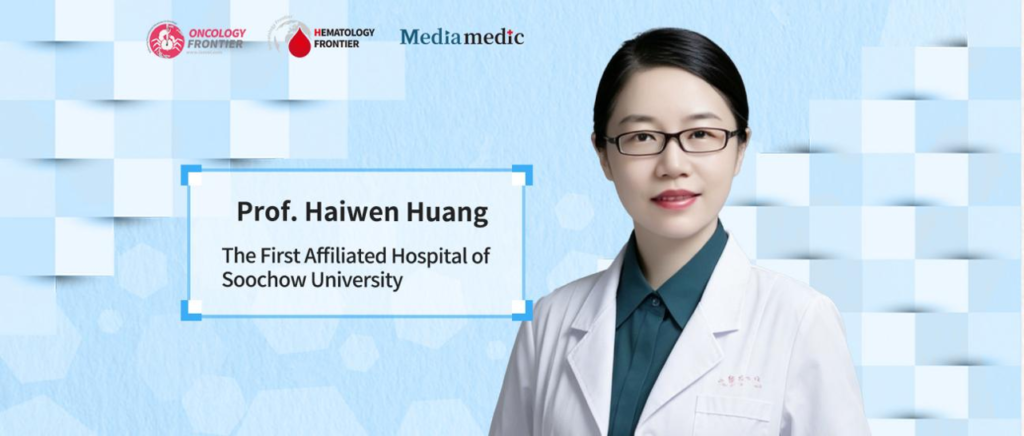
As part of its special ASCO 2026 coverage series, “China Perspectives at ASCO,” Oncology Frontier – Hematology Frontier invited leading Chinese experts to interpret the most practice-changing research presented at this year’s meeting and discuss its relevance to clinical practice in China.During the conference, we spoke with Professor Haiwen Huang of the First Affiliated Hospital of Soochow University, who reviewed several of the most important developments in lymphoma presented at ASCO 2026 and shared her perspectives on emerging treatment strategies that may further advance precision medicine and improve patient outcomes.
Frontline Integration of Novel Therapies Continues to Drive Progress in Lymphoma
When discussing the major themes emerging from this year’s ASCO meeting, Professor Huang noted that research in lymphoma remains centered on three key areas: targeted therapy, immunotherapy, and cellular therapy.
Recent breakthroughs in relapsed or refractory lymphoma have demonstrated the transformative potential of targeted agents, T-cell–based immunotherapies, and cellular therapies. Building on these successes, investigators are increasingly exploring whether these innovative approaches can be moved into earlier lines of treatment to further improve long-term outcomes.
Among the most closely watched lymphoma studies presented at ASCO 2026 was a late-breaking abstract evaluating tafasitamab (Tafa) in the frontline treatment of diffuse large B-cell lymphoma (DLBCL). The study compared tafasitamab combined with lenalidomide and R-CHOP (Tafa-Len-R-CHOP) with standard R-CHOP therapy.
According to Professor Huang, the study demonstrated a significant improvement in one-year overall survival among patients receiving Tafa-Len-R-CHOP, providing encouraging evidence that novel targeted therapies may further enhance frontline treatment outcomes in DLBCL.
Professor Huang also highlighted important contributions from Chinese investigators. One notable example was an oral presentation by Professor Qingqing Cai and colleagues evaluating linperlisib plus CHOP as first-line treatment for peripheral T-cell lymphoma (PTCL).
The study demonstrated that adding linperlisib to CHOP significantly improved treatment outcomes compared with conventional CHOP therapy alone. Professor Huang noted that the findings provide important evidence supporting targeted combination strategies in PTCL and represent one of the most impressive lymphoma studies presented by Chinese investigators at this year’s meeting.
Epcoritamab Plus R-miniCVP Shows Promise for Elderly and Frail DLBCL Patients
For elderly, frail, or anthracycline-ineligible patients with DLBCL, identifying treatment approaches that balance efficacy with tolerability remains a major clinical challenge.
Professor Huang discussed a study presented at ASCO 2026 evaluating epcoritamab plus R-miniCVP in elderly, unfit patients and in individuals with impaired cardiac function, defined by an ejection fraction below 50%.
Advanced age, poor performance status, and organ dysfunction are all well-established adverse prognostic factors in lymphoma. As a result, this patient population has historically had limited treatment options.
The study demonstrated encouraging efficacy. Patients treated with epcoritamab plus R-miniCVP achieved a one-year progression-free survival rate of 94.7%, suggesting that the addition of a bispecific antibody to a reduced-intensity chemotherapy regimen can provide substantial clinical benefit in a particularly vulnerable patient population.
The safety profile was also favorable. Cytokine release syndrome (CRS) occurred in 55% of patients; however, all reported events were Grade 1. Professor Huang emphasized that these findings support the feasibility and tolerability of the regimen in elderly and frail patients.
Taken together, the results suggest that epcoritamab plus R-miniCVP may become an important treatment option for patients who are unable to tolerate standard anthracycline-containing regimens.
Mosunetuzumab Plus Polatuzumab Offers a New Option for Transplant-Ineligible R/R LBCL
Relapsed or refractory large B-cell lymphoma (R/R LBCL) remains a major therapeutic challenge despite the growing number of available treatment options. For patients who are unable to undergo stem cell transplantation or CAR-T therapy, identifying effective and less toxic alternatives remains a critical unmet need.
Professor Huang highlighted updated findings from the SUNMO study, which evaluated mosunetuzumab plus polatuzumab vedotin (Mosun-Pola) in patients with transplant-ineligible R/R LBCL.
The study, presented by Professor Kim and colleagues from South Korea, compared the chemotherapy-free Mosun-Pola regimen with R-GemOx in patients who were unsuitable for intensive therapy and transplantation.
According to Professor Huang, the results were highly encouraging. The overall response rate exceeded 70% in the Mosun-Pola arm, compared with approximately 40% in the R-GemOx group. These findings suggest that the chemotherapy-free combination can substantially improve treatment outcomes in a patient population with limited therapeutic options.
For patients who are unable to receive transplantation or CAR-T therapy, Mosun-Pola may offer an attractive alternative that combines improved efficacy with the potential for reduced treatment-related toxicity. Professor Huang believes that the regimen could become an important component of future treatment pathways for transplant-ineligible patients with R/R LBCL.
Looking Ahead
Reflecting on the studies presented at ASCO 2026, Professor Huang emphasized that lymphoma treatment is increasingly moving toward more precise, individualized, and less toxic therapeutic approaches.
The successful incorporation of targeted therapies, bispecific antibodies, and novel immunotherapies into earlier treatment settings is creating new opportunities to improve outcomes across multiple lymphoma subtypes. At the same time, innovative strategies specifically designed for elderly, frail, and transplant-ineligible patients are helping address some of the field’s most pressing unmet needs.
As these advances continue to mature and longer-term data become available, they are expected to further refine treatment paradigms and move the field closer to truly personalized lymphoma care.
Expert Profile
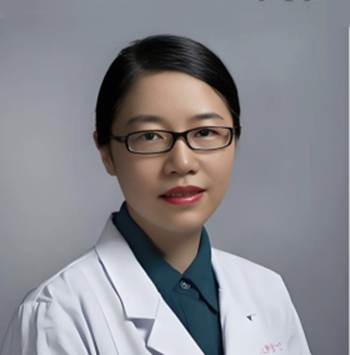
Professor Haiwen Huang
The First Affiliated Hospital of Soochow University
Head, Lymphoma Subspecialty Program, The First Affiliated Hospital of Soochow University
MD | Chief Physician | Professor | Doctoral Supervisor
Professional Appointments
- Member, Lymphoid Diseases Working Group, Chinese Society of Hematology, Chinese Medical Association
- Member, Lymphoma and Hematologic Malignancies Committee, Chinese Society of Oncology, Chinese Medical Association
- Standing Committee Member, Lymphoma Committee, Chinese Society of Clinical Oncology (CSCO)
- Member, Lymphoma Quality Control Expert Committee, National Cancer Center of China
- Expert Reviewer for Doctoral and Master’s Theses, Ministry of Education
- Vice Chair, Lymphoma Committee, Chinese Medical Education Association
- Standing Committee Member, Integrative Lymphoma Committee, China Anti-Cancer Association
- Deputy Head, Lymphoma Working Group, Jiangsu Society of Hematology
- Standing Committee Member, Lymphoma Committee, Jiangsu Anti-Cancer Association
Academic Experience and Honors
- Research Assistant, Faculty of Medicine, The University of Hong Kong (2005–2006)
- Resident Physician, Montpellier University Hospital, France (2006–2007), where she obtained board certification in Hematology
- Senior Visiting Scholar, Montpellier University Hospital, France (2009–2010)
- Visiting Scholar, University of California, Los Angeles (UCLA), USA (2013)
- Recipient of the 2023 “Outstanding Contribution” Award in Lymphoma under the People’s Good Doctor Program
- Recipient of the Jiangsu Province “Six Peaks Talent Program” Award
Professor Huang has led and participated in multiple national and provincial research projects and has published more than 40 SCI-indexed papers. She serves as a Corresponding Editorial Board Member of the Chinese Journal of Hematology and as a peer reviewer for journals including Annals of Hematology and Hematology Oncology.