On June 11, Day 3 of the 16th Peking University Gastrointestinal Oncology Forum and CGOG Annual Meeting featured the 2026 ASCO Highlights Session on Colorectal Cancer, where leading experts provided in-depth reviews and discussions of the latest advances presented at the 2026 ASCO Annual Meeting. The session was livestreamed across multiple platforms and attracted more than 25,000 online viewers.Conference Co-Chairs Prof. Jian Li from Peking University Cancer Hospital and Prof. Ying Yuan from the Second Affiliated Hospital, Zhejiang University School of Medicine, delivered opening remarks. The session focused on the latest research developments in colorectal cancer presented at the 2026 ASCO Annual Meeting, with in-depth presentations and discussions covering three major areas: locally advanced colorectal cancer, metastatic colorectal cancer, and translational medicine. Through these exchanges, participants explored new strategies for the diagnosis and treatment of colorectal cancer.
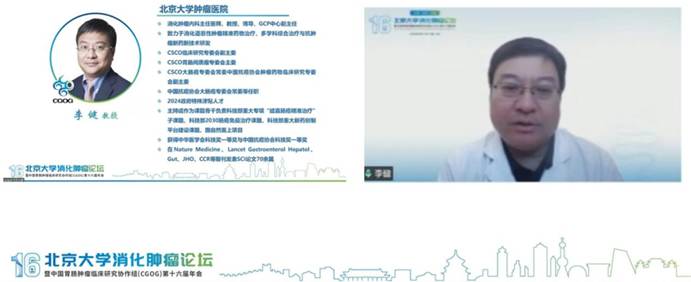
Figure: Opening Remarks by Prof. Jian Li
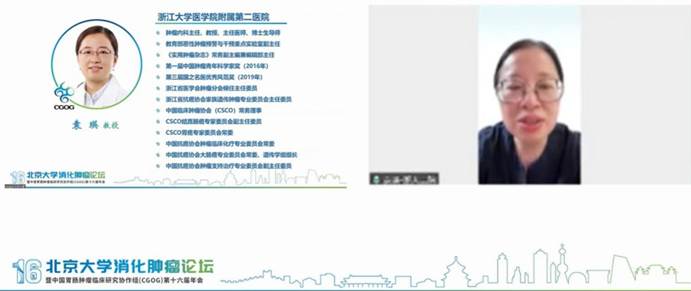
Figure: Opening Remarks by Prof. Ying Yuan
Part I: Advances in the Management of Locally Advanced Colorectal Cancer
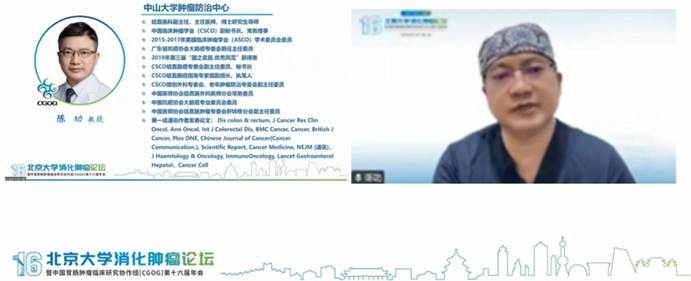
Figure: Session Chair: Prof. Gong Chen
The first session was chaired by Prof. Gong Chen from Sun Yat-sen University Cancer Center, with Prof. Zhenyu Lin from Union Hospital, Tongji Medical College, Huazhong University of Science and Technology serving as the featured speaker. His presentation focused on the latest advances in neoadjuvant treatment for locally advanced colorectal cancer reported at the 2026 ASCO Annual Meeting.
For patients with dMMR/MSI-H locally advanced colorectal cancer, a retrospective study conducted by the Sun Yat-sen University team showed that, after achieving a clinical complete response (cCR) following neoadjuvant immunotherapy, additional consolidation immunotherapy did not improve overall survival (OS) or disease-free survival (DFS). These findings support a watch-and-wait strategy for patients who achieve cCR. In addition, several PD-1/CTLA-4 bispecific antibodies demonstrated impressive pathologic complete response (pCR) rates in dMMR/MSI-H disease, providing additional options for neoadjuvant immunotherapy.
For patients with pMMR/MSS locally advanced rectal cancer, multiple randomized controlled trials confirmed that combining neoadjuvant chemoradiotherapy with immunotherapy can improve both pCR and cCR rates. Follow-up data further showed that these improvements can translate into meaningful long-term survival benefits.
Metabolic intervention has also emerged as a novel area of investigation. One study reported that an intermittent low-carbohydrate diet combined with long-course radiotherapy increased the pCR rate to 93.3% while also helping preserve anal function, offering a new direction for individualized treatment strategies.
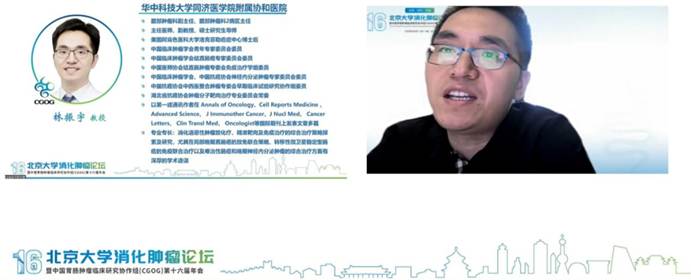
Figure: Prof. Zhenyu Lin Presenting Advances in Locally Advanced Colorectal Cancer
During the discussion session, Prof. Nan Chen from Peking University Cancer Hospital, Prof. Yongheng Li from Peking University Cancer Hospital, and Prof. Jianwei Zhang from the Sixth Affiliated Hospital of Sun Yat-sen University engaged in an in-depth exchange of views.
The panel agreed that the management of locally advanced colorectal cancer is increasingly moving toward precision stratified treatment guided by molecular biomarkers. However, several important challenges remain, including the identification of patients most likely to benefit from immunotherapy, the accurate assessment of clinical complete response (cCR), and the validation of long-term treatment outcomes. The experts emphasized that further clinical studies are needed to address these questions and support the continued development of personalized treatment strategies.
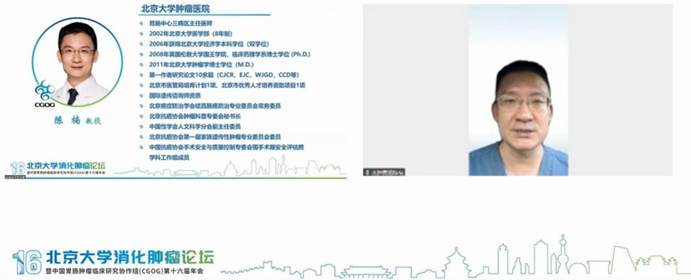
Figure: Discussion by Prof. Nan Chen
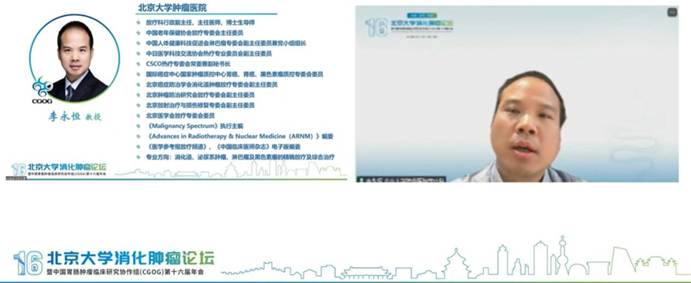
Figure: Discussion by Prof. Yongheng Li
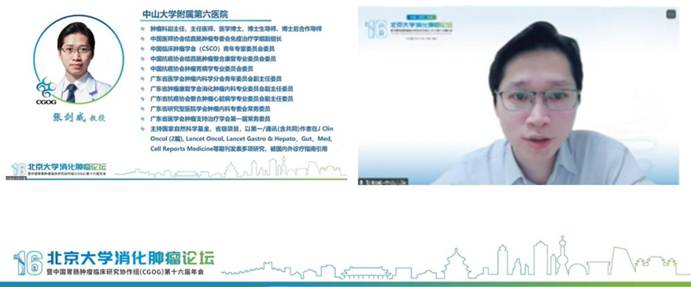
Figure: Discussion by Prof. Jianwei Zhang
Part II: Advances in Metastatic Colorectal Cancer Research
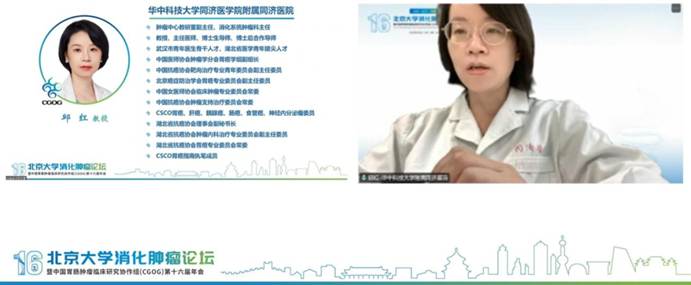
Figure: Session Chair: Prof. Hong Qiu
The second presentation focused on advances in the treatment of metastatic colorectal cancer reported at the 2026 ASCO Annual Meeting and was chaired by Prof. Hong Qiu from Tongji Hospital, Tongji Medical College, Huazhong University of Science and Technology.
Prof. Zhiyu Chen from Fudan University Shanghai Cancer Center reviewed the latest developments in targeted therapy, immunotherapy, and cell therapy for metastatic colorectal cancer.
Updated results from the BREAKWATER study showed that the combination of encorafenib, cetuximab, and FOLFIRI significantly improved both progression-free survival (PFS) and overall survival (OS) compared with the control group, providing a new treatment option for this difficult-to-treat subtype of advanced colorectal cancer.
For patients with MSS BRAF-mutant colorectal cancer, the combination of immunotherapy and targeted therapy did not demonstrate a significant clinical benefit in the SWOG2107 study.
In the field of HER2-expressing colorectal cancer, antibody-drug conjugates (ADCs) emerged as a major highlight. Compared with standard third-line treatment for advanced colorectal cancer, rilvegostomig trastuzumab achieved significant improvements in both objective response rate (ORR) and PFS, becoming the first ADC to demonstrate positive phase III results in HER2-positive advanced colorectal cancer.
For the large proportion of patients with RAS-mutant disease, a PLK1 inhibitor combined with FOLFIRI plus bevacizumab showed synergistic antitumor activity, offering a potential new treatment option.
In addition, for patients with peritoneal metastases from colorectal cancer, a particularly challenging clinical setting, a novel CEACAM5-targeted CAR-T therapy demonstrated encouraging efficacy. Adverse events, including cytokine release syndrome, were reported to be manageable, offering new hope for patients with advanced-stage disease.
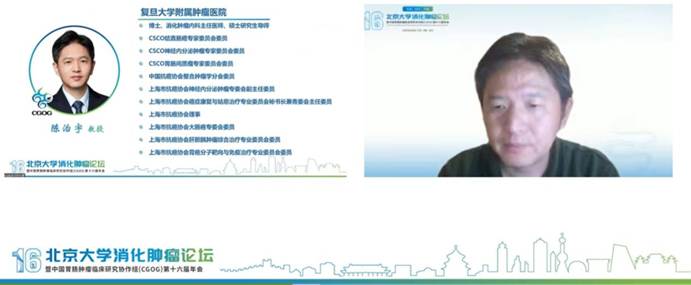
Figure: Prof. Zhiyu Chen Presenting Advances in Metastatic Colorectal Cancer Research
During the discussion session, Prof. Zimin Liu from the Affiliated Hospital of Qingdao University, Prof. Hongxia Lu from Shanxi Hospital, Cancer Hospital, Chinese Academy of Medical Sciences, and Prof. Jinghua Sun from the Second Affiliated Hospital of Dalian Medical University examined several practical issues in the management of metastatic colorectal cancer.
The discussion focused on topics including toxicity management of targeted therapies, treatment sequencing, and rechallenge strategies following the development of drug resistance. The experts also reviewed the current landscape of precision-targeted treatment for advanced colorectal cancer and noted that the success of immunotherapy continues to depend on more accurate molecular classification to identify patients most likely to benefit from treatment.
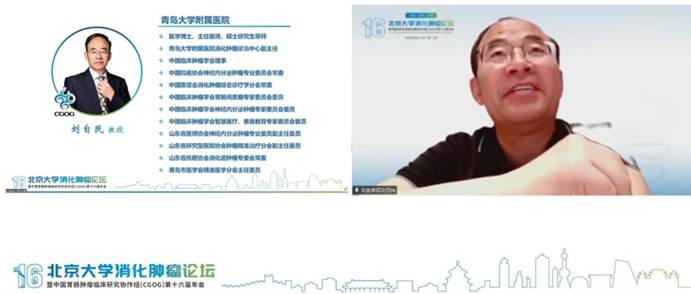
Figure: Discussion by Prof. Zimin Liu
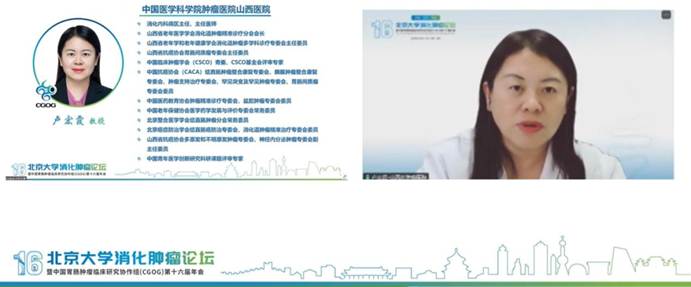
Figure: Discussion by Prof. Hongxia Lu
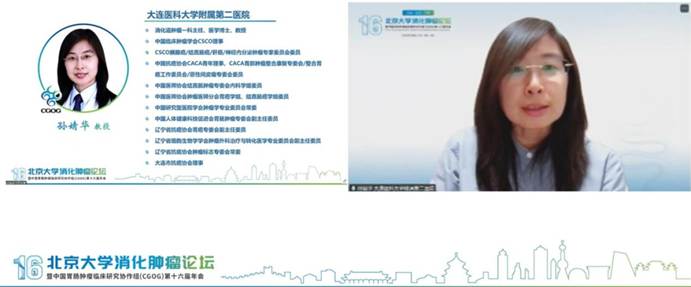
Figure: Discussion by Prof. Jinghua Sun
Part III: Advances in Translational Research in Colorectal Cancer
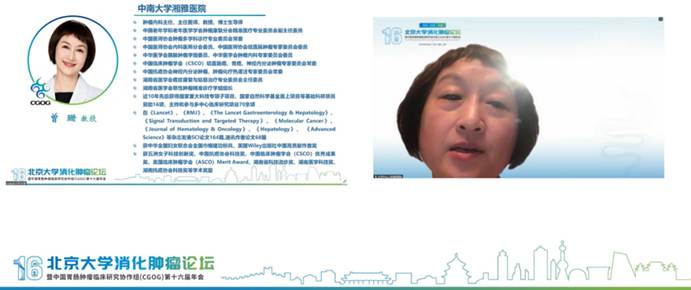
Figure: Session Chair: Prof. Shan Zeng
The ASCO 2026 highlights on translational research in colorectal cancer were chaired by Prof. Shan Zeng from Xiangya Hospital, Central South University. Prof. Ting Xu from Peking University Cancer Hospital focused her presentation on two major translational medicine topics highlighted at this year’s ASCO Annual Meeting: liquid biopsy (ctDNA/MRD) and artificial intelligence (AI). She reviewed their clinical value in perioperative management, treatment response prediction, and therapeutic decision-making for colorectal cancer.
Multiple studies have confirmed that postoperative ctDNA positivity is a strong predictor of recurrence in patients with colorectal cancer. Continuous dynamic monitoring of ctDNA may help guide the timing and duration of adjuvant chemotherapy more effectively. Prof. Xu noted that an important unresolved challenge is how to improve outcomes for patients with persistently positive ctDNA results or poor ctDNA responses during adjuvant treatment through treatment intensification strategies.
Artificial intelligence was another major focus at the 2026 ASCO Annual Meeting, and its applications in colorectal cancer continue to attract growing attention. Several studies have demonstrated the potential of AI in areas such as novel biomarker discovery, molecular and immune subtype prediction, and support for treatment decision-making. These advances highlight the expanding role of AI in precision oncology and translational cancer research.
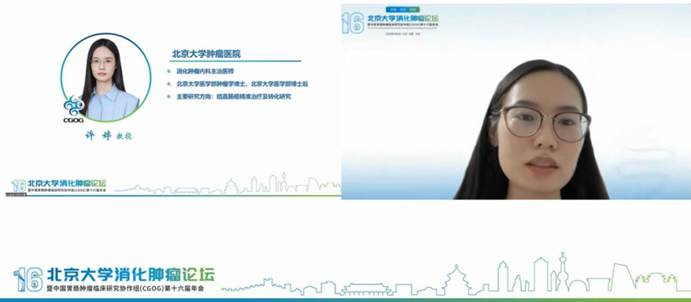
Figure: Prof. Ting Xu Presenting Advances in Translational Research in Colorectal Cancer
During the discussion session, Prof. Jing Liu from Shengjing Hospital of China Medical University, Prof. Meng Qiu from West China Hospital, Sichuan University, and Prof. Zhenghang Wang from Peking University Cancer Hospital provided in-depth analyses of the current status of MRD testing and the implementation of medical AI in China.
The experts advocated for the establishment of a national medical data-sharing platform and called for greater collaboration in prospective interventional studies. They emphasized that such efforts are essential to accelerating the clinical translation of emerging technologies and ensuring that advances in translational research can be effectively integrated into routine patient care.
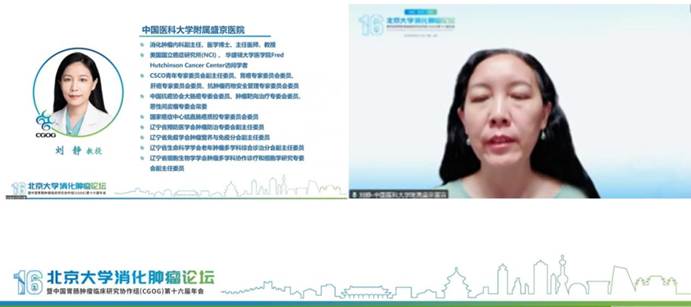
Figure: Discussion by Prof. Jing Liu
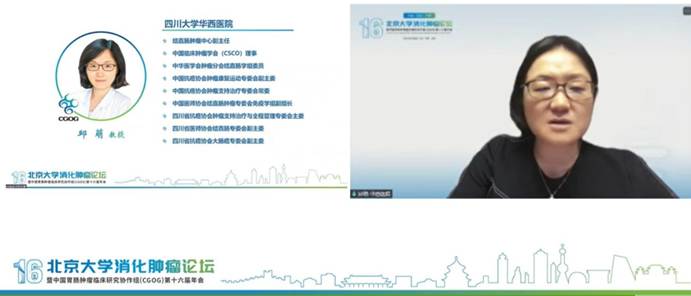
Figure: Discussion by Prof. Meng Qiu
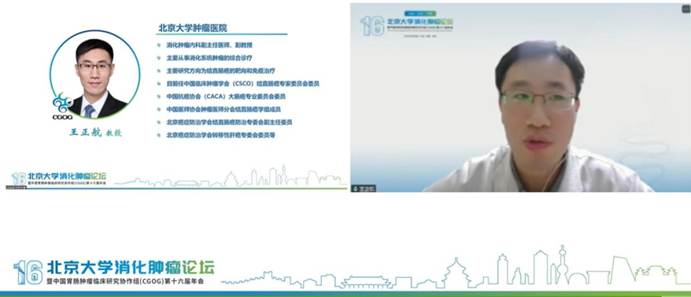
Figure: Discussion by Prof. Zhenghang Wang
At the conclusion of the session, Conference Co-Chairs Prof. Jian Li and Prof. Ying Yuan provided a comprehensive summary of the key takeaways.
They noted that the direction of precision treatment and stratified management in colorectal cancer became increasingly clear through the research presented at the 2026 ASCO Annual Meeting. For patients with locally advanced disease, molecular classification is enabling more individualized treatment approaches, including immunotherapy and combined chemoradiotherapy-immunotherapy strategies. For patients with metastatic colorectal cancer, treatment options are expanding to include a diverse landscape of targeted therapies, antibody-drug conjugates (ADCs), and cell therapies.
In addition, emerging translational technologies such as ctDNA/MRD testing and artificial intelligence are reshaping perioperative assessment and informing decisions regarding adjuvant therapy in colorectal cancer, further advancing the field toward more precise and personalized care.
Original article: Department of Gastrointestinal Oncology, Peking University Cancer Hospital
Author: Lingyu Meng
Reviewer: Ting Xu