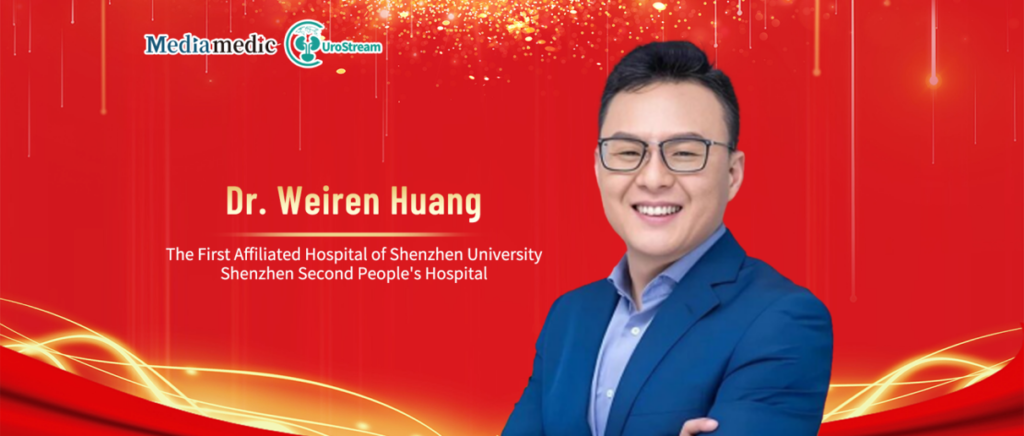
During the 2nd Peking University Urology Forum and the celebration of the 80th anniversary of the Department of Urology at Peking University First Hospital, Oncology Frontier – UroStream interviewed Prof. Weiren Huang from the Department of Urology, First Affiliated Hospital of Shenzhen University (Shenzhen Second People’s Hospital).In the interview, Prof. Huang reflected on the 80-year history of Peking University Urology, widely regarded as the “Whampoa Military Academy” of Chinese urology, and shared his perspective on the future of emerging technologies. He emphasized that, owing to their high degree of similarity to tumors in vivo, tumor organoids have the potential to transform drug screening, personalized treatment, and future therapeutic paradigms.
01
Oncology Frontier – UroStream
This year marks the 80th anniversary of the Department of Urology at Peking University First Hospital. As both a witness to and participant in its development, how do you view the department’s journey over the past eight decades?
Prof. Weiren Huang
First of all, I would like to extend my congratulations on the 80th anniversary of Peking University Urology.
Peking University Urology has long served as a cradle for the development of urology in China and is often regarded as the “Whampoa Military Academy” of Chinese urology. Throughout its 80-year history, the department has trained and cultivated a large number of highly skilled specialists through educational initiatives such as the renowned “Future Leaders Program” and other long-standing training projects.
Beyond teaching advanced surgical techniques, Peking University Urology has also transmitted its rigorous academic traditions, professional ethics, and commitment to excellence through education and mentorship. It is this spirit of inheritance and dedication that has influenced generations of Chinese urologists and helped elevate the overall strength of Chinese urology to a leading position on the global stage.
02
Oncology Frontier – UroStream
In recent years, emerging technologies such as domestically developed surgical robots, artificial intelligence, tumor organoids, and liquid biopsy have been rapidly adopted in urology. Which of these technologies do you believe is most likely to transform clinical practice over the next five to ten years?
Prof. Weiren Huang
Every major advance in medicine, particularly in treatment, is closely linked to technological innovation. For example, the development of magnetic resonance imaging significantly advanced many areas of clinical medicine.
Over the past decade, progress in cancer genomics—especially the development of liquid biopsy technologies—has accelerated the evolution of precision oncology. These advances have also driven precision management in urologic cancers, improving diagnostic capabilities, treatment selection, and prognostic monitoring.
At the same time, other emerging technologies are gaining momentum. Among them, tumor organoid technology is particularly exciting.
Because tumor organoids closely resemble their corresponding tumors in vivo and maintain a high degree of biological fidelity, they offer a unique opportunity to identify the most effective therapies for individual patients outside the body. In addition, organoids may reduce the risks associated with drug development and help industry partners develop new therapies more efficiently.
Looking ahead, tumor organoids may even give rise to entirely new treatment paradigms. For example, after surgical removal of a tumor—and with appropriate patient consent—the specimen can be cultured ex vivo to generate living organoid models. These patient-derived organoids could then be used to evaluate and validate potential therapeutic options before treatment begins.
Such an approach would allow physicians not only to identify the most effective and sensitive therapies for individual patients, but also to match novel drugs with the patient populations most likely to benefit from them.
I believe this technology has the potential to bring truly transformative changes to the field of cancer treatment in the years ahead.
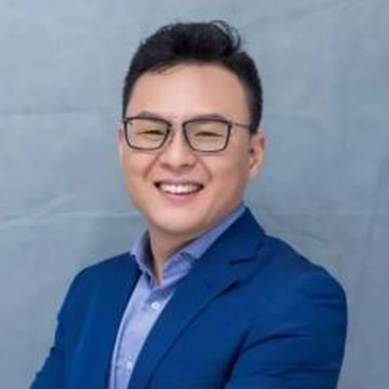
Prof. Weiren Huang