Editor’s Note: The 15th Sino-French Breast Reconstruction Congress and the 13th Sino-French Breast Cancer Academic Conference recently concluded successfully in Chongqing. During the meeting, Professor Yongsheng Wang from Shandong Cancer Hospital delivered a presentation entitled “Precision Decision-Making in Sentinel Lymph Node Biopsy”, offering an in-depth discussion on management strategies and individualized decision pathways for sentinel lymph node biopsy (SLNB).Following the conference, Oncology Frontier invited Professor Yongsheng Wang to share his perspectives on several key topics, including the clinical dimensions of precision decision-making, the nationwide promotion of standardized SLNB training, and the role of breast surgeons in breast cancer prevention, early detection, and early treatment.
01
Oncology Frontier: With the maturation of landmark studies such as Z0011 and SENOMAC, the indications for omitting axillary lymph node dissection (ALND) continue to expand. In current clinical practice, which “gray-zone” patient populations—such as those with micrometastases, special histologic subtypes, or high tumor burden undergoing breast-conserving surgery—still require the most precise axillary decision-making? In your view, what dimensions should true “precision decision-making” encompass?
Professor Yongsheng Wang:
“Over the past three decades, continuous exploration of sentinel lymph node biopsy (SLNB) in the axilla has generated increasing evidence supporting omission of ALND in selected patients.
In current clinical practice, management of axillary lymph nodes (ALNs) is primarily individualized according to three major factors: the initial ALN status, the tumor burden within sentinel lymph nodes (SLNs), and the planned adjuvant treatment strategy.
For example, patients with initial cN0 disease should undergo SLNB. Patients with negative SLNs can safely omit ALND. Likewise, patients with isolated tumor cells (ITCs) or micrometastases in the SLNs may also avoid ALND, and patients with ITCs may even avoid radiotherapy.
For patients with one to two positive sentinel lymph nodes, however, the recently reported SUPREMO trial significantly changed our understanding. SUPREMO enrolled patients with initial cN0 disease who underwent ALND and were subsequently found to have one to three positive lymph nodes. Patients were randomized 1:1 to receive chest wall radiotherapy or omit radiotherapy.
The results showed that adding chest wall radiotherapy did not significantly improve overall survival. Although radiotherapy reduced chest wall and regional nodal recurrence, the projected reduction in 10-year overall survival was less than 2% (10-year Kaplan-Meier estimated OS: 81.4% with radiotherapy vs. 81.9% without radiotherapy; HR=1.04, 95% CI: 0.82–1.30; P=0.80).
This study suggests that some patients with low axillary tumor burden may safely omit radiotherapy even after ALND.
These findings have major implications for clinical practice. Previously, for cN0 patients with one to two positive SLNs, we almost universally favored radiotherapy as a substitute for ALND. However, following the publication of the SUPREMO results, clinicians may now consider ALND itself as a strategy to avoid postoperative radiotherapy in selected patients with favorable histology, lower-grade tumors, and limited SLN involvement, rather than universally replacing ALND with radiotherapy.
This approach may be especially beneficial for patients who are highly sensitive to radiation or who undergo implant-based breast reconstruction, because radiotherapy increases the risk of capsular contracture. If implant reconstruction patients undergo ALND and are ultimately confirmed to have only one to two positive ALNs, postoperative radiotherapy may potentially be omitted.
For patients with initially node-positive disease, our goal is increasingly to use neoadjuvant therapy to facilitate omission of ALND. This is particularly relevant in HER2-positive and triple-negative breast cancer, where more than 60% of patients can achieve axillary nodal clearance after neoadjuvant treatment. These patients may subsequently undergo SLNB to confirm nodal negativity and thereby avoid ALND.
The NSABP B-51 trial further demonstrated that patients with initial cN1 disease who convert to node-negative status after neoadjuvant therapy may not only omit ALND, but many may also omit radiotherapy, achieving dual de-escalation of both surgery and radiation.
Therefore, we should fully integrate systemic therapy, SLNB, radiotherapy, imaging technologies, and radiomics to achieve individualized regional management in breast cancer.
We often say, ‘Less is more, only when it is enough.’ In other words, while maintaining oncologic efficacy, we should minimize treatment-related trauma as much as possible so that patients can ultimately achieve greater overall benefit.”
02
Oncology Frontier: Although SLNB is now the standard procedure for early breast cancer, controversies remain in many grassroots hospitals regarding internal mammary node biopsy indications, management of ITCs, and tracer selection. In the context of promoting precision decision-making, how should future consensus updates and technical training improve nationwide standardization and homogenization of SLNB practice in order to truly enhance patients’ quality of life?
Professor Yongsheng Wang:
“The benefits of SLNB for patients are undeniable. Accordingly, both Chinese and international guidelines strongly recommend SLNB and advocate determining whether ALND can be omitted based on SLNB findings.
However, SLNB is also a double-edged sword. Without standardized and consistent implementation, false-negative rates may become unacceptably high, which could compromise nodal staging accuracy and subsequently affect decisions regarding systemic therapy and radiotherapy, potentially increasing the risks of axillary recurrence and distant metastasis.
Therefore, standardization and homogenization of SLNB practice are absolutely critical.
At present, there is still substantial work to be done in China. Internationally, radioactive tracers remain the most strongly recommended mapping method, but approximately 90% of hospitals in China are currently unable to use them because of regulatory restrictions.
Encouragingly, the team led by Professor Zhaoqing Fan from Peking University Cancer Hospital has already completed patient enrollment for radionuclide tracer studies, and we hope that radioactive tracers will receive approval for clinical use in China this year.
In addition, tracers such as methylene blue have already been approved in China, expanding available dye-based mapping options.
However, regardless of which tracer is used, standardized application and documentation are essential. In routine practice, we still sometimes encounter pathology reports describing ‘submitted tissue specimen measuring 5 × 4 cm containing 10 sentinel lymph nodes,’ which reflects nonstandard surgical practice.
Both the Clinical Practice Guidelines for SLNB in Early Breast Cancer and the Chinese Anti-Cancer Association Breast Cancer Diagnosis and Treatment Guidelines and Standards (2026 Edition) clearly state that when blue dye tracers are used, surgeons should first identify the blue-stained lymphatic channels and then carefully dissect along these channels to identify the blue-stained sentinel lymph nodes.
There may be two or three stained lymphatic channels in the axilla, and surgeons should identify each SLN individually.
Therefore, SLNs should be removed one by one, rather than excising a large block of tissue in the general direction of the stained lymphatics and leaving the pathologist to search for lymph nodes afterward.
Nonstandard practice creates two major problems. First, sentinel nodes may be missed, leading to understaging. Second, it substantially prolongs operative time.
In more than 95% of Chinese hospitals, intraoperative frozen-section analysis or imprint cytology is still routinely performed for SLNs. Evaluating 10 sentinel lymph nodes intraoperatively can take a very long time, which is not beneficial for patients and also significantly increases the workload for pathologists.
In both Chinese and international studies, the median number of SLNs identified is typically one to two. In fact, 60%–70% of patients have only one or two SLNs identified. Since patients with one to two positive SLNs may often omit ALND, if surgeons identify only one or two SLNs intraoperatively, they may—in appropriately selected patients and with informed consent—directly omit ALND without waiting for intraoperative pathology results and conclude the procedure.
Sending excessive numbers of lymph nodes to pathology not only prolongs operative time but also increases axillary morbidity and compromises cosmetic outcomes after ALND omission.
For these reasons, SLNB-related training is extremely important.
The Breast Cancer Committee of the Chinese Anti-Cancer Association is actively promoting nationwide training in breast cancer surgical techniques. Shandong Cancer Hospital is leading SLNB training programs across China, and through educational initiatives at more than a dozen demonstration centers, we hope to further standardize SLNB practice and ultimately benefit more patients.”
03
Oncology Frontier: This conference coincides with the 2026 National Cancer Prevention and Control Awareness Week. Could you introduce some of the activities organized by your hospital? In your opinion, how should breast surgeons play a more proactive leadership role in breast cancer awareness and in building systems for early detection and early treatment?
Professor Yongsheng Wang:
“During National Cancer Prevention and Control Awareness Week, Shandong Cancer Hospital organized multidisciplinary physician teams representing various cancer specialties to conduct public consultation and educational activities both at Quancheng Square in Jinan and within the hospital campus.
Breast surgeons play a critically important role in breast cancer prevention, early detection, and early treatment.
Breast cancer diagnosis typically begins with a surgeon’s comprehensive assessment based on physical examination and related imaging findings. For suspicious lesions, breast surgeons collaborate closely with radiologists to perform biopsies in order to determine the nature of both the primary breast lesion and any axillary lymph node involvement. These findings then determine whether the patient proceeds to surgery or neoadjuvant therapy.
Therefore, breast surgeons carry major responsibilities in promoting early diagnosis and early treatment of breast cancer.
Through breast cancer screening programs, public consultation events, and awareness campaigns such as Cancer Prevention Week, we can increase public awareness and encourage more women to prioritize early detection, early diagnosis, and early treatment.
From a health economics perspective, early-stage breast cancer not only improves survival outcomes, but also allows more patients to undergo breast-conserving and axillary-preserving surgery. In addition, it significantly reduces healthcare expenditures.
Therefore, from every perspective, we should strive to achieve earlier diagnosis and earlier treatment in breast cancer in order to improve clinical outcomes, enhance quality of life, and reduce treatment-related costs.”

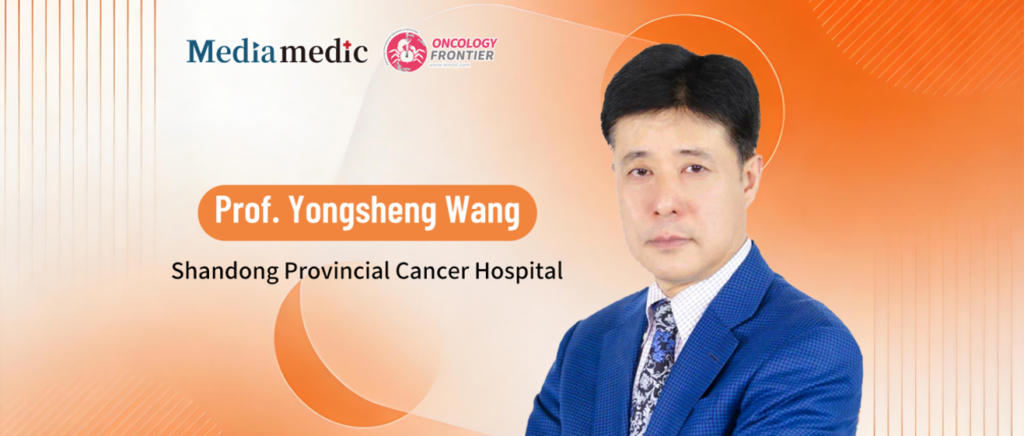
Professor Yongsheng Wang