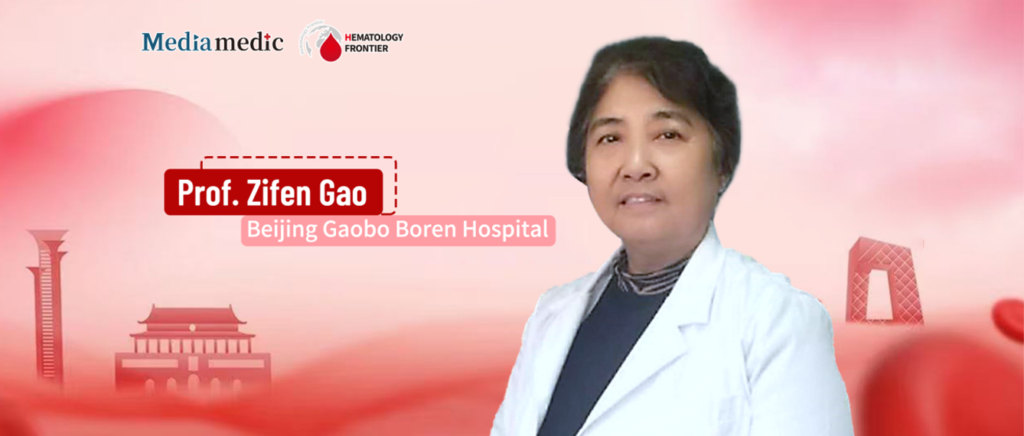
To further advance scientific research and clinical practice in hematologic malignancies in China and to establish an authoritative academic exchange platform for the field, the 2026 Boren Hematologic Malignancies Precision Diagnosis and Treatment Conference, jointly organized by the Beijing Association for the Promotion of Integrated Chinese and Western Medicine in Chronic Disease Prevention and the Beijing Society of Bioengineering, was officially held in Beijing on May 16 in a hybrid online-offline format. The conference brought together leading experts and scholars in hematologic malignancies from across the country, focusing on cutting-edge technologies, clinical diagnostic and treatment experience, and future directions in the discipline, creating a professional event of high academic caliber, strong clinical relevance, and significant industry influence.During the conference, Professor Zifen Gao from Beijing Gaobo Boren Hospital gave an in-depth interview on the current development, key challenges, and future directions of integrated diagnostic systems for hematologic malignancies, offering insightful perspectives that combine both forward-looking vision and practical clinical experience.
Q1: International and domestic academic organizations, including the WHO and CACA, are increasingly emphasizing the concept of multidimensional “integrated diagnosis.” Based on your experience, what practical changes has integrated diagnosis brought to the field of hematologic malignancies compared with traditional single-dimension diagnostic approaches? Which disease types have benefited the most?
Professor Zifen Gao: The WHO classification system for lymphomas is an integrated framework that combines clinical characteristics, morphology, immunohistochemical protein expression, cytogenetics, and molecular biology information to provide comprehensive guidance for prognosis assessment and treatment strategy selection. In developed countries, diagnostic laboratories for hematologic malignancies usually include multiple specialized units, such as cytomorphology, pathology, flow cytometry, genetics, and molecular testing laboratories, thereby forming an integrated molecular pathology and cellular pathology system that enables effective information sharing.
In these systems, diagnostic reports are issued by qualified pathologists who integrate results from all testing platforms, ensuring both accuracy and completeness. Therefore, modern classification systems are fundamentally dependent on this type of multi-technology integrated diagnostic infrastructure.
However, in China, diagnostic platforms have historically been fragmented. Cytomorphologic analysis may be conducted in cellular laboratories, clinical laboratory departments, hematology departments, or pathology departments; flow cytometry is often managed independently; molecular testing, because of unclear disciplinary ownership, may be distributed across laboratory medicine departments, hematology services, independent laboratories, or pathology departments. As a result, fragmented information is ultimately returned to the treating clinician for interpretation, while pathologists may not have access to the complete set of findings, affecting both the integrity and accuracy of diagnosis.
For many years, lymphoma diagnosis in China primarily relied on tissue morphology and immunohistochemistry, and this approach solved numerous diagnostic challenges through decades of clinical practice. However, in our daily work, we gradually recognized the necessity of integrating multiple diagnostic platforms. Over the past decade, our institution has continuously promoted integrated diagnostics and found that combining multiple technologies significantly reduces diagnostic errors and inconsistencies.
Today, biopsy samples are increasingly obtained through core needle biopsy rather than surgical excision, resulting in smaller specimens. At the same time, there is growing demand for rapid diagnostic turnaround, increasing clinical expectations, and expanding treatment options. All of these factors require diagnostic work to become both faster and more precise, further highlighting the importance of integrated diagnostics.
At present, several major lymphoma centers in China have already made substantial progress in integrated diagnostics. Going forward, the key priorities include strengthening consensus around integrated diagnostic principles and enhancing the comprehensive diagnostic capabilities of young pathologists. They must learn how to interpret results from different technical platforms and explain discrepancies between datasets rationally, thereby increasing the value of pathology diagnosis in clinical decision-making. Without integrated interpretation, fragmented information alone cannot effectively guide clinical practice.
I believe that as China continues promoting the development of Centers of Excellence in Medicine and gradually expands integrated diagnostic models nationwide, the overall standard of lymphoma diagnosis in China will continue to improve significantly.
Q2: Artificial intelligence has already shown progress in hematologic pathology diagnostics. In your view, what are the major technical and clinical validation challenges currently facing AI-assisted diagnostic systems in real-world pathology practice? How should pathologists scientifically evaluate the reliability and limitations of AI tools?
Professor Zifen Gao: In medicine, especially in pathology diagnostics, the application of artificial intelligence remains relatively limited. Some progress has been made in solid tumor pathology, such as liver cancer and prostate cancer. By comparison, cytology is better suited for AI analysis because it involves single-cell structures that are easier to observe and standardize. Consequently, more institutions are working in this area, and some centers have accumulated relatively large case databases. Through collaborations among multiple major institutions and the use of extensive pathology datasets for model training, certain AI systems have already entered practical use. However, these systems still produce incorrect prompts and outputs, meaning their use must remain cautious and carefully supervised.
In hematologic pathology, however, AI applications remain largely undeveloped. Although many institutions have explored this field, significant challenges hinder practical implementation. Hematologic tumor specimens undergo multiple complex processes, including tissue sampling, slide preparation, and staining, all of which involve numerous variables that complicate AI system training and evaluation.
We are also interested in advancing related work, but even ensuring consistently high-quality pathology slides is already challenging. Furthermore, AI model training requires the involvement of highly experienced lymphoma and hematopathology experts to improve diagnostic accuracy. At present, there are still no mature large-scale explorations in this field, and few teams are willing to deeply engage in it because of the complexity involved.
Q3: Which technologies do you believe are most likely to further advance precision diagnostics in hematologic malignancies in the future? For young physicians and pathologists, what would you recommend to help them better adapt to this transformation in diagnostic practice?
Professor Zifen Gao: First and foremost, it is essential to establish the concept of integrated diagnostics. Personnel across different laboratories must strengthen their awareness of collaboration, engage in mutual learning, maintain rational communication, and improve together. Systematic training of hematopathologists is especially important. Previously, Boren Hospital and the Tianjin Institute of Hematology jointly launched a two-year subspecialty training program in hematopathology. Physicians who completed the program demonstrated capabilities comparable to those of hematopathologists in the United States.
For difficult or complex cases, multidisciplinary discussions and close collaboration with clinical MDT teams are indispensable.
Senior experts with extensive experience have accumulated valuable diagnostic knowledge, including rare and highly challenging cases. Through multidisciplinary collaboration, these experiences should be integrated and systematically passed on to younger physicians, especially when dealing with unconventional test results where comprehensive interpretation is critical.
Rare and clinically impactful cases should be compiled into teaching presentations, illustrated atlases, or online educational resources to provide valuable learning materials for future generations of physicians.
In addition, pathologists should actively collaborate with advanced technology companies to jointly develop diagnostic equipment, software, and artificial intelligence tools with real clinical value. There is often a significant gap between purely commercial technology development and real-world clinical application. Developers may not fully understand clinical workflows and needs, while clinicians may not always provide testing requests and information in formats suitable for technological development. Therefore, stronger communication and collaboration are necessary to identify and avoid diagnostic blind spots and pitfalls, ultimately improving the performance and practicality of these tools.
Although this process requires coordinated efforts from multiple parties, including funding support, specimen collection, and data privacy protection, I believe the future remains highly promising through sustained collaboration and continued exploration.
Expert Profile
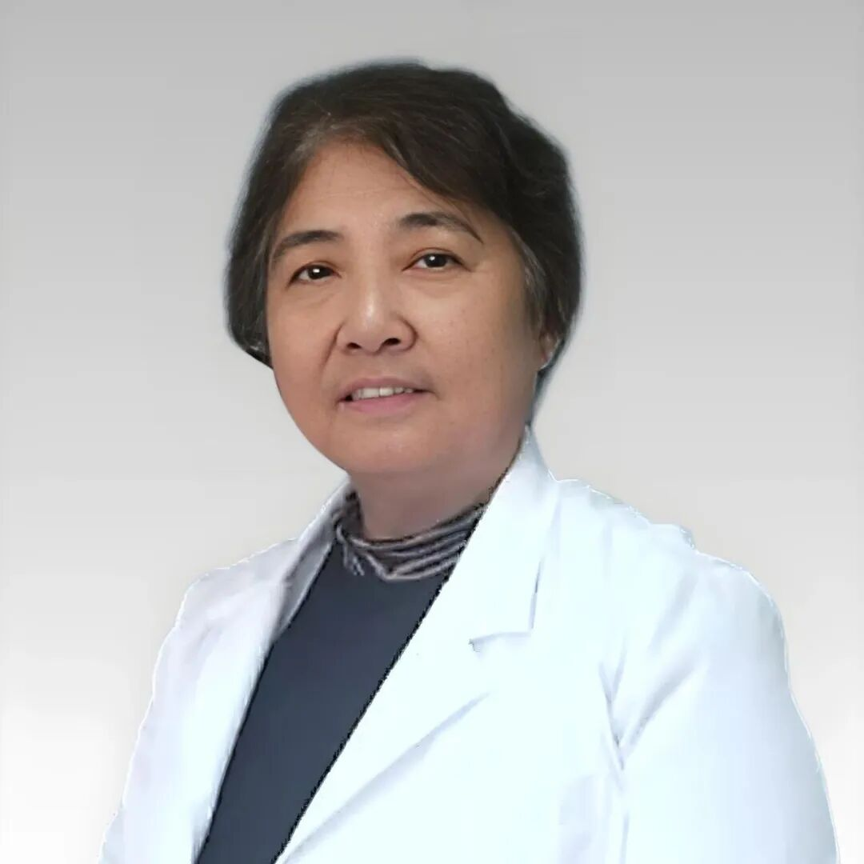
Peking University Health Science Center / Peking University Third Hospital & Gaobo Diagnostic Center Department of Pathology, Chief Physician Second-Level Professor of Pathology at Peking University Health Science Center Doctoral Supervisor Recipient of the State Council Special Government Allowance Vice President, Oncology Prevention and Treatment Branch of the China Research Association of Gerontology and Geriatrics Vice Chair, Targeted Therapy Committee of the Chinese Medical Women’s Association Editorial Board Member, Chinese Journal of Hematology Chief Scientist and Academic Leader of the Pathology Laboratory, Gaobo Medical Group Academic Leader, Department of Pathology, Tiantan Hospital Specially Appointed Expert, Beijing Hester Medical Laboratory Pathology Center
While actively contributing to the development of hematopathology as a discipline and advancing talent cultivation, Professor Gao also serves patients and medical institutions nationwide in the field of hematologic malignancies. With more than 5,000 consultation cases annually, she has accumulated extensive experience in diagnosis and differential diagnosis. She closely follows international academic advances, actively promotes precision medicine-related testing, and advances integrated diagnostics to provide strong scientific support for clinical decision-making.