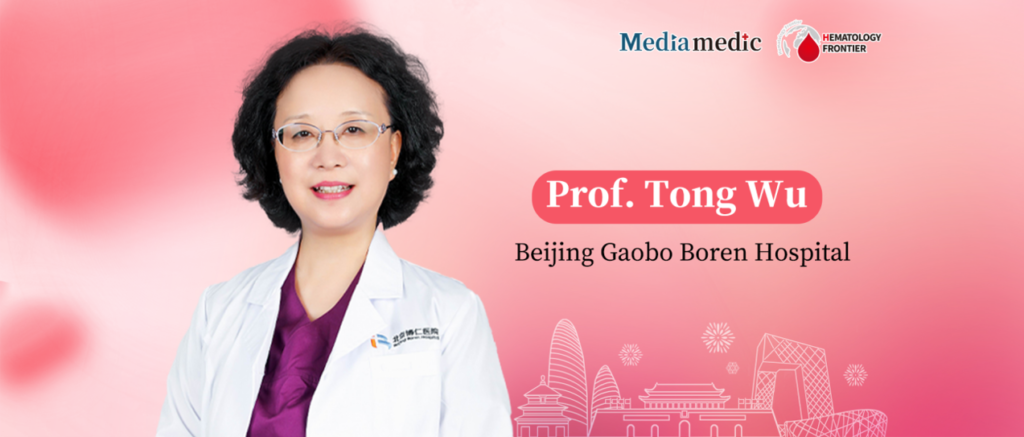
To further advance both scientific research and clinical practice in hematologic malignancies in China and to establish an authoritative academic exchange platform for the field, the 2026 Boren Hematologic Malignancies Precision Diagnosis and Treatment Conference, jointly organized by the Beijing Association for the Promotion of Integrated Chinese and Western Medicine in Chronic Disease Prevention and the Beijing Society of Bioengineering, was held in Beijing on May 16 in a hybrid online-offline format. The conference brought together leading experts and scholars in hematologic malignancies from across the country, focusing on cutting-edge technologies, clinical experience, and future directions in the discipline, creating a high-level academic event with strong clinical and industry impact.During the meeting, Professor Wu Tong from Beijing Gaobo Boren Hospital gave an in-depth interview discussing the hospital’s latest advances and clinical experience in hematopoietic stem cell transplantation, providing valuable insights for clinical practice.
Q1
Professor Wu, your hospital has accumulated extensive and highly distinctive clinical experience in hematopoietic stem cell transplantation, particularly in haploidentical transplantation, pediatric transplantation, and transplantation in elderly patients, forming what is widely referred to as the “Gaobo Model.” Could you systematically introduce the recent advances your team has achieved in transplantation strategies?
Professor Wu Tong: Achieving optimal outcomes in hematopoietic stem cell transplantation primarily depends on four key factors. First, the disease should be controlled to complete remission as much as possible before transplantation. Second, the donor should be healthy and possess normal hematopoietic and immune function. Third, the conditioning regimen should be both highly effective and minimally toxic. Finally, transplantation-related complications should be managed with a prevention-oriented strategy, aiming to minimize their occurrence and ensure that any complications remain mild and controllable. When each of these aspects is optimized, transplantation outcomes can be significantly improved.
In recent years, our team has continued to refine these areas and has established a relatively mature transplantation system that now achieves outcomes comparable to internationally advanced standards. In terms of disease control, many of the patients treated at our hospital have relapsed or refractory hematologic malignancies that are resistant to conventional chemotherapy, making complete remission difficult to achieve through standard therapies alone. Therefore, we actively incorporate innovative treatment approaches, including CAR-T immunotherapy and highly effective targeted agents, to induce deep remission before transplantation.
Regarding donor selection, in addition to following internationally recognized matching standards, we have introduced testing for hereditary susceptibility genes associated with hematologic and immune disorders. This assists not only in donor selection but also in predicting the risk of post-transplant complications, thereby enabling us to tailor transplantation strategies to minimize those risks. The World Health Organization (WHO) has established a category termed “myeloid neoplasms with germline predisposition” within its classification of hematologic malignancies, and diagnosis of these conditions relies heavily on genetic testing. After establishing corresponding testing methodologies, we conducted familial analyses of hereditary susceptibility genes in patients referred from other hospitals whose post-transplant complications had been difficult to control. Both donor and recipient genetic testing revealed that certain donors carried significant hereditary susceptibility abnormalities, directly contributing to difficult transplantation courses and poor outcomes.
Based on these findings, we moved hereditary susceptibility screening to the pre-transplant stage. When multiple potential family donors are available, we prioritize donors with favorable genetic backgrounds and without major immune-related abnormalities or tumor susceptibility genes. This approach also helps predict the risks of graft-versus-host disease (GVHD), infection, relapse, and treatment-related toxicity after transplantation, thereby guiding individualized transplantation design and targeted prevention strategies. Since incorporating this parameter into our donor selection process, the incidence of post-transplant complications has significantly declined, and when complications do occur, they are generally milder and easier to control.
For conditioning regimens, because many of our patients are heavily pretreated and have relapsed or refractory disease, we routinely use reduced-toxicity conditioning strategies. Although these regimens improve safety, they may increase the risk of relapse. To address this, we combine individualized targeted therapies during conditioning to further reduce tumor burden and enhance antitumor efficacy. In addition, all post-transplant complications are managed with a strong emphasis on prevention, and these systematic preventive strategies have substantially improved overall patient outcomes. We also place great importance on post-transplant maintenance therapy to further reduce relapse risk.
Through these comprehensive strategies, our overall transplantation outcomes have improved markedly. For example, in second transplantation procedures, international disease-free survival rates are generally reported at 20%–30%, with 30%–40% of patients relapsing and another 30%–40% dying from transplantation-related toxicity. By implementing reduced-toxicity conditioning, changing donors, adopting individualized high-efficacy low-toxicity conditioning regimens, and providing post-transplant maintenance therapy, our hospital has increased disease-free survival after second transplantation to 72.5%. This improvement is largely attributable to reducing transplantation-related mortality from the commonly reported 30%–40% to just 2%, while relapse rates declined from approximately 30%–40% to 25%. Currently, the outcomes of second transplantation at our center are comparable to those of first transplantation. Similarly, through these strategies, transplantation outcomes in elderly patients have also reached levels comparable to those seen in younger patients.
Q2
Post-transplant GVHD remains one of the major challenges affecting long-term survival and quality of life. Your team has accumulated extensive experience in GVHD prevention and treatment. Could you share some of your standardized management pathways for severe GVHD, comprehensive post-transplant management, relapse prevention, and immune intervention that may offer valuable reference for clinical colleagues?
Professor Wu Tong: Graft-versus-host disease (GVHD) is one of the major complications following hematopoietic stem cell transplantation, and severe GVHD can be life-threatening if not effectively controlled. Our center has developed a systematic philosophy and management strategy for GVHD prevention and treatment, with prevention always serving as the primary principle. For example, reduced-toxicity conditioning regimens help decrease the risk of GVHD, while our rigorous donor selection system further lowers its incidence. Within our transplantation framework, the overall incidence of acute GVHD is approximately 20%–30%, while severe GVHD accounts for about 5%–10%. However, through precise interventions, the success rate in managing severe GVHD exceeds 90%, significantly reducing mortality associated with this complication.
For GVHD monitoring, international practice increasingly relies on biomarker testing. At our center, we have established a parameter system that includes ferritin, cytokines, soluble CD25, and related indicators. Based on these dynamic biomarkers, we select the most appropriate therapeutic agents for each patient, enabling individualized precision treatment and improving therapeutic efficacy. It is important to recognize that excessive use of GVHD medications substantially increases infection risk. Therefore, in clinical practice, we flexibly adjust treatment intensity according to biomarker changes. For instance, when soluble CD25 levels are elevated, we may administer anti-CD25 monoclonal antibody therapy. If the biomarker normalizes after a single dose, additional treatment is avoided to minimize unnecessary infection risk. This “stop once the target is achieved” strategy effectively controls GVHD while maintaining treatment safety.
Q3
With the rapid development of precision medicine, cellular immunotherapy, and multidisciplinary collaboration, hematopoietic stem cell transplantation continues to evolve. How do you view future trends in the transplantation field, and what are your hospital’s future plans for enhancing transplantation capabilities?
Professor Wu Tong: In recent years, CAR-T therapy has achieved remarkable efficacy in patients with relapsed or refractory hematologic malignancies, enabling many individuals who were previously resistant to chemotherapy and conventional therapies to achieve deep remission. If these patients proceed directly to salvage transplantation, long-term cure rates are generally only 20%–30%. However, following CAR-T therapy, approximately 90% of patients can achieve favorable remission, and sequential transplantation performed during this period of optimal disease control can increase long-term cure rates to 60%–70%.
Nevertheless, for high-risk refractory diseases, relapse rates following CAR-T therapy alone remain substantial, and combining multiple therapeutic approaches is essential for achieving higher disease-free survival. Although CAR-T therapy produces high initial remission rates, international adult clinical trial data indicate that approximately two-thirds of patients relapse within one year, highlighting the limited durability of remission. Therefore, once patients achieve remission with CAR-T therapy, we proceed promptly with transplantation while the disease remains well controlled and combine this with post-transplant maintenance therapy to further reduce relapse risk and improve long-term survival.
Today, the principles of precision medicine have become deeply integrated into every aspect of transplantation, including disease control, donor selection, conditioning regimen design, and the prevention and management of post-transplant complications. All of these require individualized strategies to achieve optimal outcomes. For example, severe viral infections after transplantation remain challenging because antiviral agents are limited and often insufficiently effective, leading to potentially fatal uncontrolled infections.
When antiviral treatment options are limited, donor lymphocyte infusion can provide antiviral immune cells to help control infection. However, the major risk associated with traditional donor lymphocyte infusion is the induction of GVHD. In critically ill patients already weakened by severe infection, additional GVHD often necessitates intensified immunosuppressive therapy, ultimately compromising outcomes. In recent years, we have explored precision donor lymphocyte infusion strategies by using cell-sorting technologies to remove T-cell subsets likely to trigger GVHD while selectively infusing memory T cells with antiviral activity. This approach has successfully controlled severe viral infections in some high-risk patients without inducing severe GVHD.
These advances demonstrate that, with ongoing technological progress and the precise integration of multiple treatment modalities, both the safety and efficacy of hematopoietic stem cell transplantation continue to improve, enabling more patients to achieve long-term disease-free survival through transplantation.
Expert Profile
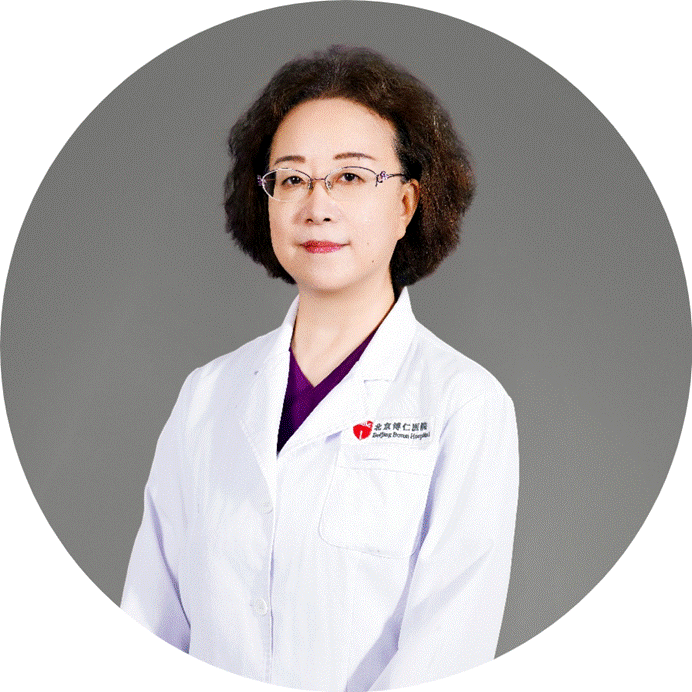
Professor Wu Tong
Gaobo Medical (Hematology) Beijing Research Center
Beijing Gaobo Boren Hospital
Director, Hematopoietic Stem Cell Transplantation Department
Vice President of Medical Affairs
Member, Academic Committee of the Asia-Pacific Blood and Marrow Transplantation Group
Standing Committee Member, Hematologic Oncology Committee of the Chinese Anti-Cancer Association
Deputy Head, Hematopoietic Stem Cell Transplantation and Cellular Therapy Group
Chair, Digital Diagnosis and Treatment Committee for Hematologic Diseases
Vice Chair, Targeted Therapy Committee of the Chinese Medical Women’s Association
Vice President, Hematology Institution Branch of the Chinese Hospital Association
Member, Hematology Branch of the Chinese Medical Association
Member, American Society of Hematology (ASH)
Member, International Society of Hematology
Standing Committee Member, Hematology Committee of the Chinese Medical Women’s Association
Committee Member, Integrated Hematology Committee of the Chinese Medical Doctor Association
Editorial Board Member of Chinese Journal of Hematology, Journal of Clinical Hematology, Hematology/Oncology and Stem Cell Therapy, and Blood Chinese Edition
Executive Editor-in-Chief of Hematology and Oncology Discovery