
On April 21, 2026, Professor Shi Yanxia and Professor An Xin’s team from Sun Yat-sen University Cancer Center published their latest findings in the international journal Cancer Communications under the title “Camrelizumab Plus Nab-paclitaxel in Patients with Previously Treated Advanced Urothelial Carcinoma: A Multicenter Phase II Study.”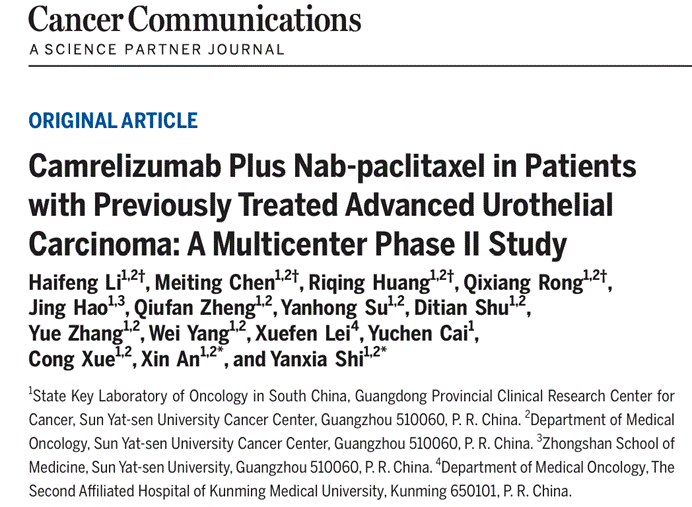
The study explored the efficacy and safety of camrelizumab combined with nab-paclitaxel in patients with previously treated advanced urothelial carcinoma, offering a new therapeutic strategy that balances both efficacy and accessibility.
Advanced Urothelial Carcinoma Remains a Major Clinical Challenge
Urothelial carcinoma (UC) is one of the most common malignancies of the urinary system. Patients with advanced disease continue to face extremely poor prognoses, particularly after failure of standard first-line therapies.
Although antibody-drug conjugates (ADCs) such as enfortumab vedotin (EV) have shown promising efficacy, their accessibility remains limited because of high costs and restricted availability, as some agents are still undergoing clinical investigation and have not yet entered routine clinical practice. Meanwhile, conventional later-line treatment options remain limited, providing only short durations of disease control, with overall survival generally remaining under one year.
Study Design
This multicenter, single-arm Phase II clinical trial was designed to evaluate whether camrelizumab combined with nab-paclitaxel could provide meaningful therapeutic benefit for patients with advanced urothelial carcinoma who had failed previous treatments.
The study enrolled 60 patients with advanced urothelial carcinoma who had experienced disease progression after at least one platinum-containing regimen. The primary endpoint was progression-free survival (PFS), while secondary endpoints included objective response rate (ORR), overall survival (OS), and safety.
Longer Disease Control Provides Valuable Time for Patients
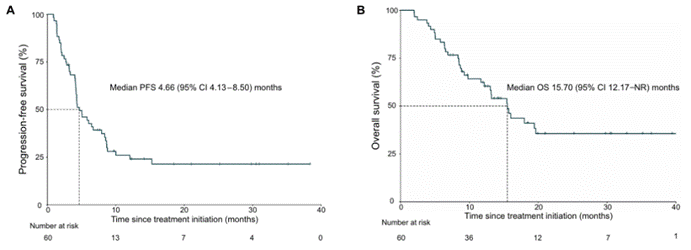
Compared with conventional later-line treatments such as docetaxel, paclitaxel, or vinorelbine, the combination of camrelizumab plus nab-paclitaxel extended median progression-free survival to 4.66 months, representing approximately a two-month improvement in disease control. Median overall survival reached 15.7 months, reflecting an approximately nine-month survival improvement compared with historical conventional therapies.
Effective and Durable Responses
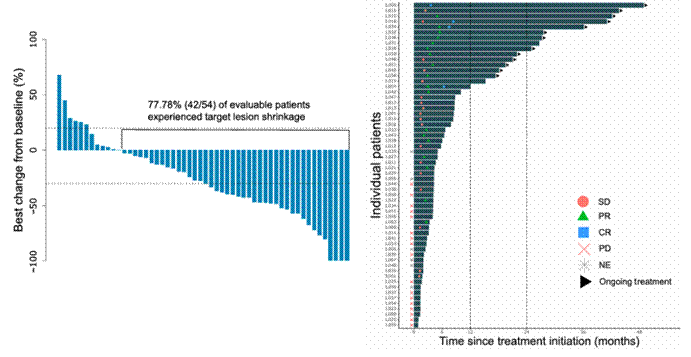
The regimen demonstrated encouraging antitumor activity. The objective response rate reached 37.04%, while the complete response rate reached 7.41%. In addition, 77.78% of patients experienced tumor shrinkage during treatment.
In practical terms, approximately one out of every three patients achieved significant tumor reduction, while 7.41% achieved complete disappearance of detectable tumors.
The durability of response was particularly notable. Among responding patients, 27.8% maintained their responses for more than one year, while 16.7% maintained responses beyond two years. For patients with advanced cancer, this durability is especially meaningful, as treatment success depends not only on whether a response occurs, but also on how long that response can be sustained.
Identifying Patients Most Likely to Benefit
Subgroup analyses showed that patients who had not previously received immune checkpoint inhibitors (ICIs) achieved especially favorable outcomes, with disease control extending to 8.36 months.
Importantly, even among patients previously treated with ICIs, disease control duration remained nearly two months longer than that typically achieved with conventional therapies, reaching 4.07 months.
Biomarker Exploration Supports Precision Medicine
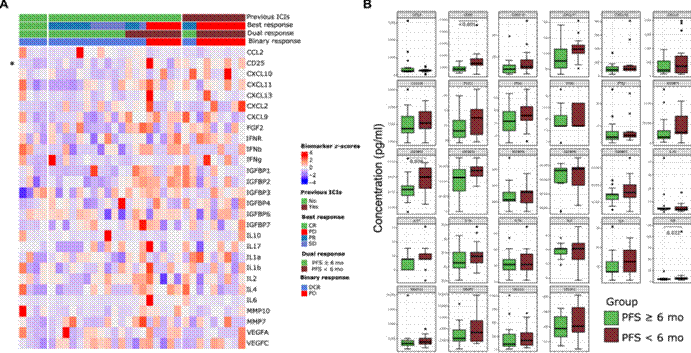
Exploratory biomarker analyses revealed that elevated baseline serum levels of IL-6, IGFBP2, and CD25 were associated with poorer treatment outcomes. These findings may help clinicians identify patients who are more likely to benefit from this therapeutic strategy, further supporting the development of precision treatment approaches in advanced urothelial carcinoma.
Safety Remained Manageable
In terms of safety, grade 3 or higher adverse events occurred in approximately 50% of patients. However, these toxicities were generally manageable and preventable with close monitoring and timely intervention.
Notably, only one patient discontinued treatment because of treatment-related adverse events, indicating that the regimen maintained an acceptable and controllable safety profile in clinical practice.
Conclusion
For patients with advanced urothelial carcinoma, failure of first-line therapy does not mean the end of therapeutic opportunities. The oncology community continues exploring new combination strategies aimed at extending survival and improving quality of life for more patients.
The combination of camrelizumab plus nab-paclitaxel achieved a median progression-free survival of 4.66 months and a median overall survival of 15.70 months, while maintaining a manageable safety profile. These findings provide a promising later-line treatment option for advanced urothelial carcinoma in China that balances both efficacy and accessibility.
Principal Investigators

Corresponding Author: Professor Shi Yanxia

Co-Corresponding Author: Professor An Xin

First Author: Li Haifeng
Co-First Author: Chen Meiting

Edited by Lu Wei
Reviewed by Li Haifeng
Chinese Society of Clinical Oncology (CSCO)
Committee of Medical Oncology