On April 24, 2026, the China–Spain–Canada Colorectal Surgery Clinical Practice Symposium was successfully held at the Chengdong Campus of the Second Affiliated Hospital, Zhejiang University School of Medicine. Renowned surgical experts and scholars from China, Spain, and Canada gathered to engage in in-depth academic exchanges focused on live surgical demonstrations, operative technique sharing, and presentations of cutting-edge technologies.During the conference, trainees from the International College of Surgery Training Academy of China (ICSTAC) also presented the outcomes of their training, demonstrating China’s growing commitment and responsibility in cultivating international medical talent.
On the occasion of this major academic event, Oncology Frontier conducted an exclusive interview with Professor Kefeng Ding, conference chair and founding initiator of ICSTAC. Professor Ding discussed the highlights and global academic value of the symposium, the distinctive strengths and technological advantages of Chinese colorectal surgery, and the international development of the discipline. He also systematically explained ICSTAC’s core role as a platform for high-level international academic dialogue, global sharing of advanced surgical technologies, and training of young international surgeons.
His insights provide valuable practical experience for strengthening global collaboration in colorectal surgery, building new models of international medical cooperation, and promoting broader access to high-quality medical resources worldwide.
01
Oncology Frontier: This China–Spain–Canada Colorectal Surgery Clinical Practice Symposium has brought together experts from three countries. In your view, what unique value and characteristics does this meeting offer in advancing the field of colorectal surgery?
Professor Kefeng Ding
Second Affiliated Hospital, Zhejiang University School of Medicine
This China–Canada–Spain Colorectal Surgery Clinical Practice Symposium carries a strong international character in terms of its scientific content, communication format, and academic outcomes.
Through this conference, Chinese surgeons are able to gain a deeper understanding of the clinical practice patterns, academic perspectives, and research priorities of colorectal surgeons overseas. At the same time, internationally renowned colorectal surgery experts can fully appreciate and recognize the capabilities, techniques, and distinctive strengths of Chinese surgeons. It is truly a valuable platform for meaningful international exchange.
In the field of colorectal surgery, Chinese surgeons have consistently contributed an increasingly influential voice on the global stage. As a public hospital committed to advancing internationalization, the Second Affiliated Hospital of Zhejiang University adheres to the philosophy: “I need the world, and the world needs me.” Guided by this vision, we actively promote two-way international exchange, sustained interaction, and mutual advancement.
02
Oncology Frontier: Since 2019, your hospital has served as a Vice Chair institution of China’s “Belt and Road” Health Professionals Development Alliance. In 2023, the ICSTAC program you lead officially launched, and during this conference, cooperation agreements among China, Spain, and Canada were formally signed to further promote international exchange. Could you discuss the significance of the hospital’s and ICSTAC’s development in fostering global collaboration?
Professor Kefeng Ding
The Second Affiliated Hospital of Zhejiang University carries important responsibilities in training physicians from both China and abroad across multiple specialties.
Internationally, we have focused on countries participating in the Belt and Road Initiative as well as developed nations. To date, specialists from countries with long-established Western medical traditions—including Canada, Italy, Spain, Belgium, Brazil, and Argentina—have come to our center for training and academic exchange.
At the same time, we place great emphasis on improving healthcare education and medical capacity in developing countries participating in the Belt and Road Initiative.
Our training programs are designed for physicians at different stages of development. We provide foundational training for resident physicians while also offering advanced programs for specialists who already possess certain technical skills and wish to further refine their expertise.
Importantly, through both “bringing in” and “going out,” training international physicians has also created valuable opportunities for us to learn from advanced global concepts and clinical thinking, which in turn benefits the development of our own disciplines and institution.
In this sense, the Second Affiliated Hospital of Zhejiang University is strategically building an international medical training platform from a global perspective, striving to achieve comprehensive training dimensions and broad international outreach.
Over the past few years, many outstanding international specialists have graduated from ICSTAC. After returning to their home countries, they have played increasingly important roles in their institutions, helping establish a strong international reputation for the program. Today, many overseas physicians learn about our training system through word-of-mouth recommendations and media exposure, and actively apply to participate.
This has also become an important pathway for Chinese hospitals to enhance their international visibility and global recognition.
03
Oncology Frontier: Whether through ICSTAC or this China–Spain–Canada symposium, what aspects of Chinese colorectal surgery do you believe are most distinctive, innovative, and worthy of learning for international colleagues?
Professor Kefeng Ding
Every country has its own unique characteristics in surgical practice.
Through more than two to three decades of dedicated development and continuous exploration, Chinese surgeons have increasingly contributed influential achievements to the global stage. This progress has been supported not only by the continuous improvement of China’s healthcare system, but also by the country’s vast clinical case resources, which provide tremendous opportunities for surgical innovation and practical exploration.
Chinese colorectal surgery has developed significant strengths in the application of new technologies such as robotic surgery, as well as in innovative surgical approaches including NOSES and LISH techniques. These advancements are allowing Chinese surgeons to gain growing recognition internationally.
At the same time, many excellent overseas institutions possess valuable experience in multidisciplinary treatment and postoperative rehabilitation that we can continue to learn from.
Throughout the development of ICSTAC, we have continuously learned from others while sharing our own strengths, enabling overseas experts to deeply understand and fully recognize the advantages and capabilities of Chinese surgical practice.
Only through equal exchange and mutual learning can we achieve more high-quality academic achievements.
04
Oncology Frontier: During this conference, Professor Antonio from Spain and Professor Zhao Ren from Ruijin Hospital both shared insights on robotic surgery. In your opinion, what are the respective strengths of China and other countries in robotic surgery applications, and where is further improvement needed?
Professor Kefeng Ding
The original technological innovation behind robotic surgery originated overseas. However, during its application and development in China, the value, precision, sophistication, and clinical outcomes of robotic systems have been further enhanced.
This demonstrates the complementary strengths of Western countries in original innovation and China in applied innovation and clinical adaptation.
Today, Chinese medical professionals are also continuously striving to carry out original innovations grounded in clinical practice. Domestic robotic surgical systems in China are rapidly evolving, with their capabilities and technical performance steadily improving.
Whether in China or abroad, the ultimate goal of advances in robotic technology is to serve patients. In my view, both Eastern and Western approaches have their own advantages, but ultimately, success depends on people. Innovations such as AI and robotic systems must ultimately be implemented in real clinical practice by physicians, and Chinese surgeons possess many strengths in this regard.
05
Oncology Frontier: Looking ahead, what are your expectations for the future development of ICSTAC and for international exchange in the field of colorectal surgery?
Professor Kefeng Ding
I hope not only that more colorectal surgeons will join the field of international medical training, but also that more Chinese physicians will embrace this mission with enthusiasm and dedication.
China’s development, its responsibility as a major country, and the expansion of its global vision all require leading Chinese hospitals and disciplines to take on the responsibility of training qualified physicians for the world.
Looking toward the future, I firmly believe that China will play an even greater role in global medical and surgical training.
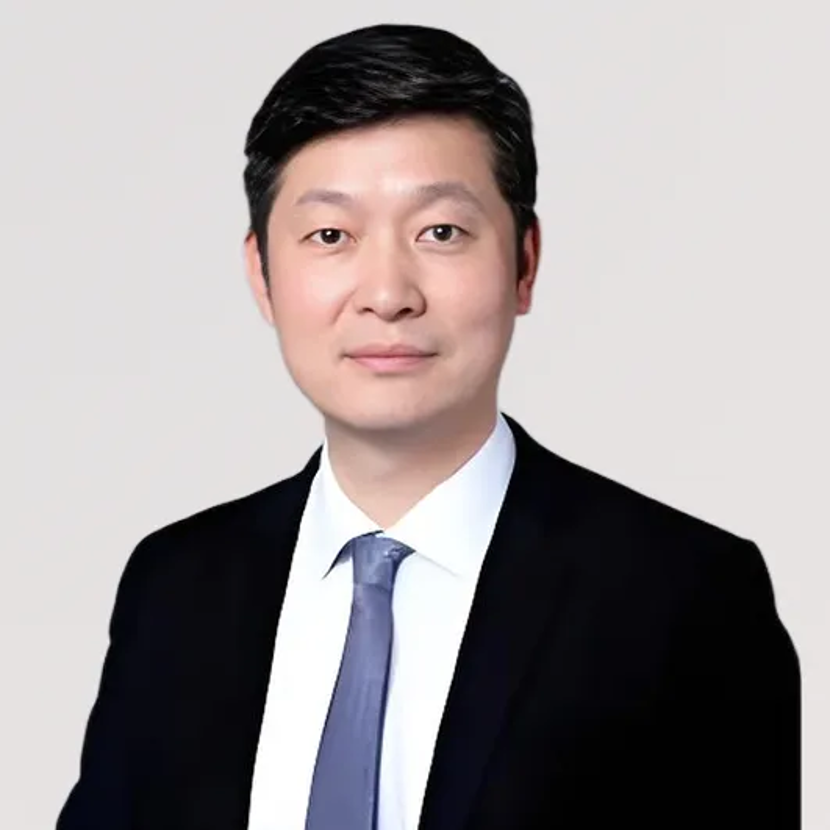
Professor Kefeng Ding