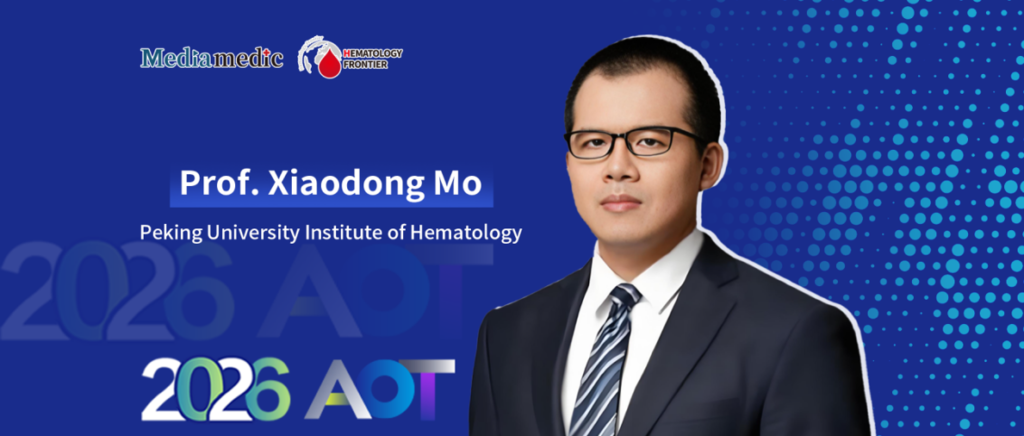
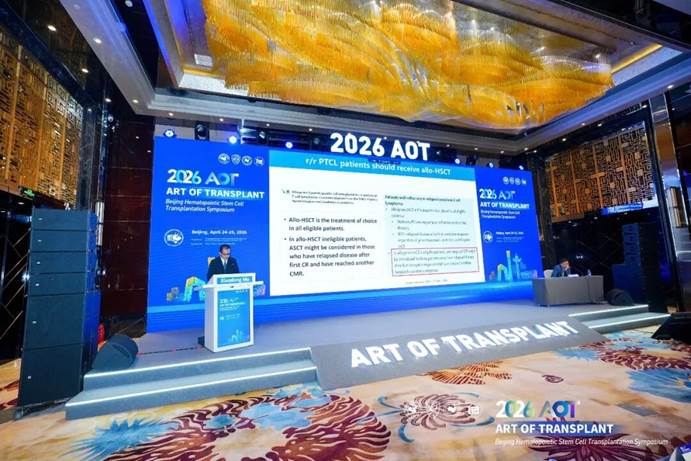
To comprehensively improve public health and strengthen strategies for the prevention and treatment of major diseases, medical innovation and international collaboration have become key drivers of clinical progress. Against this backdrop, the 2026 Beijing International Hematopoietic Stem Cell Transplantation Conference (AOT) was successfully held in Beijing from April 24 to 25, 2026. Organized by the Hematology Branch of the China International Exchange and Promotive Association for Medical and Health Care and hosted by the National Clinical Research Center for Hematologic Diseases and the Peking University Institute of Hematology, this year’s conference centered on the theme “The Art of Transplantation.” The meeting brought together leading hematology experts from around the world to discuss cutting-edge innovations and future directions in hematopoietic stem cell transplantation.During the conference, Oncology Frontier – Hematology Frontier conducted an exclusive interview with Professor Xiaodong Mo from Peking University People’s Hospital. The discussion focused on key clinical issues surrounding allogeneic hematopoietic stem cell transplantation (allo-HSCT) in non-Hodgkin lymphoma (NHL), with Professor Mo sharing his academic perspectives and clinical experience to provide valuable insights for patient management.
How do you currently define the clinical value of allogeneic hematopoietic stem cell transplantation in the evolving treatment landscape of non-Hodgkin lymphoma (NHL)? With the rapid development of targeted therapies and immunotherapy, is the transplant candidate population changing?
Professor Xiaodong Mo
Xiaodong Mo
“Non-Hodgkin lymphoma is a highly heterogeneous group of diseases encompassing multiple subtypes.
For B-cell non-Hodgkin lymphoma, advances in cellular therapies and targeted treatments have been remarkably rapid and have achieved highly encouraging efficacy. Consequently, allogeneic hematopoietic stem cell transplantation is now positioned primarily as a salvage strategy for patients with relapsed or refractory disease.
In contrast, for T-cell non-Hodgkin lymphoma, although a number of targeted and cellular therapies are currently available, long-term survival outcomes remain unsatisfactory. Therefore, beyond its important role in relapsed and refractory disease, allogeneic transplantation is also being explored as part of frontline consolidation therapy in an effort to further improve patient prognosis.”
In real-world clinical practice, how do you determine the optimal timing for allogeneic transplantation in patients with relapsed/refractory NHL? What are the key considerations regarding disease assessment, bridging therapy selection, and depth of disease control before transplantation?
Professor Xiaodong Mo
“At present, one of the major challenges in allogeneic transplantation for lymphoma is that patients are often referred for transplantation only after undergoing multiple lines of chemotherapy and targeted therapies, when conventional treatment options have already failed.
This is also an important reason why outcomes of allogeneic transplantation in NHL are generally less favorable than those observed in leukemia.
Large international studies have shown that receiving second-line or later salvage therapies significantly increases non-relapse mortality following allogeneic transplantation.
Therefore, from the perspective of overall treatment strategy, patients who are eligible for transplantation should be considered for allogeneic transplantation as early as possible if frontline salvage therapy fails.
At that stage, patients typically still maintain relatively good performance status and organ reserve, which may contribute to improved transplant outcomes.
In addition, although the depth of disease remission is indeed associated with transplant prognosis, for certain chemotherapy-insensitive disease subtypes, simply pursuing further tumor reduction before transplantation may not necessarily translate into survival benefit. In such situations, clinicians should transition to allogeneic transplantation without unnecessary delay.”
In the long-term management of patients after allogeneic transplantation, how can clinicians balance relapse prevention with control of graft-versus-host disease (GVHD)? In recent years, what advances or emerging strategies in maintenance therapy, immune regulation, or novel approaches deserve particular attention?
Professor Xiaodong Mo
“There is a close relationship between graft-versus-host disease (GVHD) and the graft-versus-tumor effect.
At present, it is generally believed that for high-risk patients, achieving durable disease control while completely avoiding GVHD remains difficult.
However, important advances have been made in recent years in the prevention and treatment of GVHD.
For example, ROCK2 inhibitors exert relatively weaker suppression on CD8-positive T cells and primarily function through immune modulation and antifibrotic mechanisms. Their role in clinical GVHD prevention and management is becoming increasingly important.
Therefore, prophylactic and therapeutic application of these novel anti-GVHD agents may help partially separate GVHD from the graft-versus-tumor effect, thereby improving transplant outcomes in high-risk NHL patients.”
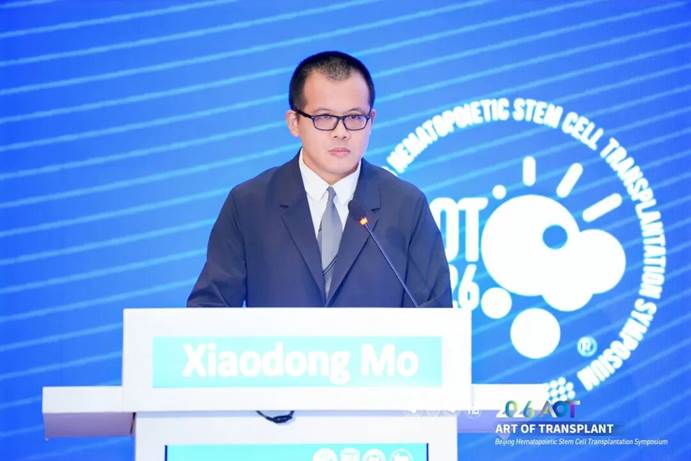
Expert Profile
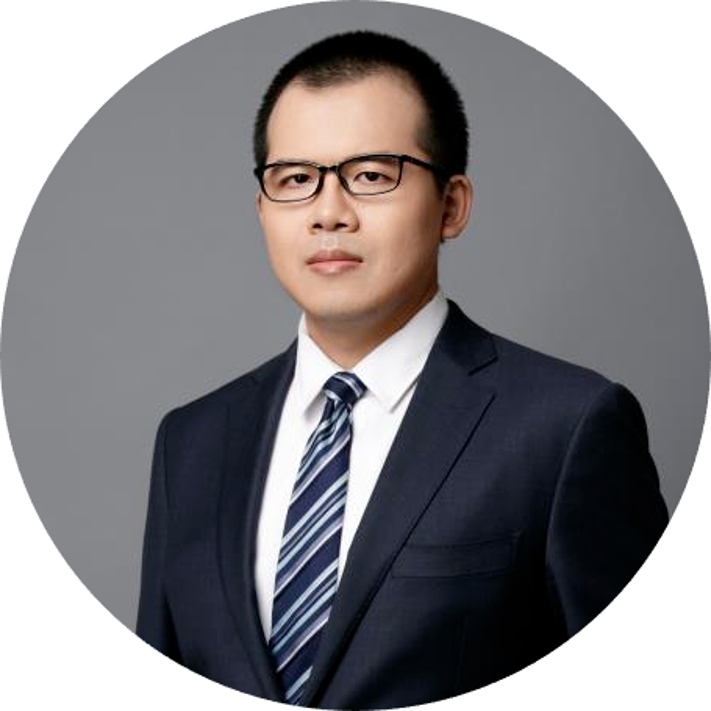
Xiaodong Mo, MD, PhD
Xiaodong Mo
- Chief Physician, Department of Hematology, Peking University People’s Hospital
- Associate Professor and Doctoral Supervisor
- Selected as a Beijing Young Top Talent and recognized as a High-Level Innovation and Entrepreneurship Talent in Beijing
- Honored as an Outstanding Young Scientific and Technological Innovator in Tongzhou District
Professor Xiaodong Mo has served as principal investigator for multiple research programs, including:
- Subprojects under China’s National Key Research and Development Program
- General projects funded by the National Natural Science Foundation of China
He has published more than 90 SCI-indexed papers as first or corresponding author (including co-authorships).
As a major contributing investigator, he has received several prestigious awards, including:
- Second Prize of the National Science and Technology Progress Award of China
- First Prize of the Huaxia Medical Science and Technology Award