Flexible ureteroscopic lithotripsy is an important treatment modality for upper urinary tract stones. However, conventional procedures are associated with several limitations, including low stone-free rates, elevated intrarenal pressure during surgery, and increased risks of postoperative infection and ureteral stricture.The FANS technique (Flexible and Navigable Suction Access Sheath), pioneered by Chinese investigators, is the first approach to demonstrate—through high-level evidence-based clinical data—non-inferiority to conventional percutaneous nephrolithotomy (PCNL). At the same time, other clinician–engineer innovations, including the world’s thinnest digital flexible ureteroscope and AI-assisted puncture systems, have already entered clinical practice.
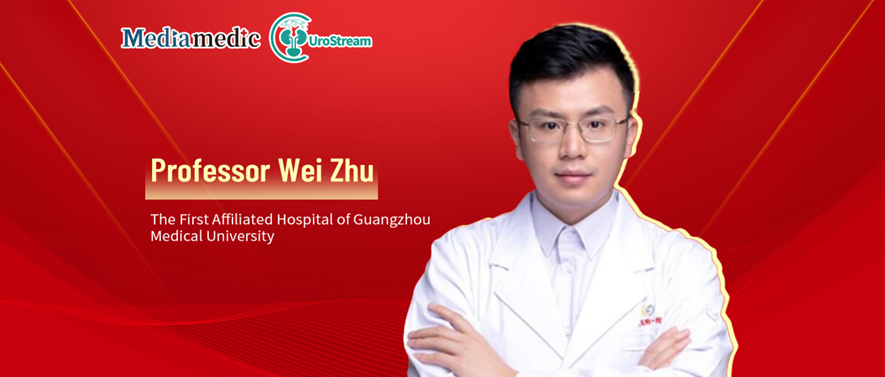
Oncology Frontier – UroStream invited Professor Wei Zhu from the Department of Urology, The First Affiliated Hospital of Guangzhou Medical University, to discuss technological innovation, clinical translation, and the key elements driving these advances.
FANS Technology: Addressing Key Limitations of Conventional Flexible Ureteroscopy
Oncology Frontier – UroStream:
Your team has led research demonstrating, for the first time through high-level evidence-based data, that the FANS technique achieves efficacy comparable to conventional PCNL. What key clinical limitations of traditional flexible ureteroscopic lithotripsy does this technology address? What are its core innovations?
Professor Wei Zhu:
The FANS technique was originally pioneered by the teams of Professor Baihua Shen and Professor Hui Liang from Zhejiang University School of Medicine. The technique incorporates a flexible suction access sheath into flexible ureteroscopic lithotripsy.
This innovation primarily addresses two major limitations of conventional flexible ureteroscopy.
First, traditional flexible ureteroscopy is designed mainly for stone fragmentation, leaving patients to pass residual fragments spontaneously after surgery. In contrast, the FANS technique enables simultaneous fragmentation and active suction removal of stone debris, thereby significantly improving stone clearance rates.
Second, the suction function helps reduce intrapelvic pressure during surgery, which lowers the risk of postoperative infection and minimizes the likelihood of ureteral stricture caused by excessive irrigation pressure.
This technology represents a major advancement in flexible ureteroscopic lithotripsy. Conventional flexible ureteroscopy is generally suitable only for relatively small stones, whereas the FANS technique achieves stone-free rates comparable to those of conventional PCNL for medium-sized stones measuring approximately 2–3 cm.
However, it should also be noted that the procedure requires longer operative times and demands a higher level of surgical expertise.
From Clinical Need to Clinical Translation: The Role of Clinician–Engineer Collaboration
Oncology Frontier – UroStream:
Your team has independently developed the world’s thinnest digital flexible ureteroscope and an AI-assisted puncture system, both of which are now widely used clinically. How did these clinician–engineer innovations evolve from clinical needs into real-world applications? What do you consider the most critical factor in this process?
Professor Wei Zhu:
My mentor, Professor Guohua Zeng, has always emphasized that the most important problems clinicians should solve must originate from clinical practice itself. If an invention does not address a real clinical problem, it has little practical value.
In this process, the physician’s primary responsibility is to identify unmet clinical needs and pain points. However, successful translation ultimately depends on the support of industry partners who can transform clinical ideas into tangible products.
The process requires close collaboration between clinicians and enterprises—from identifying clinical demands to developing and implementing practical solutions.
The essence of clinician–engineer collaboration lies in this partnership: physicians define the unmet clinical needs, while industry provides the technological and engineering expertise necessary to bring those ideas into clinical reality. Only through such close cooperation can true clinical translation be achieved.
Expert Profile
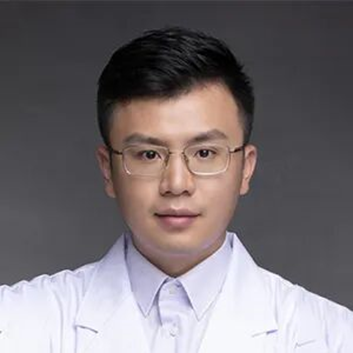
Professor Wei Zhu Department of Urology The First Affiliated Hospital of Guangzhou Medical University