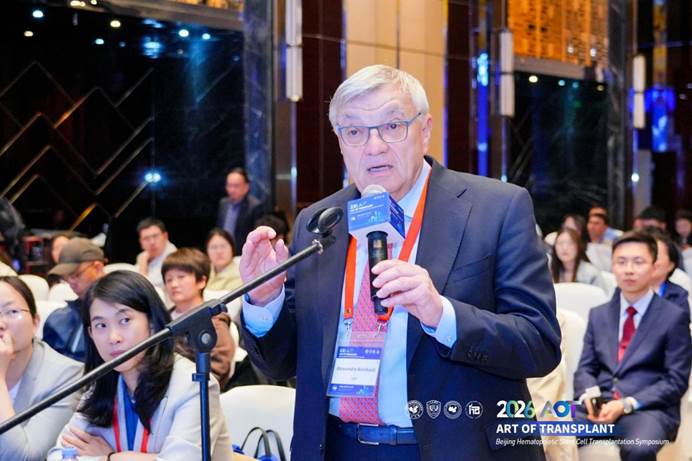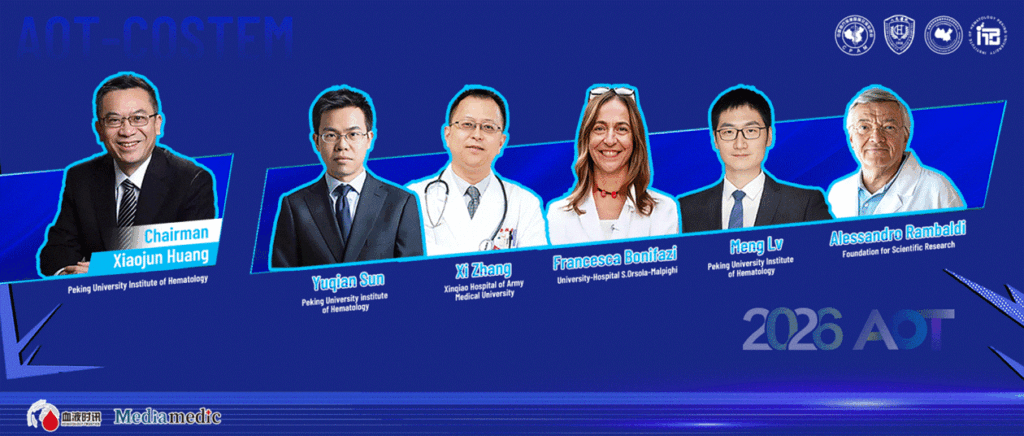
Academic progress begins with debate and matures through consensus. As a cornerstone therapy for hematologic diseases, hematopoietic stem cell transplantation (HSCT) continues to face numerous unresolved controversies and clinical dilemmas. Centered on the theme “The Art of Transplantation,” the 2026 Beijing International Hematopoietic Stem Cell Transplantation Conference (AOT 2026) brought together leading experts from around the world to discuss technological innovation and future directions in transplantation medicine.Among the highlights of the meeting was the joint AOT–COSTEM session, which focused on three internationally debated topics:
- Whether mesenchymal stem cells (MSCs) are truly effective for GVHD prevention
- Whether patients with relapsed/refractory B-cell acute lymphoblastic leukemia (r/r B-ALL) should undergo sequential allogeneic transplantation following CAR-T therapy
- Whether splenectomy or splenic irradiation is preferable for patients with myelofibrosis and JAK inhibitor–refractory splenomegaly prior to transplantation
The debates generated intense discussion and attracted significant attention from attendees.
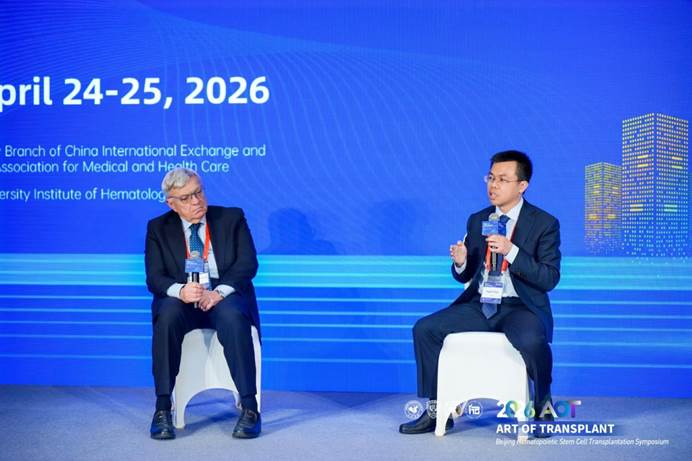
Following the conference, Oncology Frontier – Hematology Frontier invited Academician Xiaojun Huang of the Peking University Institute of Hematology to lead a follow-up roundtable discussion. Three groups of invited experts reunited to revisit the core arguments and explore the deeper implications behind these controversies:
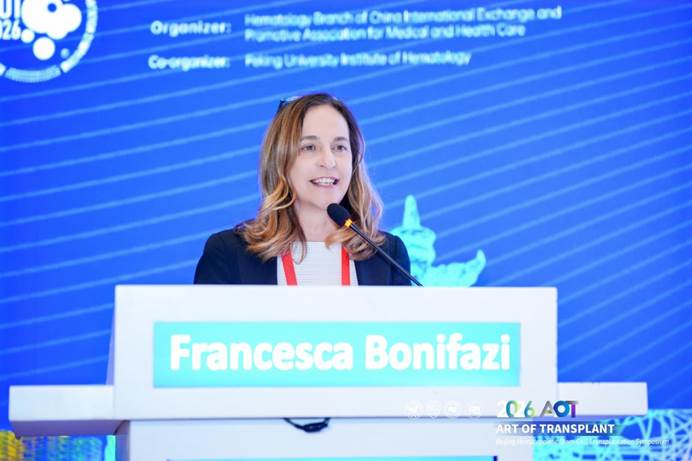
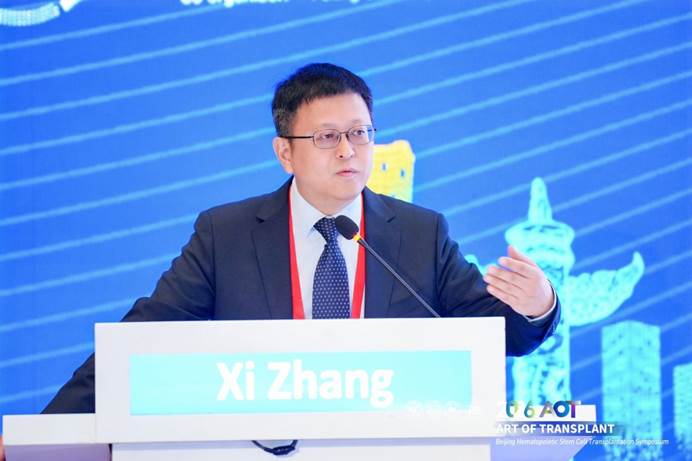
- Professor Xi Zhang from the Second Affiliated Hospital of Army Medical University (Xinqiao Hospital) and Professor Francesca Bonifazi from IRCCS Azienda Ospedaliero-Universitaria di Bologna, Policlinico di Sant’Orsola
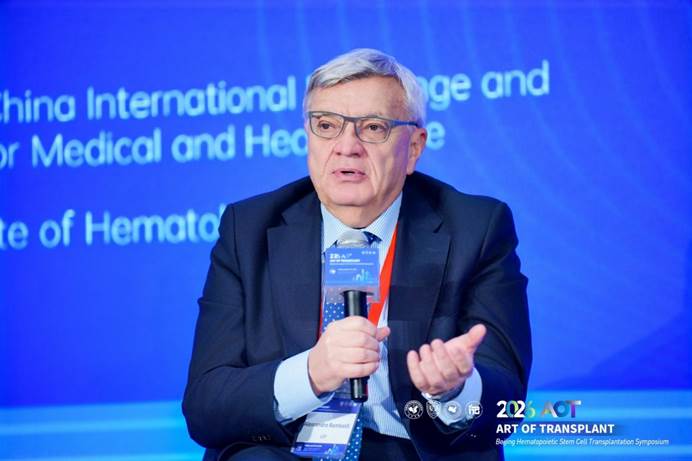
- Professor Meng Lü from the Peking University Institute of Hematology and Professor Alessandro Rambaldi from Papa Giovanni XXIII Hospital, Bergamo
- Professor Alessandro Rambaldi and Professor Yuqian Sun from the Peking University Institute of Hematology
Through the exchange of Chinese and international perspectives, the discussion sought to build consensus and further advance the field of transplantation medicine.
Key Perspective I
MSC for GVHD Prevention: Strong Evidence from China, but International Multicenter Validation Is Still Needed
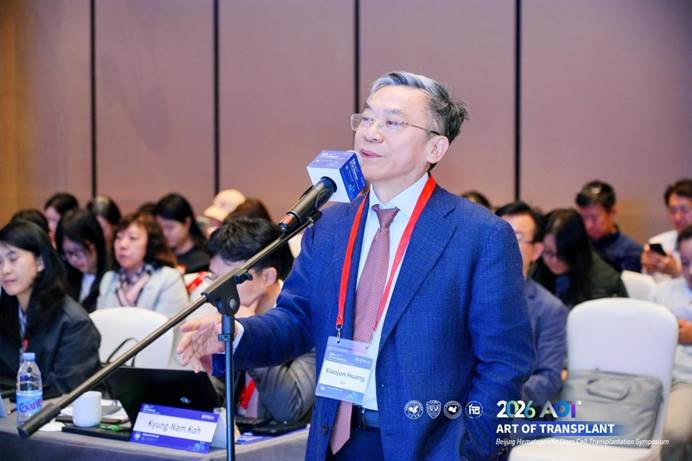
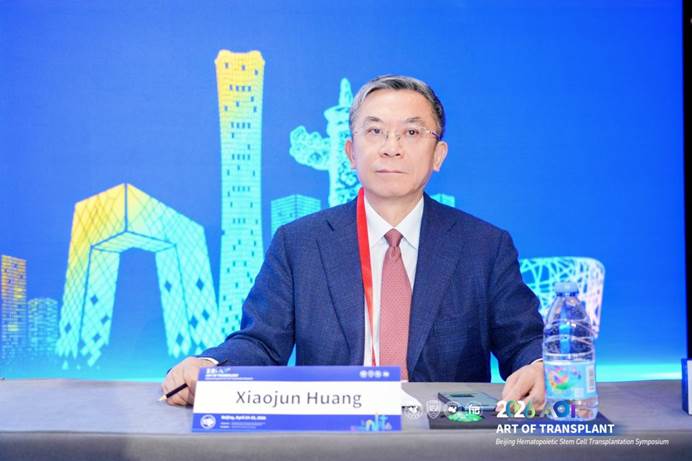
Academician Xiaojun Huang
Xiaojun Huang
“This afternoon’s discussions covered three highly relevant and fascinating topics. The first focused on whether mesenchymal stem cells (MSCs) are effective in preventing graft-versus-host disease (GVHD).
Although high-quality randomized controlled trials have already provided strong evidence supporting MSC prophylaxis, opposition still exists within the field. Reservations remain even within China, and support appears to be even more limited in Europe. Does this suggest that, beyond scientific evidence, cultural context may also influence physicians’ judgment and treatment preferences? I would like to hear your perspectives on this issue.”
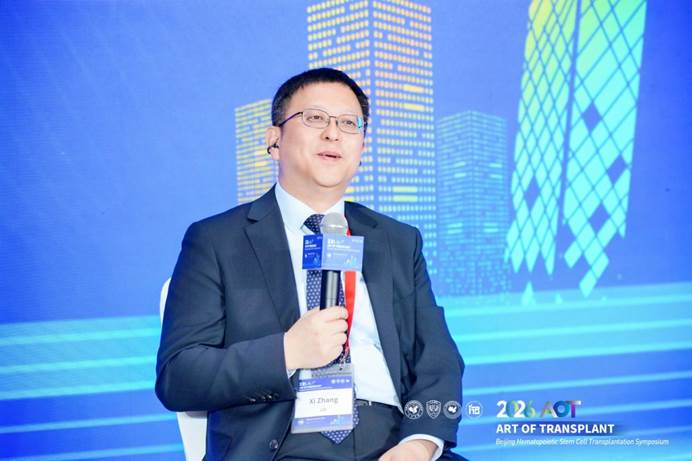
Professor Xi Zhang
Xi Zhang
“Thank you, Academician Huang, for this incisive question, which reflects the field’s strong interest in the application of MSCs in transplantation.
Scientific questions such as these must ultimately be answered through rigorous preclinical and clinical research, and the growing body of evidence-based data in recent years has already demonstrated the value of MSCs in preventing GVHD.
Moving forward, we hope to conduct additional international multicenter clinical trials to further validate not only the role of MSCs in GVHD prevention, but also their ability to promote hematopoietic and immune reconstitution after transplantation.”
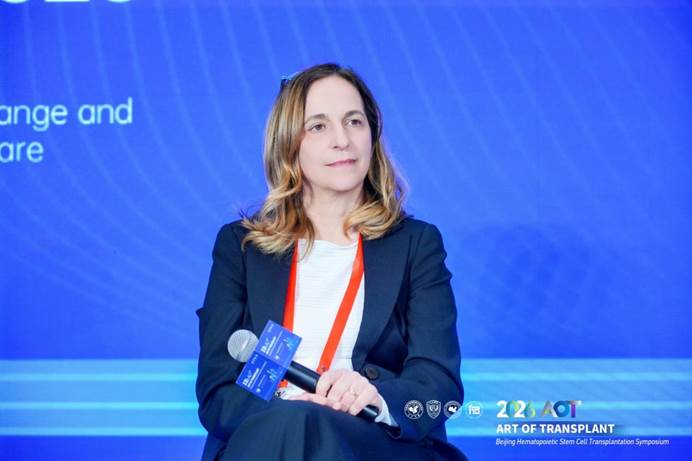
Professor Francesca Bonifazi
Francesca Bonifazi
“The three randomized clinical trials presented by the Chinese teams provide robust and convincing evidence. However, as I mentioned earlier, it is now essential to expand this research onto the international stage to verify reproducibility, ensure comparability between control groups, and confirm whether MSCs derived from cord blood or other sources can achieve similar efficacy.
The reported reduction of severe acute GVHD to below 2–3%, and severe chronic GVHD to around 5%, is truly remarkable and certainly warrants further investigation in Europe and elsewhere.
The key challenge lies in obtaining the resources necessary to conduct randomized trials involving cellular therapies, which will be critical for broader adoption in Europe and other Western countries.
In addition, if this strategy becomes established as a standard therapy in China and continues to demonstrate consistent benefits over time in routine clinical practice, it will carry enormous weight internationally. Given China’s outstanding reputation in hematology, multicenter validation of these findings could strongly support the routine clinical implementation of this approach.
Chinese investigators have already reshaped the landscape of haploidentical transplantation.”
Academician Xiaojun Huang
“Acceptance of new concepts always requires time, and every clinical trial inevitably has limitations. That is why additional evidence remains essential.
I hope that Professor Xi Zhang and colleagues will continue generating even more convincing data to address lingering concerns within the field.
Importantly, China has already approved an MSC product for clinical use. Future clinical trials utilizing this approved product may further strengthen the authority and standardization of the research.”
Key Perspective II
Sequential Transplantation After CAR-T: Shared Evidence, but Different Clinical Decision-Making Between East and West
Academician Xiaojun Huang
“The second topic focused on consolidation transplantation after CAR-T therapy in relapsed/refractory B-cell acute lymphoblastic leukemia (r/r B-ALL).
Whether transplantation should still be performed after CAR-T remains highly controversial. Both speakers presented compelling evidence supporting their respective positions, yet clinical uncertainty persists. I would like to invite both experts to provide additional data or unique insights that may help clarify the decision-making process at this critical therapeutic crossroads.”
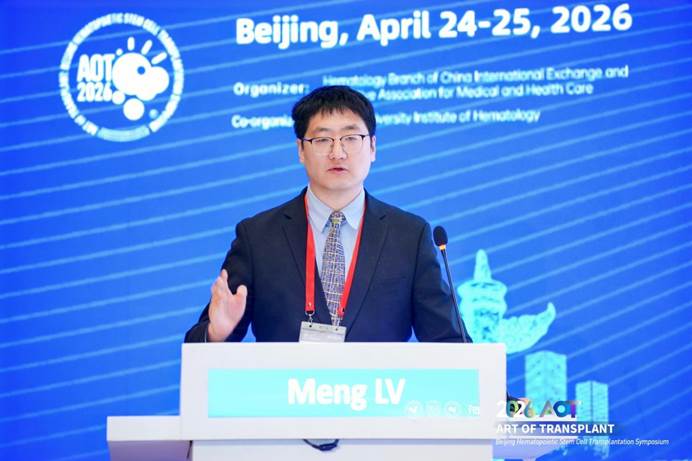
Professor Meng Lü
Meng Lü
“Decisions regarding transplantation should never be absolute; they must integrate multiple clinical factors.
Professor Rambaldi emphasized the importance of non-relapse mortality (NRM), which remains a key determinant of patient outcomes. Reducing NRM is central to clinical practice.
Looking back at the evolution of T-cell–depleted haploidentical transplantation in Europe, NRM has fallen dramatically—from historically over 40% to below 20%—as transplantation strategies evolved from high-dose CD34+ selection to the ‘Beijing Protocol’ and post-transplant cyclophosphamide (PTCy)-based approaches. This fundamentally changed clinical recommendations.
Likewise, when evaluating the value of allogeneic transplantation after CAR-T therapy today, NRM remains a critical consideration.
At the upcoming European Hematology Association (EHA) Congress, I will present data showing that our center has reduced NRM to approximately 5–10%, largely owing to Academician Huang’s extensive expertise in managing GVHD, thrombotic microangiopathy (TMA), and infections. However, in multicenter practice, NRM may rise again to 15–20%, potentially diminishing the survival benefit of transplantation.
The characteristics of the CAR-T product itself are also highly relevant. As Professor Alessandro Rambaldi mentioned, significant differences exist among CAR-T products. For example, AUTO1, which uses a ‘fast off-rate’ design, may be less effective in patients with high tumor burden and therefore more dependent on subsequent transplantation. In contrast, for patients with minimal residual disease (MRD) positivity alone, this single-target therapy may achieve excellent outcomes without transplantation.
Clinical decisions must therefore be individualized according to the specific clinical context.”
Professor Alessandro Rambaldi
Alessandro Rambaldi
“In my view, performing a second allogeneic transplant for patients with ALL is not an ideal strategy.
In Europe, we generally prioritize offering one allogeneic transplant to high-risk patients upfront. I believe Chinese investigators now have a unique opportunity to reshape this scientific debate through a paradigm shift: using CAR-T therapy to replace allogeneic transplantation as frontline innovative treatment for high-risk patients.
Subsequently, transplantation could be reserved for those who still require it based on early CAR-T response and MRD assessment.
Importantly, China is uniquely positioned to initiate investigator-driven clinical trials of this kind. Such studies have become increasingly difficult to conduct in Europe and the United States, where transplantation is sometimes added largely on the basis of accumulated clinical experience rather than rigorous evidence.
I believe Chinese hematologists may once again lead global progress in this field in the near future.”
Academician Xiaojun Huang
“Clinical decisions are grounded in evidence, yet they often extend beyond evidence alone.
Even when presented with the same evidence-based data, clinicians may arrive at very different conclusions because decision-making inevitably incorporates factors beyond the data itself.
Take risk stratification as an example. Although both Eastern and Western physicians recognize its importance, major differences exist in decision-making for MRD-negative patients.
Chinese physicians tend to follow a ‘confirmation of benefit’ approach: if transplantation is shown to provide a meaningful survival advantage, they are inclined to proceed with transplantation.
Western physicians, by contrast, often adopt a ‘risk avoidance’ strategy: if there is insufficient evidence proving that the net benefit outweighs the risks, they are more likely to avoid transplantation.
This divergence in decision-making pathways illustrates that clinical conclusions are based on evidence—but also extend beyond it.
Moreover, regarding MRD-negative patients, achieving disease-free survival rates exceeding 80% after frontline chemoimmunotherapy would indeed represent an ideal outcome. However, we still lack sufficient frontline data to fully support this assumption.”
Key Perspective III
Transplantation in Myelofibrosis: Splenectomy or Irradiation May Depend on Disease Stage
Academician Xiaojun Huang
“Our final topic concerns transplantation in myelofibrosis, which remains a major challenge in both Asia and Europe.
Compared with leukemia, transplantation for myelofibrosis is considerably more difficult.
Both of you agree that splenomegaly is strongly associated with poor transplant outcomes and graft failure. However, as our Japanese colleagues asked earlier today, from a biological perspective, what is the fundamental difference between splenic irradiation and splenectomy in facilitating engraftment?
I would also like to direct a second question specifically to Professor Yuqian Sun. Current evidence suggests that both splenic irradiation and splenectomy improve transplant outcomes compared with no intervention. If both strategies are evidence-based, why is splenectomy often chosen directly in clinical practice rather than trying irradiation first?”
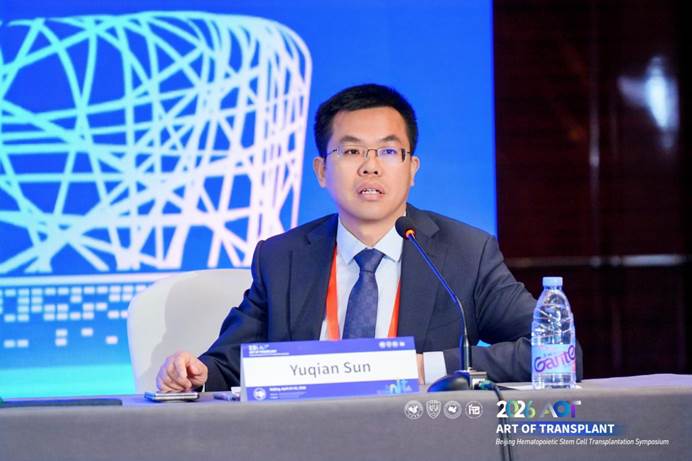
Professor Yuqian Sun
Yuqian Sun
“To be honest, I do not fully understand the mechanistic differences between splenic irradiation and splenectomy.
Based on our current understanding, splenectomy completely removes the spleen and may fully reverse abnormalities potentially related to CXCL12 or CXCR4 signaling, thereby substantially improving stem cell homing. Whether splenic irradiation can achieve similar effects remains unclear.
As for the second question, I personally have not used irradiation prior to splenectomy. However, I have treated nine patients with severe massive splenomegaly who underwent splenic irradiation immediately followed by haploidentical transplantation.
Unfortunately, all nine patients experienced graft failure. Based on this experience, I remain cautious regarding irradiation as a bridge strategy before transplantation.”
Professor Alessandro Rambaldi
“This is an extremely important issue.
Because haploidentical transplantation is far less widely adopted in Europe than in China, substantial differences exist in treatment strategies.
Although I previously wrote an editorial accompanying Polverelli’s paper published in the American Journal of Hematology emphasizing the benefits of splenectomy—and although I personally have extensive experience with splenectomy—the central issue is that splenectomy itself can be fatal, whereas splenic irradiation is relatively safe.
As I emphasized in my presentation, we must carefully collect comprehensive data and include all patients in intention-to-treat analyses.
This is not a black-and-white decision, and several years of follow-up will be required before we can obtain more reliable evidence.”
Academician Xiaojun Huang
“More than a decade ago, I discussed transplantation in myelofibrosis with Professor Nicolaus Kröger. At that time, most available data were based on HLA-matched sibling transplantation.
According to Professor Kröger, Germany tends to adopt transplantation earlier and more proactively in myelofibrosis, initiating transplantation once patients begin developing anemia.
By contrast, Chinese patients often undergo transplantation at much later disease stages, frequently with refractory massive splenomegaly that has not responded to prior irradiation.
These clinical differences may explain why splenectomy appears more beneficial in Chinese patients, whereas irradiation may offer advantages in European populations. Of course, this is only my personal perspective.”
Professor Alessandro Rambaldi
“I completely agree with your point.
Without question, Germany tends to transplant patients with myelofibrosis earlier than Italy does. Although guidelines already recommend timely transplantation, some patients still fail to receive transplant early enough.
We therefore continue advocating for earlier transplantation because allogeneic hematopoietic stem cell transplantation remains the only curative therapy for myelofibrosis, whereas current JAK inhibitors cannot provide cure.”
Conclusion
Medical progress is driven not only by technological breakthroughs, but also by the critical thinking, empathy, and open dialogue embedded within every controversy.
At AOT 2026, the debates surrounding these three major international controversies were never about determining absolute right or wrong. Rather, they reflected the sincere efforts of clinicians striving to identify the best possible solutions for patients amid diverse forms of evidence.
Under the leadership of Academician Xiaojun Huang, these discussions moved beyond surface-level disagreement to explore the deeper essence of each issue—respecting the rigor of evidence-based medicine while acknowledging individual differences shaped by cultural and clinical contexts.
The pragmatism and scientific rigor of Chinese experts complemented the openness and inclusiveness of international colleagues, allowing differing perspectives to converge into meaningful consensus and bringing a more human dimension to scientific evidence.
This cross-border intellectual exchange not only clarified key controversies in transplantation medicine, but also reaffirmed the true essence of medicine itself: it is never merely about data, but about a shared commitment to patient-centered care and the collective pursuit of progress by physicians worldwide.