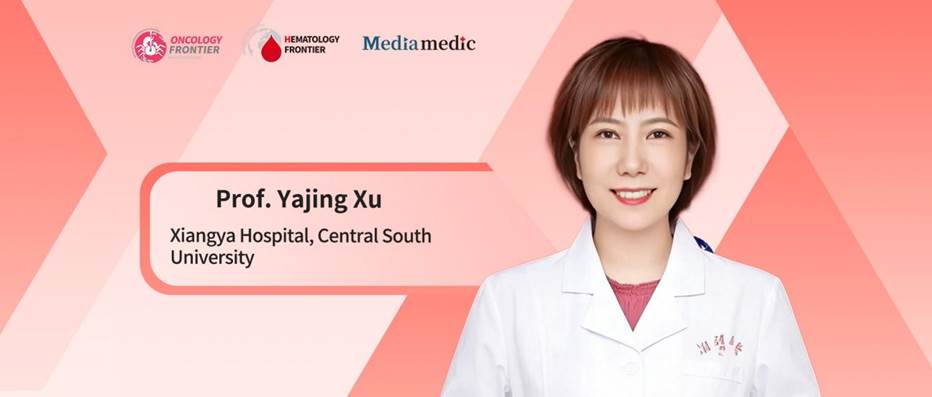
From April 10 to 11, 2026, the Annual Academic Meeting of the Hematology Branch of the China International Exchange and Promotive Association for Medical and Health Care (CPAM), together with the “Huatuo Project” MDT Symposium, was held in Changsha. During the meeting, Professor Yajing Xu, Executive Chair and Director of Hematology at Xiangya Hospital, Central South University, was invited by Hematology Frontier to share her insights on the clinical challenges of long-term follow-up after hematopoietic stem cell transplantation (HSCT), standardized management models, and pathways for primary care collaboration. Her discussion aimed to promote the standardization of follow-up systems and improve long-term survival and quality of life for patients.Q1
Long-term follow-up after HSCT is critical for reducing late complications, improving quality of life, and detecting relapse early. However, many challenges remain in clinical practice. Based on your experience, what are the most prominent challenges in long-term follow-up management?
Professor Yajing Xu:
Comprehensive, long-term follow-up after HSCT is essential for improving survival outcomes and quality of life. In China, there is ongoing progress in establishing dedicated follow-up centers for chronic graft-versus-host disease (cGVHD).
One of the most significant challenges in clinical practice is the early identification and diagnosis of organ involvement in chronic-phase cGVHD. This requires pulmonary function monitoring as well as comprehensive disease assessment and scoring.
However, current consensus-recommended scoring systems for cGVHD are relatively complex, requiring separate evaluation of multiple organ systems. In busy outpatient settings, completing detailed assessments within limited consultation time can be both time-consuming and technically demanding.
Therefore, there is a pressing need for more efficient screening tools. For example, dedicated digital applications or standardized patient-reported questionnaires completed prior to clinic visits could facilitate rapid screening and scoring, enabling timely and precise therapeutic interventions.
At the same time, the team led by Professor Xiaojun Huang is advancing the development of big data platforms for clinical data collection and analysis, allowing for more efficient integration and utilization of patient information. With the continued evolution of artificial intelligence and data-driven tools, these challenges are expected to be progressively addressed.
Q2
As treatment technologies evolve, approaches to long-term follow-up are also being optimized. What are the key elements of effective follow-up management, and how are recent advances improving standardization and clinical outcomes?
Professor Yajing Xu:
The core of long-term follow-up after HSCT lies in ensuring that patients adhere to regular, standardized follow-up schedules, thereby minimizing loss to follow-up. Implementing a structured management model is therefore critical.
At our center, we have established a full-cycle management system supported by a digital platform based on WeChat. Patients are enrolled into this system as early as the pre-transplant phase. From donor evaluation and pre-transplant assessments onward, patients can maintain real-time communication with the clinical team through the platform.
After transplantation, the system continues to coordinate follow-up care by providing timely reminders for outpatient visits and required examinations. Once tests are completed, patients can return home, and results—such as bone marrow reports—can be accessed through the platform. Physicians can review results remotely and provide prompt guidance.
This approach significantly reduces the time and financial burden associated with repeated hospital visits and helps prevent interruptions in follow-up. Since implementing this full-cycle management system, our center has achieved near-complete adherence to standardized follow-up, a model that could be broadly adopted nationwide.
Q3
Primary care settings play a crucial role in long-term follow-up after transplantation and are a key focus of the “Huatuo Project.” Based on your experience, how can public health initiatives further strengthen follow-up management at the primary care level?
Professor Yajing Xu:
As the leading institution for hematology in Hunan Province and the coordinating center for HSCT collaboration in the region, we have a responsibility to promote the development of transplantation services at the primary care level.
The “Huatuo Project” outreach initiative plays an important role in enhancing the diagnostic and treatment capabilities of local hospitals. Given that the number of independently performed transplants at the primary level remains limited, a key priority is to support standardized follow-up for patients who return to their local communities after undergoing transplantation at tertiary centers.
Through systematic training of primary care physicians, mild complications can be managed locally, reducing patient burden while enabling early detection and intervention for post-transplant complications.
Leveraging the “Huatuo Project,” we will continue to conduct regular outreach activities, including physician training and patient education, while strengthening coordination within integrated healthcare networks. This approach optimizes resource allocation: complex care can remain centralized, while routine follow-up can be managed locally.
Such a model not only reduces economic burden but also ensures continuity of care, ultimately improving long-term survival and quality of life for patients.
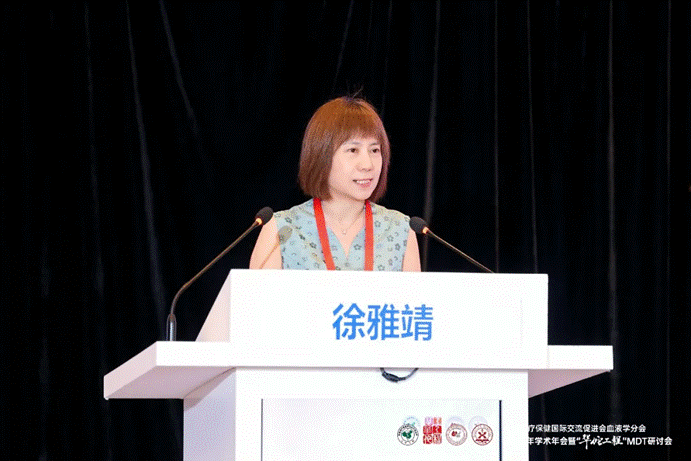
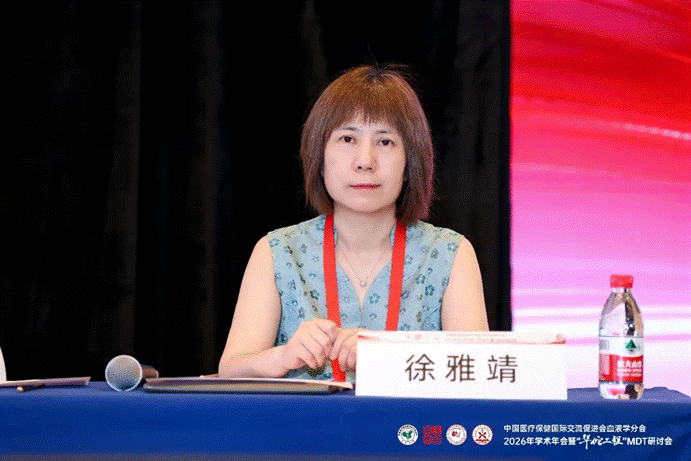
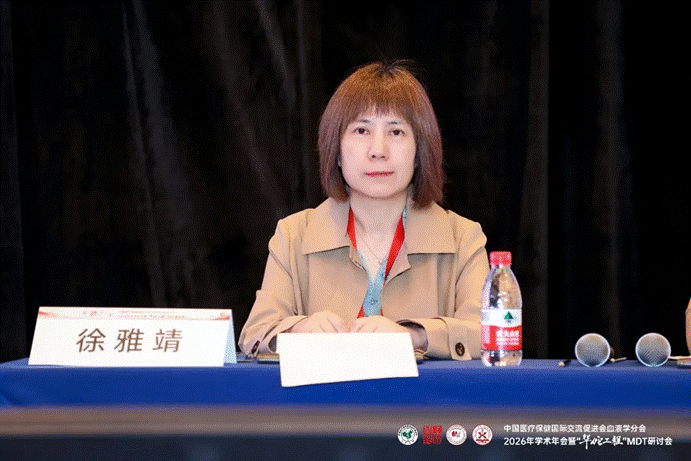
Expert Profile
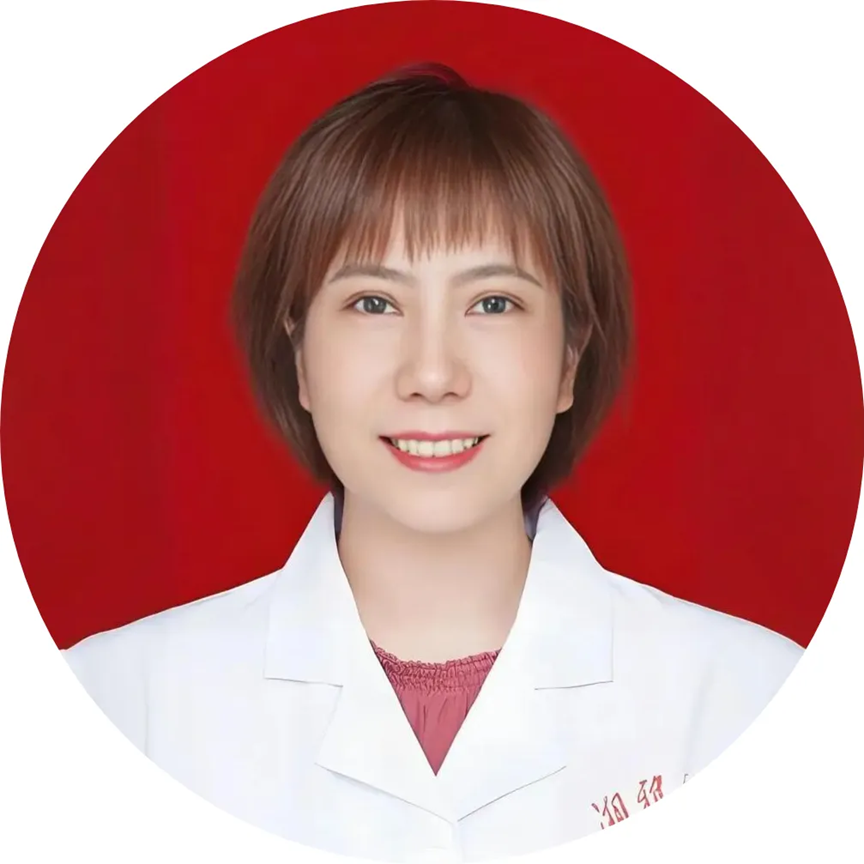
Professor Yajing Xu
Xiangya Hospital, Central South University
- Chief Physician, Professor, Doctoral Supervisor
- Director, Department of Hematology, Xiangya Hospital, Central South University
- Director, Department of Hematology, Xiangya School of Medicine
- Committee Member, Hematology Branch, Chinese Medical Association
- Standing Committee Member, Hematology Physicians Branch, Chinese Medical Doctor Association
- Chair, Hematology Society, Hunan Medical Association
- Standing Committee Member, Hematologic Oncology Committee, Chinese Anti-Cancer Association
- Member, HSCT Application Group, Hematology Branch, Chinese Medical Association
- Standing Committee Member, Hematology Committee, China Association of Integrative Medicine
- Vice Chair, HSCT Committee, Beijing Cancer Prevention and Treatment Society
- Standing Committee Member, HSCT Committee, China Primary Health Care Foundation
- Standing Committee Member, Hematology Committee, Cross-Strait Medical and Health Exchange Association
- Standing Committee Member, Hematology Branch, CPAM
- Deputy Secretary-General, Infection Committee in Hematopoietic Transplantation, Chinese Geriatrics Society
- Director, Hunan Clinical Research Center for Hematologic Malignancies
- Head, Hunan HSCT Collaborative Group
- Visiting Scholar, City of Hope National Medical Center, USA