Editor’s Note: From April 17 to 22, 2026, the Annual Meeting of the American Association for Cancer Research—one of the most influential events in global oncology—was held. At this premier scientific forum, the R&D team of Qilu Pharmaceutical presented a series of independently developed innovative research achievements spanning cutting-edge fields such as antibody–drug conjugates (ADCs), bispecific and trispecific antibodies, and small-molecule therapies.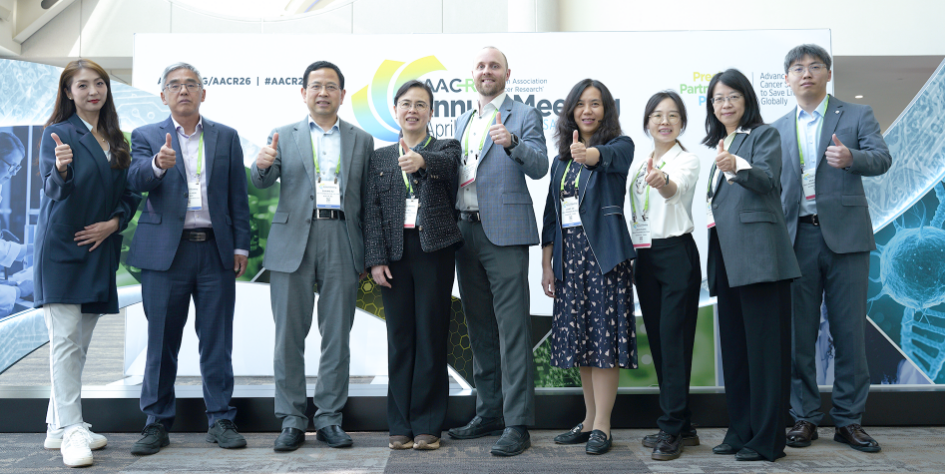
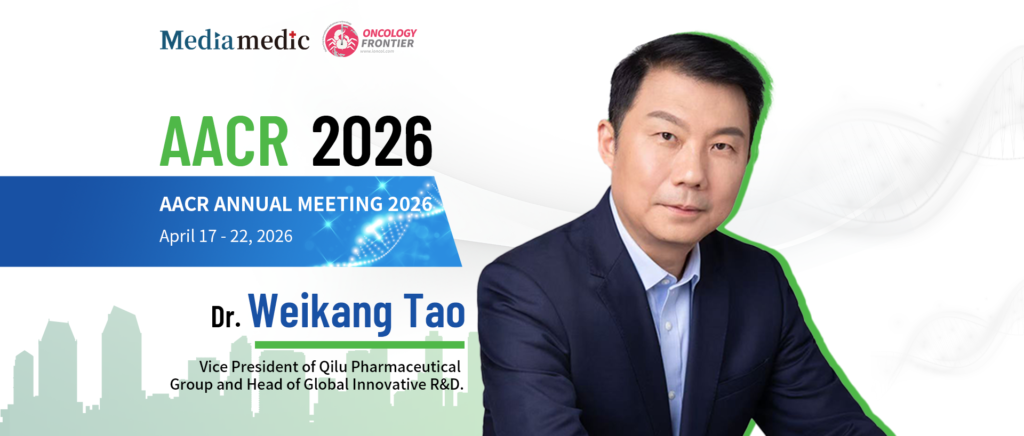
During the meeting, Oncology Frontier conducted an exclusive on-site interview with Dr. Weikang Tao, Vice President of Qilu Pharmaceutical Group and Head of Global Innovative R&D. Drawing on the latest data presented at AACR, Dr. Tao provided an in-depth analysis of Qilu’s strategic approach to addressing unmet clinical needs, achieving technological breakthroughs, empowering clinicians, and building globally competitive R&D teams.
Collaborative Innovation: A Strong Pipeline of Independent R&D Achievements
Solid tumors and hematologic malignancies remain major threats to patient survival. For patients whose disease progresses despite existing therapies, the development of novel treatment strategies has become a shared priority for both clinicians and the pharmaceutical industry.
At this year’s AACR meeting, Qilu Pharmaceutical presented a comprehensive and diversified portfolio of achievements, highlighting its deep-rooted capabilities in oncology drug development.One of the key highlights was QLS5132, a CLDN6-targeting ADC independently developed by Qilu. As one of the first such candidates from China to enter clinical development, QLS5132 had its Phase I study selected for oral presentation.Preliminary data demonstrated encouraging antitumor activity in patients with platinum-resistant ovarian cancer.
Beyond a single pipeline breakthrough, Qilu also showcased multiple studies across bispecific antibodies, trispecific antibodies, and novel small molecules in poster sessions. From target discovery and molecular design to clinical translation, these achievements reflect years of dedicated research and coordinated teamwork. Collectively, they demonstrate Qilu’s systematic R&D strategy and its transition toward multi-target, multi-mechanism innovation.
Addressing Clinical Pain Points: A Differentiated Strategy to Overcome Key Challenges
Despite the advances in precision medicine and immunotherapy, substantial unmet needs remain in oncology. According to Dr. Weikang Tao, although significant progress has been made over the past decade, overall five-year survival rates in China still lag behind those in Western countries. For cancers such as liver, pancreatic, and esophageal cancer, five-year survival rates remain below 30%.
These realities underscore the urgent need for more effective and innovative therapies. Qilu’s R&D strategy is firmly centered on addressing these unmet clinical needs.
In tackling the three major challenges in oncology—drug resistance, tumor heterogeneity, and immunotherapy-related toxicity—Qilu adopts a comprehensive approach that begins at the level of target biology. Through close collaboration with academic institutions and clinicians, the team carefully evaluates the biological relevance of targets, their role in tumor progression, and their differential expression relative to normal tissues, thereby minimizing potential off-target toxicity.
At the molecular design stage, Qilu leverages its proprietary platforms in ADCs, bispecific/multispecific antibodies, and small molecules to achieve precise optimization. For example, linker and payload engineering is used to improve the therapeutic window of ADCs, while multivalent designs enhance coverage of heterogeneous tumor antigens. These strategies aim to overcome resistance while reducing immune-related adverse events.
Dr. Tao emphasized that this clinically driven, platform-based approach—combined with the integration of emerging technologies such as artificial intelligence—forms the foundation of Qilu’s differentiated innovation strategy, with the ultimate goal of developing truly transformative therapies.
From Fast-Follow to First-in-Class: Strategic Breakthroughs in Innovation
China’s innovative drug industry is undergoing a critical transition from “fast-follow” to “first-in-class” and “best-in-class” development. This transformation presents both technical challenges and strategic opportunities.
Reflecting on this shift, Dr. Tao highlighted that the key challenge lies not only in the inherent risks and long timelines of drug development, but also in ensuring that every project is precisely aligned with unmet clinical needs.
Qilu’s approach emphasizes a well-structured pipeline strategy. On one hand, the company invests in exploring novel biological mechanisms and identifying new targets through rigorous translational research. On the other hand, for established targets with suboptimal efficacy, Qilu continues to innovate by leveraging its technological platforms to develop more differentiated and competitive molecules.
At AACR, several candidates with near-term clinical potential demonstrated clear biological activity and relevance to resistant or refractory patient populations. These candidates are being rapidly advanced into clinical development, supported by Qilu’s robust R&D infrastructure.
Dr. Tao stressed that true innovation lies in identifying precise intervention points within the complex tumor microenvironment and delivering meaningful improvements over existing treatment paradigms.
Deep Integration of Industry, Academia, and Clinical Practice
The development of innovative therapies is inherently collaborative. From identifying clinical needs in early research to designing and conducting clinical trials, and ultimately improving patient access, the involvement of clinicians is indispensable.Dr. Tao emphasized the concept of “bidirectional empowerment” in industry–clinician collaboration. The success of a drug depends on close cooperation between researchers and clinicians throughout its lifecycle.
At Qilu, clinical input plays a critical role from the earliest stages of target selection and project initiation. Structured consultation mechanisms enable continuous dialogue with frontline clinicians, ensuring that R&D efforts are aligned with real-world clinical challenges.Conversely, Qilu actively shares scientific insights with clinicians. Even before clinical trials begin, the team engages in detailed discussions on pharmacology, toxicology, and translational strategies, including patient selection and indication development. This ongoing exchange ensures alignment between scientific innovation and clinical application.
Looking ahead, Dr. Tao envisions a shift from traditional sponsor–investigator relationships toward long-term partnerships focused on jointly overcoming disease challenges and creating value for patients.
Building a Global Innovation Team
As a leading force in China’s innovative pharmaceutical sector, Qilu Pharmaceutical has set its sights on the global stage. Behind its achievements lies a highly collaborative R&D team with both international vision and strong local execution.
Dr. Tao believes that talent is the most critical asset in innovation. Attracting and retaining talent depends on a shared mission: developing therapies that genuinely improve patient outcomes.Qilu fosters a culture of open scientific discussion, where ideas are evaluated on their merit regardless of hierarchy. The company also emphasizes learning through practice, encouraging researchers to grow through real-world problem-solving and decision-making.
On globalization, Dr. Tao underscored that international expansion is essential for Chinese innovation. Qilu has established multiple overseas R&D centers and is pursuing diverse strategies, including independent clinical development and global partnerships. The overarching goal is to bring high-value innovative therapies to a broader patient population worldwide.
Conclusion
The presentation of 12 major research achievements by Qilu Pharmaceutical at AACR reflects years of sustained commitment to innovation and represents another milestone for China’s growing influence in global oncology.
Looking ahead, Qilu will continue to uphold its core values and accelerate the development and translation of innovative therapies. Through close collaboration with clinicians and industry partners, the company aims to deliver more high-quality, China-originated medicines and bring new hope to cancer patients worldwide.