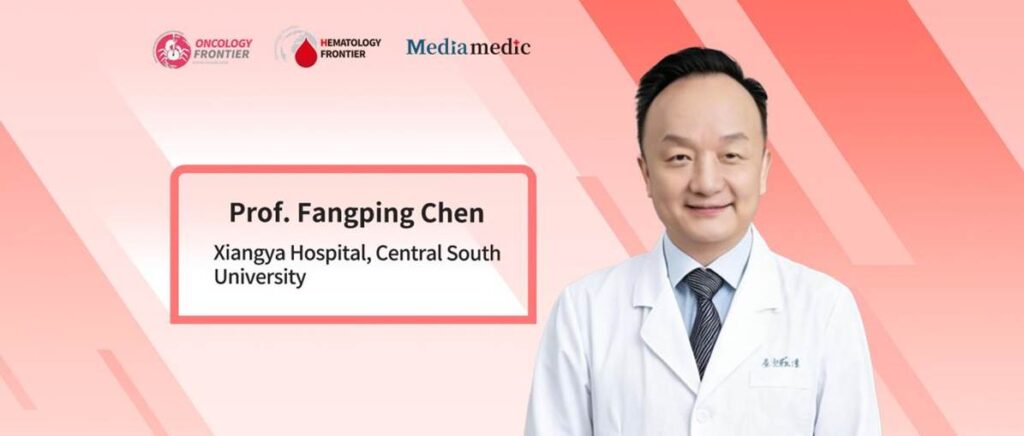
From April 10 to 11, 2026, the Annual Academic Meeting of the Hematology Branch of the China International Exchange and Promotive Association for Medical and Health Care (CPAM), together with the “Huatuo Project” MDT Workshop, was held in Changsha.During the conference, Professor Fangping Chen from Xiangya Hospital, Central South University, was invited by Hematology Frontier. He provided an in-depth analysis of the key challenges in implementing standardized care for hematologic malignancies, the translational value of basic research, and strategies for extending high-quality medical resources to lower-level healthcare institutions. His insights offer important perspectives for improving the overall standard of hematologic cancer care in China.
Bridging the Gap Between Guidelines and Practice
Professor Fangping Chen:
The diagnosis and treatment of hematologic diseases—particularly hematologic malignancies—have entered an era of precision and standardization. With the continuous updating of domestic and international guidelines, clinicians now have access to increasingly sophisticated theoretical frameworks. However, significant barriers remain between written standards and their full implementation in clinical practice.
China’s vast geography and uneven distribution of healthcare resources result in substantial differences in how institutions at different levels interpret and apply these guidelines. Bridging this gap—ensuring that high-level clinical concepts reach primary care settings while leveraging advances in basic research to address clinical challenges—has become a central issue in improving the overall standard of hematologic cancer care nationwide.
01 | Barriers to Implementation: Variability in Awareness and Accessibility
Standardized care is the foundation for improving outcomes in patients with hematologic malignancies, yet its implementation faces unavoidable real-world challenges. A key issue lies in the variability of understanding among healthcare professionals at different levels. Although national guidelines provide clear recommendations, differences in case complexity, access to continuing medical education, and academic environments lead to inconsistencies in the interpretation and execution of key components such as risk stratification, targeted therapy selection, and treatment response evaluation. This lack of uniformity significantly limits improvements in overall clinical outcomes.
Equally important is the issue of accessibility. This extends beyond the physical availability of drugs and technologies to include patient-related factors such as treatment adherence and financial capacity. Some patients and their families may have limited awareness of the long-term benefits of standardized therapy, while others may be unable to complete full treatment courses due to economic constraints.
The interplay of these factors means that even well-established guidelines may not translate into optimal outcomes for every patient. Addressing these challenges requires both improving professional awareness across the healthcare system and strengthening healthcare financing and social support mechanisms, thereby enabling standardized care to take root in everyday clinical practice.
02 | Translating Basic Science into Clinical Impact: From Aptamers to Chemical Biology
Breaking through the current limitations in diagnosis and treatment requires not only adherence to established standards but also a strong pipeline of innovation driven by basic research. Several presentations at this conference highlighted the importance of this translational pathway.
For example, research on nucleic acid aptamers, led by leading scientific teams, demonstrates their ability to selectively bind specific proteins or cells with high specificity and strong tissue penetration. These properties make aptamers a promising new class of targeted therapeutic agents for a variety of diseases. This work underscores a fundamental principle: breakthroughs in basic science are the prerequisite for innovation in clinical practice.
Similarly, advances in chemical biology further illustrate the importance of integrating mechanistic discoveries with clinical applications. The journey from laboratory findings to bedside implementation is a complex yet tightly interconnected process. Whether it involves the detailed screening of aptamers at the molecular level or broader investigations into biochemical regulatory networks, the ultimate goal must remain focused on solving real clinical problems.
Only by overcoming the barriers between basic research and clinical translation can scientific discoveries be transformed into effective tools that improve patient outcomes.
03 | Resource Integration and Regional Collaboration: Building a Standardized Care Network
Achieving the goals of the “Healthy China” initiative and improving healthcare outcomes nationwide requires extending high-quality medical resources to grassroots levels. Initiatives such as the “Huatuo Project,” led by leading experts, provide a practical model for this approach.
By deploying expert teams to support lower-level hospitals, these programs not only enhance the ability of frontline clinicians to manage complex and severe cases but also help standardize clinical thinking and decision-making processes. This, in turn, promotes greater consistency in diagnosis and treatment across regions.
Taking Xiangya Hospital and its regional network as an example, collaborative efforts involving expert outreach, technical support, and academic exchange have begun to establish an efficient, integrated system that extends to primary care institutions. This top-down and bottom-up coordination effectively addresses disparities in clinical knowledge and practice.
Looking ahead, further strengthening the role of regional medical centers, leveraging digital health technologies, and building integrated healthcare networks will be essential to reducing disparities across geographic regions and institutional levels, ultimately improving the overall prevention and treatment of hematologic malignancies in China.
Conclusion
Advancing the diagnosis and treatment of hematologic malignancies in China requires a dual approach that balances the implementation of standardized care with innovation-driven progress. On the one hand, it is essential to address disparities in clinical awareness and economic accessibility through policy support and resource redistribution, ensuring that every patient has access to high-quality, standardized care. On the other hand, continued investment in fundamental scientific research is crucial, as it provides the driving force for clinical innovation.
From the precision targeting enabled by aptamer technology to the mechanistic insights offered by chemical biology, each scientific advance contributes to overcoming the challenges posed by hematologic malignancies. By fostering a dynamic interaction between clinical practice and basic research, and by building a coordinated, multi-level healthcare network, it will be possible to achieve a meaningful transformation in the prevention and treatment of these diseases.
Expert Profile
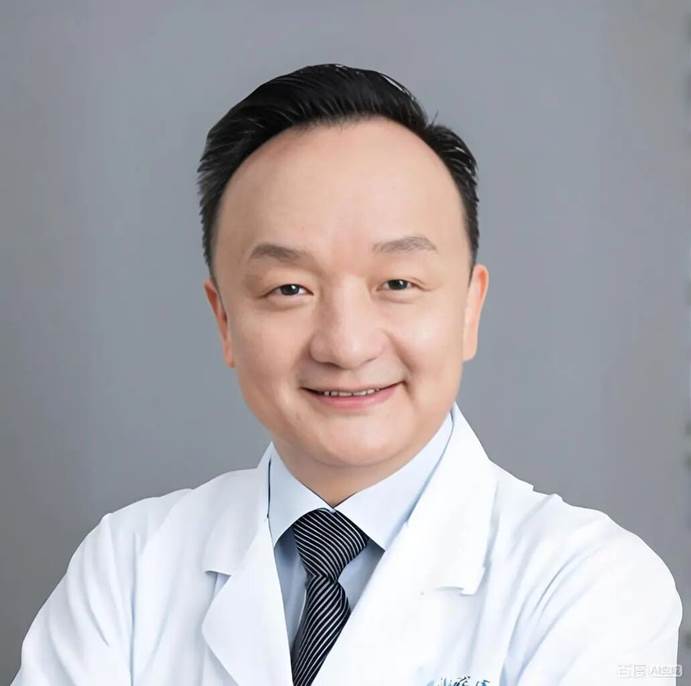
Fangping Chen
Xiangya Hospital, Central South University
Chief Physician (First Grade); Second-Tier Professor; Doctoral Supervisor
Recipient of the inaugural “Xiangya Distinguished Physician” honor
Expert entitled to special government allowances from the State Council
National leader in key clinical specialties for hematologic diseases
Standing Committee Member, Hematology Branch, Chinese Medical Association (6th–8th terms)
Standing Committee Member, Chinese Society of Experimental Hematology (6th–7th terms)
Standing Committee Member, Hematology Physicians Branch, Chinese Medical Doctor Association (1st–4th terms)
Honorary Chair, Hunan Society of Hematology
Founding President, Hematology Physicians Association of Hunan Province