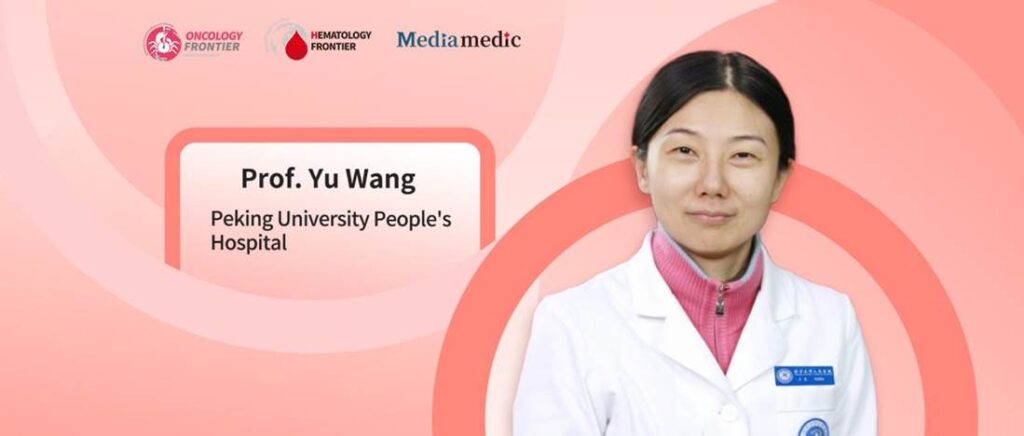
Acute myeloid leukemia (AML) is a heterogeneous group of malignant clonal disorders originating from myeloid stem cells, characterized by significant biological diversity and generally poor prognosis. The global disease burden of AML continues to rise, with the age-standardized incidence increasing by 87.3% between 1990 and 2021, underscoring the urgent need for improved therapeutic strategies.The research team led by Professor Yu Wang at Peking University People’s Hospital has been deeply engaged in the diagnosis and treatment of AML for many years and has achieved a series of important advances. This article reviews several of their recent key studies, focusing on optimization of post-transplant interventions for relapsed/refractory AML, single-cell insights into TP53-mutated AML resistance and relapse, and the prognostic value of molecular monitoring in NUP98-rearranged AML, with the aim of informing clinical decision-making and precision treatment in high-risk AML.
01 | Prophylactic DLI Improves Survival in R/R AML After Transplantation
Relapse after transplantation remains a major clinical challenge in patients with relapsed/refractory acute myeloid leukemia (R/R AML). Donor lymphocyte infusion (DLI) can enhance the graft-versus-leukemia (GVL) effect; however, the relative benefits of prophylactic DLI (Pro-DLI) versus preemptive DLI (Pre-DLI, triggered by minimal residual disease [MRD] positivity) remain uncertain, particularly when long-term leukemia-free survival (LFS) is considered.
The team led by Professor Yu Wang hypothesized that early prophylactic DLI, compared with MRD-guided preemptive intervention, could improve LFS and reduce relapse without significantly increasing complications. To test this hypothesis, they conducted a retrospective cohort study including 163 R/R AML patients who achieved complete remission within 30 days after transplantation between January 2010 and February 2025.
Among these patients, 64 received prophylactic DLI at a median of 51 days post-transplant, while 84 received preemptive DLI at a median of 189 days after MRD positivity. Baseline genetic characteristics and ELN risk stratification were well balanced between the two groups.
The results demonstrated that the prophylactic DLI group had a significantly lower 2-year cumulative relapse rate compared with the preemptive group (22.4% vs. 42.1%), along with a markedly improved 2-year LFS (60.1% vs. 37.8%). Subgroup analyses showed consistent benefits of prophylactic DLI regardless of subsequent DLI administration.
Although the incidence of chronic graft-versus-host disease (GVHD) was higher in the prophylactic DLI group (93.8% vs. 34.4%), most cases were manageable and did not translate into increased rates of severe acute GVHD or non-relapse mortality. Importantly, no significant increase in infection risk was observed.
These findings suggest that early prophylactic DLI after allogeneic hematopoietic stem cell transplantation (allo-HSCT) can significantly improve survival and reduce relapse in R/R AML patients, with an acceptable safety profile. This strategy may be particularly beneficial for high-risk populations and warrants further validation in prospective studies.
02 | Single-Cell Analysis Reveals Mechanisms of Resistance and Relapse in TP53-Mutated AML
A collaborative study led by Professor Yu Wang (Peking University People’s Hospital) and Professor Qifa Liu (Nanfang Hospital, Southern Medical University), published in Experimental Hematology & Oncology, constructed the first integrated single-cell atlas of leukemia, immune, and stromal cells in TP53-mutated AML, providing a comprehensive understanding of its resistance and relapse mechanisms.
The study analyzed bone marrow samples from 30 newly diagnosed AML patients using single-cell RNA sequencing. Compared with TP53 wild-type AML, TP53-mutated AML exhibited hierarchical reprogramming of leukemia cells, with a bias toward differentiation into more advanced states such as granulocyte–monocyte progenitors. These cells showed activation of transcriptional programs related to oxidative stress, inflammation, and anti-apoptotic pathways. Notably, higher oxidative stress and inflammatory scores were associated with poorer prognosis. A particularly important finding was the identification of a strong resistance to ferroptosis in this AML subtype.
In parallel, the study revealed profound disruption of the bone marrow microenvironment. Cytotoxic NK cells were reduced, while exhausted CD8⁺ T cells accumulated. Immunosuppressive monocyte and neutrophil subsets were expanded. The stromal ecosystem was also remodeled, with a decline in hematopoiesis-supporting stromal and endothelial cells and a shift toward an osteogenic niche.
Moreover, a higher TP53 mutation burden correlated with increased leukemia cell proliferation and stronger immunosuppressive features. Based on these findings, the researchers developed a “TP53 ecosystem score,” which effectively stratifies patient prognosis.
This work provides a novel, multi-layered framework for understanding this ultra–high-risk AML subtype and suggests that future therapeutic strategies may need to simultaneously target leukemia cells (e.g., ferroptosis pathways), reverse immune suppression, and restore the bone marrow microenvironment.
03 | Prognostic Value of NUP98 Rearrangement Dynamics After Transplantation
A multicenter study in China, conducted by Professor Yi Luo (The First Affiliated Hospital, Zhejiang University School of Medicine), Professor Yu Wang (Peking University People’s Hospital), and Professor Xi Zhang (Xinqiao Hospital, Army Medical University), and published in Transplantation and Cellular Therapy, demonstrated that the persistence of NUP98 rearrangements (NUP98r) early after transplantation is a key independent predictor of poor outcomes in AML patients undergoing allo-HSCT.
NUP98-rearranged AML represents a high-risk subtype with particularly poor prognosis. Although allo-HSCT remains the primary treatment, the prognostic impact of post-transplant molecular dynamics has not been fully clarified. To address this, the study retrospectively analyzed 56 adult patients with NUP98r AML who underwent allo-HSCT.
After a median follow-up of 755 days, the 2-year overall survival rate was 73.0%. However, post-transplant NUP98r status proved to be highly prognostic. Patients who remained NUP98r-positive at one month after transplantation had a significantly higher 2-year cumulative relapse rate (60.0% vs. 21.5%) and markedly inferior disease-free and overall survival compared with those who became negative.
Persistence of NUP98r at three or six months was associated with even worse outcomes. Notably, all patients who remained positive at six months experienced relapse. Multivariate analysis confirmed that NUP98r positivity at one month post-transplant was an independent risk factor for both relapse and mortality, whereas pre-transplant NUP98r status was not significantly predictive.
These findings highlight that early post-transplant molecular monitoring—particularly within the first month—is more clinically informative than baseline pre-transplant status. The study underscores the importance of close molecular surveillance in high-risk patients and provides a strong rationale for early intervention trials targeting minimal residual disease. Achieving clearance of NUP98r should be considered a critical therapeutic goal in guiding post-transplant management.
Expert Profile
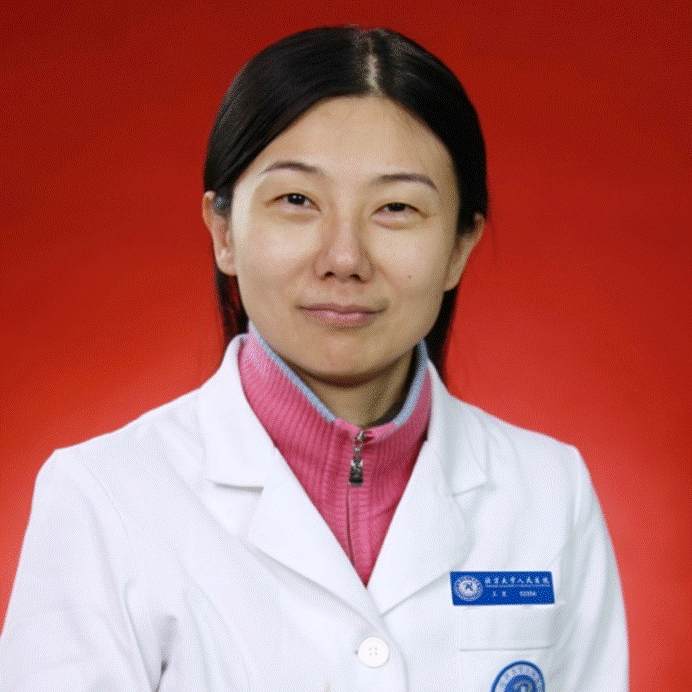
Yu Wang
Peking University People’s Hospital
Second-Tier Professor; Chief Physician; Doctoral Supervisor / Postdoctoral Supervisor
Deputy Director, Department of Hematology, Peking University People’s Hospital
Vice Head, Infectious Diseases Group, Hematology Branch, Chinese Medical Association (11th and 12th terms)
Standing Committee Member and Secretary General, Hematology Branch, China International Exchange and Promotive Association for Medical and Health Care
Standing Committee Member, Leukemia Expert Committee (2nd term), Chinese Society of Clinical Oncology (CSCO)
Deputy Head, MDS/MPN Working Group, Hematologic Oncology Committee, China Anti-Cancer Association
Standing Committee Member, Hematology Branch, Chinese Geriatrics Society; Deputy Head, MDS Academic Working Committee
Standing Committee Member, Medical Insurance and Healthcare Technology Committee, China Health Insurance Research Association; Deputy Head, Hematology Group
Member, Hematology Committee, Chinese Society of Integrated Traditional and Western Medicine
Member, Hematology Branch, Beijing Medical Association
Editorial Board Member, Chinese Journal of Hematology and Journal of Translational Internal Medicine (JTIM)
Editorial Board Member, Journal of Clinical Internal Medicine and Journal of Clinical Hematology
Reviewer, National Natural Science Foundation of China
He has published 97 SCI-indexed papers as first or corresponding author, with a cumulative impact factor of 786, including publications in leading journals such as The Lancet family journals, Signal Transduction and Targeted Therapy, Blood, Leukemia, Clinical Cancer Research, Journal of Hematology & Oncology, Experimental Hematology & Oncology, Science China Biology, Haematologica, and BMC Medicine. Among these, 31 papers have an impact factor greater than 10.
He has led five projects funded by the National Natural Science Foundation of China and three projects under the National Key R&D Program.
He has received numerous awards, including the Second Prize of the National Science and Technology Progress Award (as second contributor), First Prize of the Chinese Medical Science and Technology Award, First Prize of the Guangdong Provincial Science and Technology Progress Award (third contributor), and multiple additional national and ministerial-level awards.