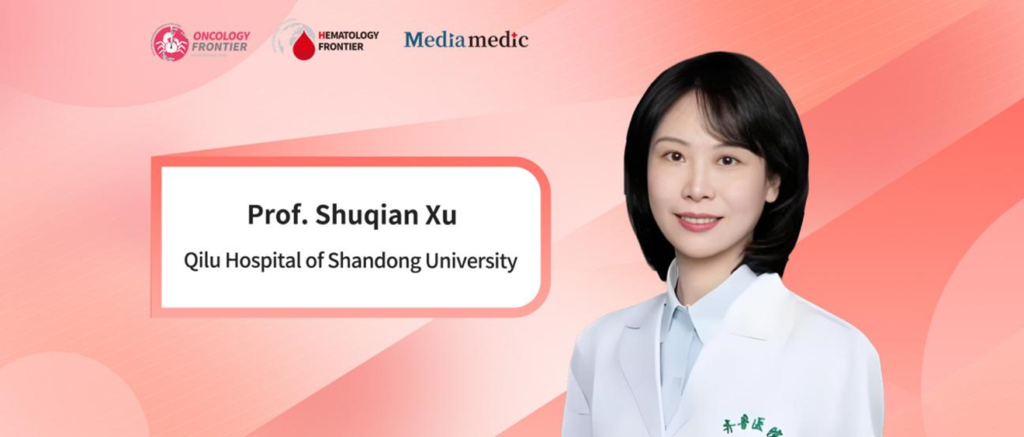
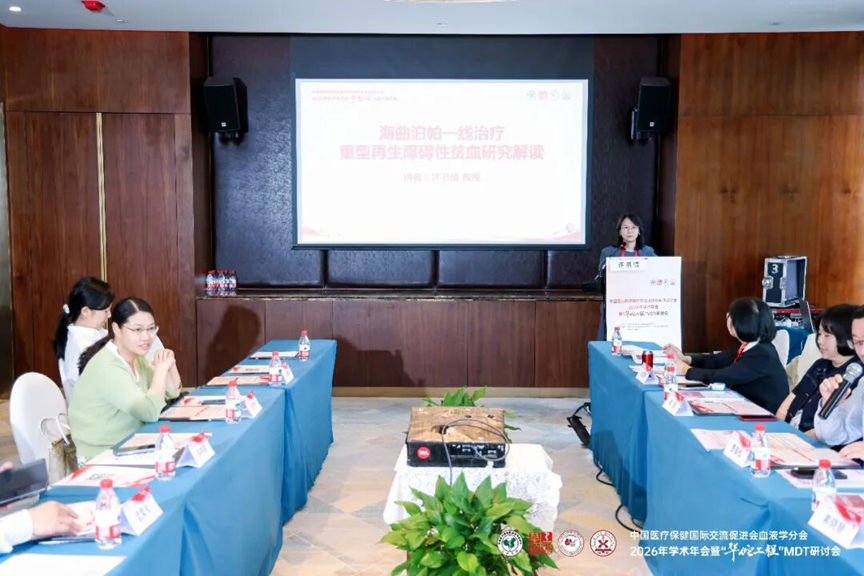
From April 10 to 11, 2026, the Annual Academic Meeting of the Hematology Branch of the China International Exchange and Promotive Association for Medical and Health Care (CPAM), together with the “Huatuo Project” MDT Workshop, was held in Changsha.During the conference, Professor Shuqian Xu from Qilu Hospital of Shandong University was invited by Hematology Frontier. Drawing on extensive clinical experience and recent advances in the field, she shared in-depth insights into the latest progress, clinical challenges, and future directions in first-line treatment of severe aplastic anemia (SAA), providing valuable guidance for optimizing treatment strategies in clinical practice.
Q1: Limitations of Conventional First-Line Therapy and Rationale for Intensification
Immunosuppressive therapy remains the standard first-line treatment for patients with severe aplastic anemia (SAA) who are not eligible for hematopoietic stem cell transplantation. However, a proportion of patients fail to respond or experience relapse. What are the major limitations of conventional first-line therapy in clinical practice, and how have these limitations driven efforts to enhance treatment efficacy?
Professor Shuqian Xu: For patients with severe aplastic anemia who are not candidates for hematopoietic stem cell transplantation, immunosuppressive therapy remains the cornerstone of first-line treatment. Nevertheless, conventional regimens continue to face several challenges in real-world clinical practice, particularly in terms of accessibility, efficacy, and safety.
From an accessibility perspective, the standard regimen typically consists of cyclosporine combined with anti-thymocyte globulin (ATG) or anti-lymphocyte globulin (ALG). The oral capsule formulation of cyclosporine is often not reimbursed and must be paid out of pocket, placing a financial burden on patients. Although an oral solution formulation may be covered by insurance, it is not readily available in many regions, limiting practical access. In addition, ATG/ALG requires inpatient administration and is not available in all hospitals, further restricting treatment options.
In terms of efficacy, while immunosuppressive therapy remains the standard of care, overall response rates still leave room for improvement. A subset of patients exhibit suboptimal responses or experience relapse, necessitating retreatment or alternative therapeutic approaches, which increases the overall treatment burden.
Regarding safety, both cyclosporine and ATG/ALG are associated with notable adverse effects. Long-term cyclosporine use may lead to nephrotoxicity, hepatotoxicity, and gingival hyperplasia. ATG/ALG, on the other hand, can cause profound bone marrow suppression, resulting in delayed hematologic recovery. These safety concerns further complicate clinical management.
Q2: Clinical Value of Hetrombopag in First-Line Treatment
You presented data on the use of hetrombopag in first-line treatment of SAA. Could you summarize the key findings of this research? How might this approach address the limitations of conventional therapy?
Professor Shuqian Xu: Based on current clinical evidence, the combination of hetrombopag with immunosuppressive therapy has been approved as a first-line treatment option for adult patients with severe aplastic anemia. This represents a significant advancement, as regulatory approval may facilitate future inclusion in reimbursement systems, thereby reducing the financial burden on patients.
More importantly, clinical data demonstrate that adding hetrombopag to conventional immunosuppressive therapy significantly improves treatment outcomes. Compared with the traditional regimen of cyclosporine plus ATG, the addition of hetrombopag markedly increases efficacy. At six months, the complete response (CR) rate reaches 28.1%, significantly higher than that observed in the placebo group (13.8%, P=0.0129). These findings indicate a clear and meaningful clinical benefit for patients.
Q3: Future Directions and Evidence Needs in SAA
Looking ahead, what are the key areas for future exploration in SAA treatment? What types of evidence are still needed to further refine clinical practice in China?
Professor Shuqian Xu: Research into the treatment of severe aplastic anemia continues to evolve. Although the combination of hetrombopag with immunosuppressive therapy has now been approved for first-line use, several important clinical questions remain.
In practice, issues such as how to accurately assess treatment response in regimens combining cyclosporine, ATG, and hetrombopag, how to determine the optimal timing of therapy initiation, and how to define complete remission require further clarification. Additionally, questions remain regarding when and how to taper therapy, including the appropriate timing, magnitude, and frequency of dose reduction.
Equally important is the need for systematic monitoring and comprehensive evaluation of both efficacy and safety throughout the entire treatment course. Accumulating high-quality, evidence-based data in these areas will be essential for refining treatment guidelines and improving patient outcomes.
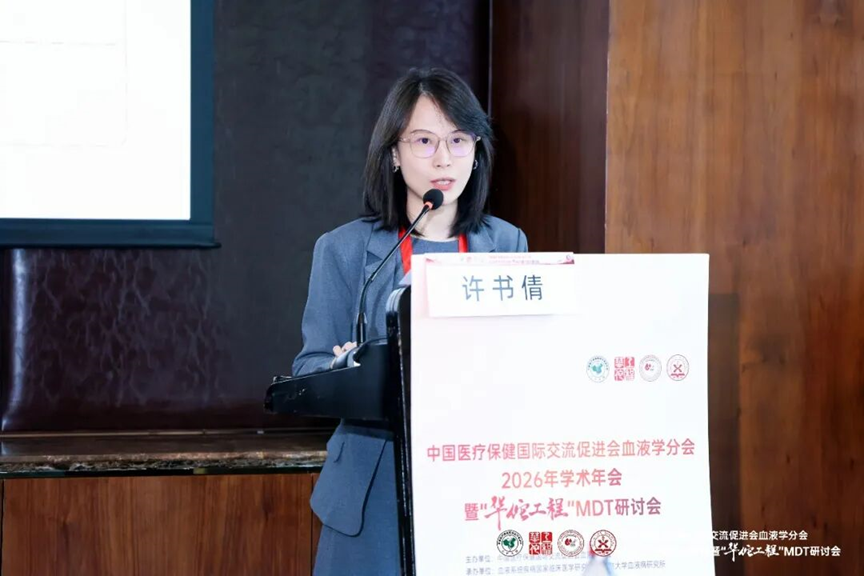

Expert Profile
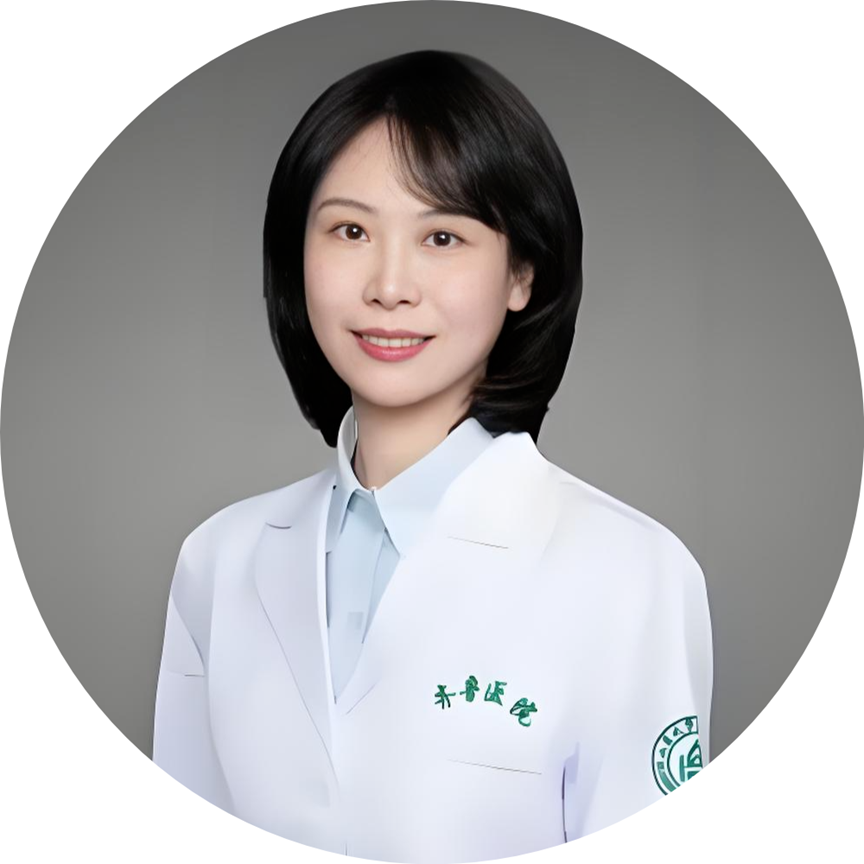
Shuqian Xu Qilu Hospital of Shandong University
Director, Department of Hematology, Qilu Hospital of Shandong University Deputy Director, Office of International Cooperation and Exchange, Qilu Hospital of Shandong University Head, Cell and Immunotherapy Center, Qilu Hospital of Shandong University
Chief Physician; Professor; Doctoral Supervisor; Taishan Scholar Young Expert Distinguished Young Scholar, Shandong University
Visiting Scholar / Postdoctoral Fellow, Harvard Medical School
Member and Secretary, Red Blood Cell Disease Group, Hematology Branch, Chinese Medical Association Secretary General, Experimental Hematology Committee, Chinese Society of Pathophysiology Standing Committee Member, Leukemia Expert Committee, Chinese Society of Clinical Oncology (CSCO) Deputy Head, National Hematology Group, Integrative Medicine Expert Committee
Chair, Hematology Branch, Shandong Young Medical Workers Association Head, Shandong PNH Collaborative Group Secretary, 10th Committee, Hematology Branch, Shandong Medical Association
Principal Investigator of sub-projects under the National Key R&D Program and General Program of the National Natural Science Foundation of China
She has published multiple SCI-indexed papers in leading journals, including Nature Genetics, Blood, Leukemia, Autoimmunity Reviews, and Genes & Diseases.