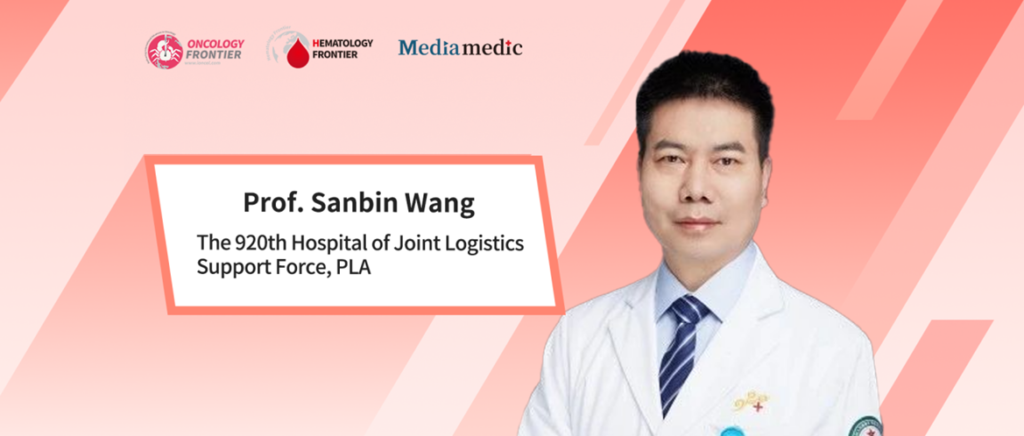
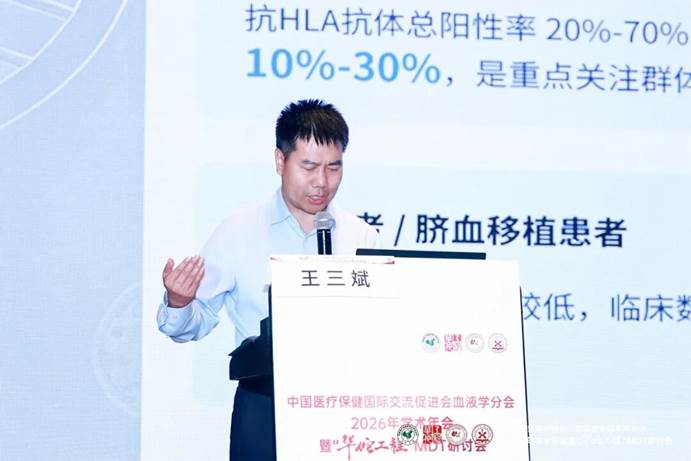
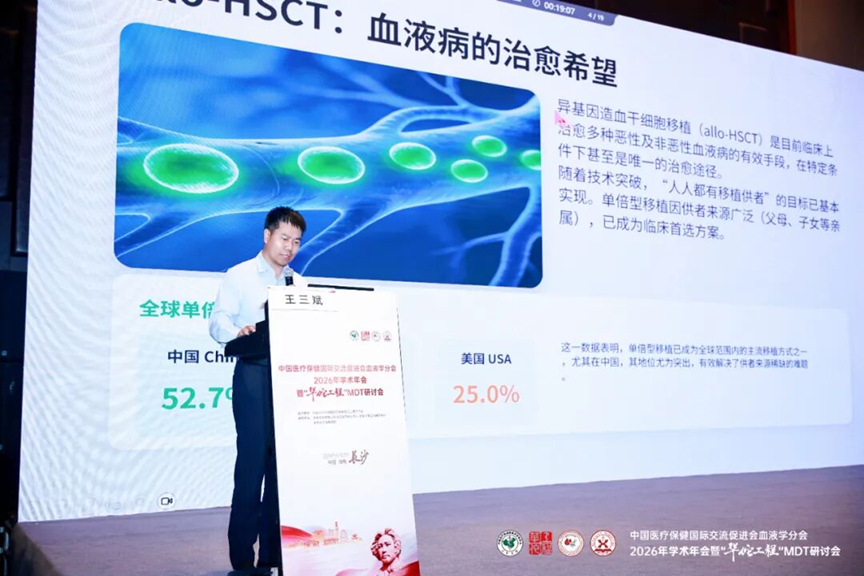
From April 10 to 11, 2026, the Annual Academic Meeting of the Hematology Branch of the China International Exchange and Promotive Association for Medical and Health Care (CPAM), together with the “Huatuo Project” MDT Workshop, was held in Changsha.During the conference, Professor Sanbin Wang from the 920th Hospital of the Joint Logistics Support Force of the Chinese People’s Liberation Army was invited by Hematology Frontier. Drawing on extensive clinical experience and the latest guideline updates, he provided a systematic overview of donor-specific antibody (DSA) screening and intervention strategies, and shared perspectives on future innovations in hematologic malignancy treatment. His insights offer valuable guidance for improving transplant safety and clinical practice.
Q1: Background of the 2025 DSA Consensus
You presented an excellent lecture on the DSA Consensus Interpretation 2025. Could you briefly introduce the background of this consensus? What key clinical challenges does it aim to address?
Professor Sanbin Wang: The development of this consensus is closely linked to the rapid expansion of haploidentical hematopoietic stem cell transplantation (HSCT), which has become one of the most widely used transplant modalities both in China and globally. In China in particular, haploidentical transplantation now accounts for more than half of all allogeneic HSCT procedures.
With the increasing use of this approach, donor-specific antibodies (DSA) have emerged as an unavoidable and clinically significant issue. DSA refers to antibodies present in the recipient that specifically target human leukocyte antigens (HLA) expressed on donor cells. These antibodies can recognize and bind to class I or class II HLA molecules on donor cells, thereby posing a direct threat to successful engraftment.
It is important to emphasize that although DSA targets donor antigens, it is produced and resides within the recipient, not the donor. This immunological mismatch forms the basis of its clinical significance.
Q2: Key Recommendations and Practical Guidance
What are the most important and clinically actionable recommendations from the consensus?
Professor Sanbin Wang: In the setting of HLA-mismatched or haploidentical transplantation, the incidence of DSA is relatively high, ranging from approximately 10% to 30%. If DSA is present and not effectively managed, it can lead to serious complications such as graft failure or poor graft function. Therefore, it requires careful attention in clinical practice.
The consensus provides several key recommendations. First, routine screening for DSA is strongly advised in all patients undergoing HLA-mismatched transplantation. Second, if DSA positivity is confirmed, targeted interventions should be initiated promptly.
Current clinical strategies primarily include the removal of circulating antibodies through immunoadsorption or plasma exchange. Another approach focuses on targeting the cellular sources of DSA production, including B cells, plasma cells, and, as highlighted in recent studies, follicular helper T cells. In addition, blocking complement-dependent cytotoxicity (CDC) pathways through the use of complement inhibitors represents an important therapeutic option.
Other interventions include the administration of intravenous immunoglobulin (IVIG) and, in some cases, transfusion of cellular components expressing donor-matched antigens to neutralize DSA. These strategies, when applied appropriately, can significantly improve transplant outcomes.
Q3: Future Research Directions
There are still many unresolved challenges in hematology. Could you share your team’s current and future research priorities?
Professor Sanbin Wang: Our future work will focus on two major areas. The first is the further exploration of in vivo CAR-T cell therapy. As CAR-T technology continues to expand its role in hematologic diseases, we aim to advance its clinical application across a broader range of conditions.
The second focus is the optimization of transplantation strategies. This includes improving approaches for patients with relapsed or refractory disease, developing individualized transplant protocols for elderly patients, and addressing fertility preservation in transplant recipients. In parallel, we are working to refine conditioning regimens and enhance graft-versus-host disease (GVHD) prevention strategies.
Ultimately, our goal is to maintain or improve therapeutic efficacy while reducing treatment-related costs, thereby enhancing long-term survival and facilitating patients’ return to normal social life.
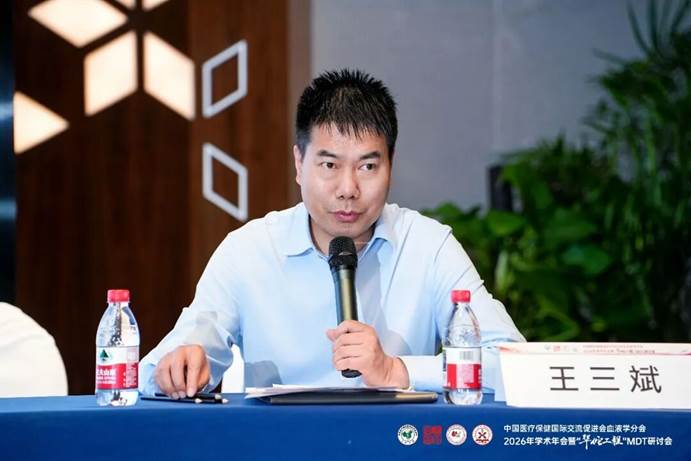
Expert Profile
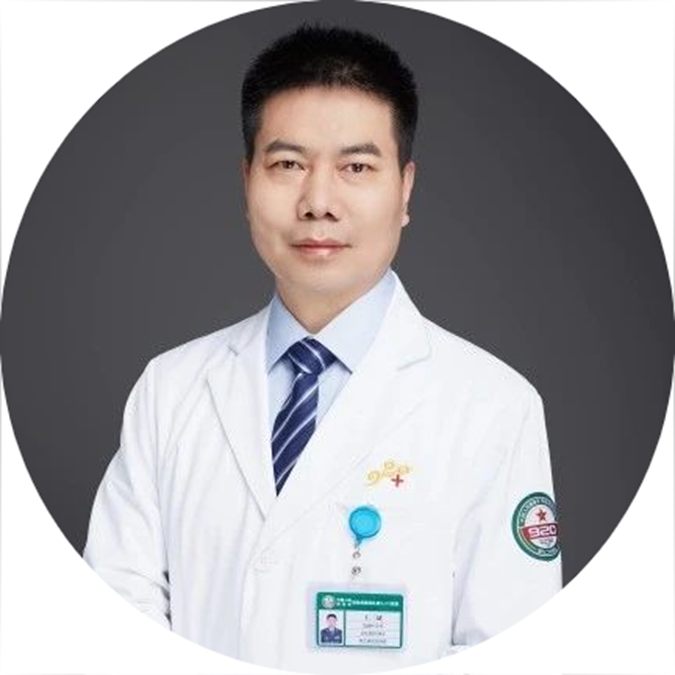
Sanbin Wang 920th Hospital of the Joint Logistics Support Force of the Chinese People’s Liberation Army
Chief Physician; Doctoral Supervisor
Department of Hematology, 920th Hospital of the Joint Logistics Support Force of the Chinese People’s Liberation Army
Member, Hematology Physicians Branch, Chinese Medical Doctor Association Member, Hematology Branch, Chinese Association of Integrative Medicine Member, Cell Therapy Group, Hematologic Oncology Committee, China Anti-Cancer Association Member, Integrative Hematology Committee, Chinese Medical Doctor Association (Integrative Medicine Branch) Member, Hematology Committee, Military Medical Science and Technology Commission
Chair, Yunnan Society of Hematology Vice Chair, Hematology Physicians Branch, Yunnan Medical Doctor Association
Recipient of the First Prize of the Chinese Association for Laboratory Animal Sciences Science and Technology Award; two Third Prizes of Yunnan Provincial Science and Technology Progress Awards; and First Prize of the Kunming Science and Technology Program. He has led a major biomedical research project funded by the Yunnan Provincial Department of Science and Technology.
He has published more than 40 academic papers as first or corresponding author in leading journals such as Journal of Clinical Oncology (JCO) and Clinical Cancer Research (CCR).
Main research interests: hematopoietic stem cell transplantation; treatment of HIV-associated hematologic diseases; universal CAR-T therapy for hematologic malignancies; and gene therapy for transfusion-dependent β-thalassemia.