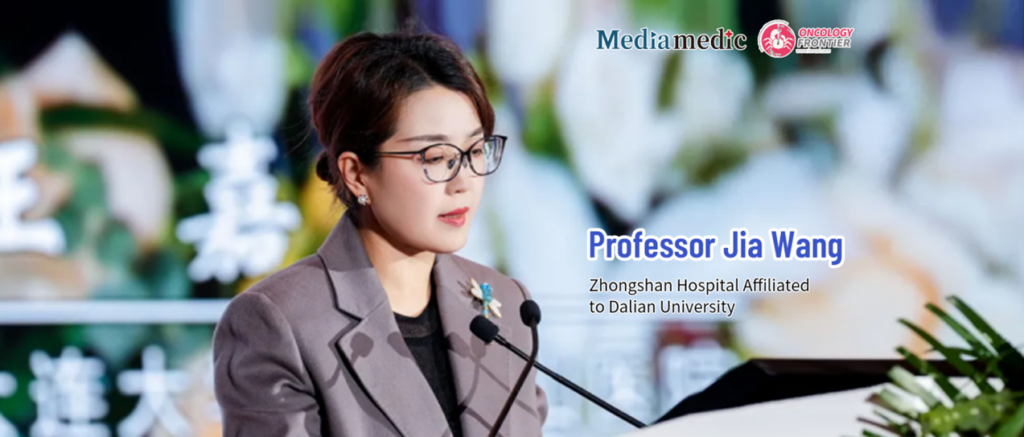
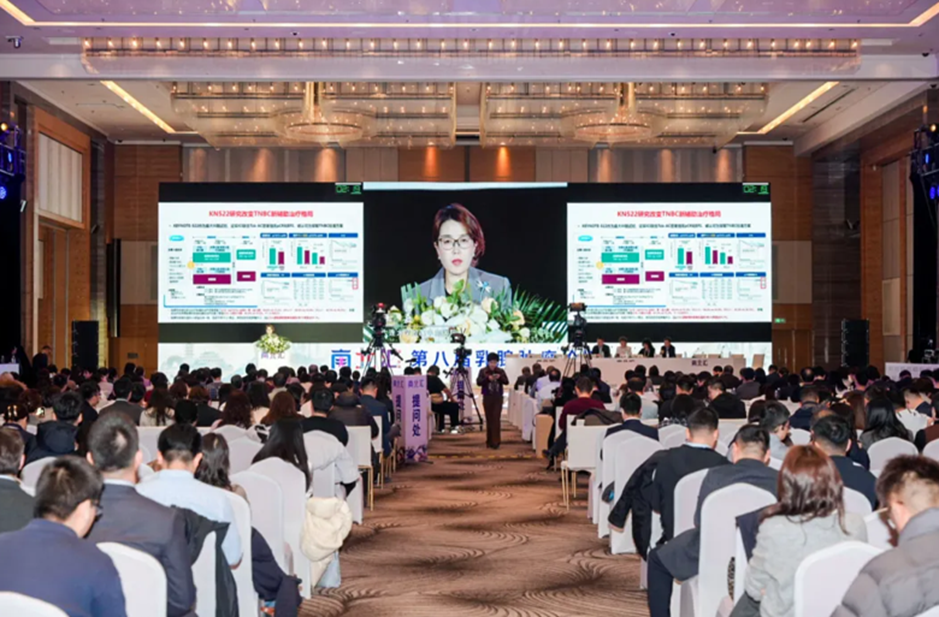
In the era of neoadjuvant immunotherapy for triple-negative breast cancer (TNBC), an important clinical question has emerged: is platinum still indispensable? During the “Deep Dive” session at the 8th North–South Breast Cancer Forum, Professor Jia Wang from Zhongshan Hospital, Dalian University presented an in-depth analysis of this issue. Drawing on treatment goals, mechanistic rationale, clinical evidence, and individualized strategies, she systematically reviewed the role and challenges of platinum agents in neoadjuvant immunotherapy for TNBC and proposed future directions toward precision “de-escalation” therapy.Revisiting the foundations: the goals of neoadjuvant therapy
Professor Jia Wang: In the current era of neoadjuvant immunotherapy, chemotherapy remains an essential component of treatment for patients with TNBC. Whether we discuss “de-anthracycline” or “de-platinum” strategies, the underlying question is how to optimize the chemotherapy backbone in the neoadjuvant setting.
The goals of neoadjuvant therapy in TNBC are multifaceted. First, tumor downstaging to facilitate surgical resection. Second, in vivo assessment of drug sensitivity, allowing clinicians to evaluate treatment response and guide subsequent therapy at both the individual and research levels. Ultimately, the overarching objectives are to improve overall survival and quality of life.
Pathologic complete response (pCR) serves as a strong surrogate endpoint for long-term outcomes, including event-free survival (EFS) and overall survival (OS). Therefore, the design of chemotherapy backbones in neoadjuvant immunotherapy should be aligned with maximizing pCR while balancing toxicity.
Mechanistic rationale: why platinum matters
Platinum-based agents are non–cell cycle–specific cytotoxic drugs that exert their effects by forming platinum–DNA adducts, thereby disrupting DNA replication and inducing tumor cell apoptosis or necrosis.
Given the prevalence of defects in DNA damage repair pathways in TNBC, platinum agents have long been considered a key component of chemotherapy regimens. Clinical trials such as BrighTNess and TNT have demonstrated that platinum-containing regimens improve both short-term responses and long-term outcomes in TNBC.
Preclinical studies further suggest that platinum agents can modulate the tumor immune microenvironment by increasing immune cell infiltration, effectively converting “cold” tumors into “hot” ones. This provides a strong mechanistic rationale for combining platinum chemotherapy with immunotherapy.
The KEYNOTE-522 trial validated this approach, demonstrating significant improvements in EFS and OS with the addition of pembrolizumab to platinum-based neoadjuvant chemotherapy. Indeed, this study has reshaped the treatment paradigm for TNBC, and many of today’s clinical questions stem from its design.
The trade-off: efficacy versus toxicity
While platinum-containing regimens enhance efficacy, they are also associated with increased toxicity. Studies have consistently shown higher rates of grade ≥3 adverse events and treatment discontinuation when platinum is added to chemotherapy.
However, even in the absence of platinum, intensified regimens—such as dose-dense anthracycline-based approaches (e.g., IMpassion031)—can also increase pCR rates, albeit with similarly elevated toxicity profiles and discontinuation rates.
In real-world clinical practice, patients are highly concerned with whether improvements in response rates translate into meaningful survival benefits, and how these benefits balance against treatment-related toxicity. This underscores the need for individualized decision-making.
Unanswered questions in the immunotherapy era
Several critical questions remain unresolved in the neoadjuvant treatment of TNBC: • Is it necessary to use four chemotherapy agents, as in KEYNOTE-522, for all patients—particularly those highly sensitive to immunotherapy? • Are anthracyclines indispensable, given concerns about cardiotoxicity and secondary leukemia? • Must platinum be included in all cases, despite hematologic and neurotoxic risks? • Should pembrolizumab be continued for a full year, or can treatment be de-escalated in patients achieving pCR?
At present, there are no definitive answers, and ongoing research is needed to address these challenges.
Future directions: toward precision de-escalation
Professor Wang outlined several emerging strategies aimed at redefining the role of platinum in TNBC:
First, attempts to omit platinum while retaining anthracyclines. To date, most neoadjuvant regimens excluding platinum have maintained anthracycline-based chemotherapy, as seen in trials such as GeparNuevo and IMpassion031.
Second, strategies that aim to prime the tumor immune microenvironment before introducing immune checkpoint inhibitors, as explored in studies like BELLINI.
Third, replacing conventional chemotherapy with antibody–drug conjugates (ADCs) in combination with immunotherapy. For example, in the BEGONIA study, the combination of datopotamab deruxtecan (Dato-DXd) and immunotherapy achieved an objective response rate of 79% in first-line TNBC.
Fourth, biomarker-driven selection of patients most likely to benefit from platinum, such as those with germline BRCA mutations.
Fifth, platform trials designed to optimize treatment combinations and dosing strategies. One example is the FASCINATE-N study from Fudan University Shanghai Cancer Center, which explores subtype-specific precision neoadjuvant therapy based on molecular classification.
Conclusion
The question of whether platinum is essential in the era of neoadjuvant immunotherapy for TNBC remains open. While platinum offers clear mechanistic and clinical advantages, its associated toxicity and the evolving landscape of targeted and immune-based therapies call for a more nuanced, individualized approach.
Looking ahead, continued clinical research will be critical to advancing precision de-escalation strategies, enabling clinicians to maximize survival benefits while minimizing treatment burden. Ultimately, the goal is to ensure that every patient with TNBC receives the most effective and least burdensome therapy tailored to their disease biology.


Expert profile

Jia Wang, MD Professor of Medical Oncology Zhongshan Hospital, Dalian University
Professor Wang specializes in the comprehensive management of breast cancer, with a focus on optimizing neoadjuvant and immunotherapy-based treatment strategies.