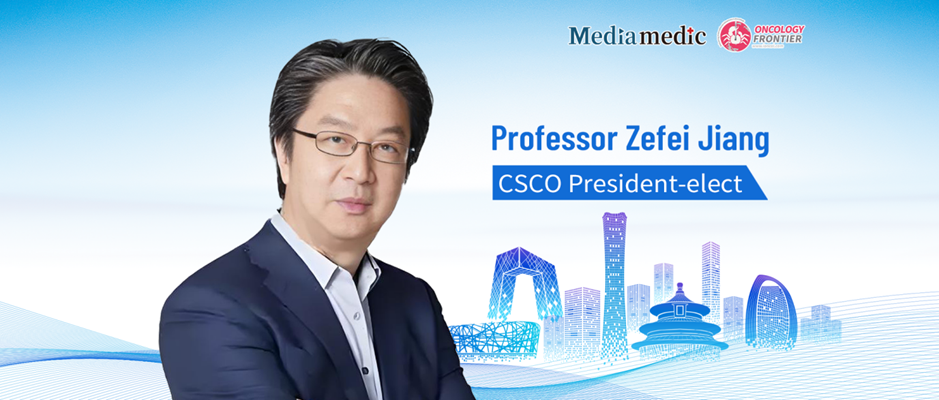
From April 10 to 12, 2026, the National Breast Cancer Conference will be held in Beijing. Marking the 10th anniversary of the Breast Cancer Committee of the Chinese Society of Clinical Oncology (CSCO BC), this annual flagship meeting will once again bring together leading experts from China and around the world to share cutting-edge research, interpret the latest guidelines and consensus statements, and exchange clinical experience—driving the high-quality development of breast cancer care in China. On the eve of the conference, Oncology Frontier invited Professor Zefei Jiang, Conference Chair and President-Elect of CSCO, to provide insights into the past decade of CSCO BC, the highlights of this year’s meeting, and key updates in the 2026 guidelines. We look forward to welcoming you in Beijing.A decade of progress: advancing breast cancer care in China
Oncology Frontier: As CSCO BC marks its 10th anniversary, and alongside the continued growth of its annual meeting, breast cancer care in China has steadily improved. Could you reflect on this journey and the impact CSCO BC has had on clinical practice?
Professor Zefei Jiang: Thank you to Oncology Frontier for your longstanding support. This year marks the 10th anniversary of CSCO BC. Over the past decade, under the guidance of the Chinese Society of Clinical Oncology and through the collective efforts of our experts, we have upheld a spirit of collaboration and made substantial progress in clinical research, guideline development and dissemination, and the implementation of standardized care. This year also marks a leadership transition. I am confident that the new CSCO BC leadership will build upon this foundation, further advancing standardized diagnosis and treatment and ultimately benefiting more patients. I sincerely invite colleagues to join us at this important academic gathering as we open a new chapter in breast cancer care.
2026 annual meeting: key highlights and innovations
Oncology Frontier: As the 2026 CSCO BC Annual Meeting approaches, what are the key highlights clinicians can look forward to?
Professor Zefei Jiang: Our annual meeting continues to uphold its core principles—scientific rigor, expert perspectives, guideline interpretation, and multidisciplinary (MDT) collaboration—while introducing new thematic sessions. For example, we will feature dedicated sessions on antibody–drug conjugates (ADCs), where experts involved in drug development will share insights from clinical trials and discuss real-world patient benefits. Importantly, the 2026 edition of the CSCO Breast Cancer Guidelines will be released, incorporating multiple new therapeutic strategies. This update aims to improve accessibility to innovative treatments, ensuring that more patients can benefit from them. In addition, MDT discussions will bring together expert teams from regions including Henan, Qingdao, and Beijing. Through case-based discussions, specialists in surgery, medical oncology, pathology, and radiation oncology will provide comprehensive perspectives and share valuable clinical experience.
2026 guidelines update: integrating breakthrough advances into practice
Oncology Frontier: The year 2025 has been highly productive for breast cancer research, and the upcoming 2026 CSCO guidelines are highly anticipated. What key updates can we expect, and how will they influence clinical practice?
Professor Zefei Jiang: Each annual update of the CSCO Breast Cancer Guidelines is grounded in the latest global and domestic advances, with particular emphasis on major studies involving Chinese investigators. In 2025, several landmark trials achieved significant breakthroughs. For example, trastuzumab deruxtecan (T-DXd) has demonstrated strong efficacy across multiple settings, including neoadjuvant, adjuvant, and first-line metastatic treatment, as seen in the DESTINY-Breast11, DESTINY-Breast05, and DESTINY-Breast09 studies. Chinese investigators, including Professors Jiong Wu, Zhimin Shao, and myself, served as leading principal investigators in these studies. The results have been presented at major international conferences and published in leading journals, with several indications already approved or under regulatory review—laying the foundation for guideline updates. At the same time, innovative therapies that have been included in national reimbursement programs will see upgraded recommendation levels in the guidelines. Key studies involving Chinese experts that are practice-changing will also be prioritized, with broader recommendations as accessibility improves. Furthermore, treatment approaches that have accumulated strong clinical evidence and gained expert consensus will undergo optimization in their recommendation grading. We encourage everyone to stay tuned for the release of the updated guidelines. We also plan to expand guideline education initiatives across regions, ensuring that these updates reach frontline clinical practice and benefit more patients.