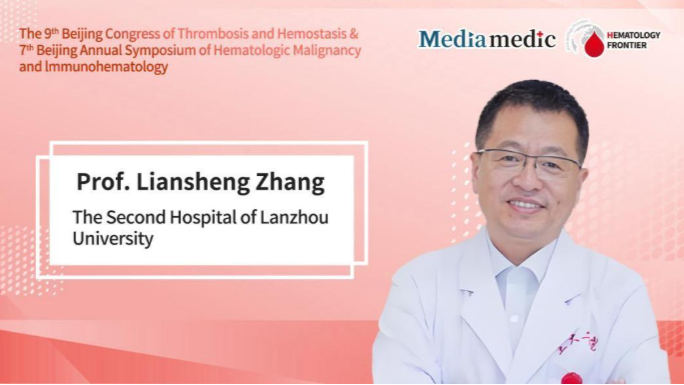
Iron deficiency anemia (IDA) is the most common nutritional deficiency and the leading cause of anemia worldwide. Despite the availability of well-established diagnostic methods, IDA is often underestimated in clinical practice as a “minor condition.” At the 9th Beijing Conference on Thrombosis and Hemostasis and the 7th Beijing Hematologic Oncology and Immunology Summit Forum, Professor Liansheng Zhang from the Second Hospital of Lanzhou University delivered an in-depth lecture on the current status and management of IDA. Drawing on recent high-impact publications, including data from The Lancet Haematology and Nutrients, he provided a comprehensive analysis of the multifaceted burden of IDA across perioperative settings, chronic diseases, elderly populations, and maternal–child health. He further introduced innovative diagnostic and therapeutic approaches centered on high-dose intravenous iron, along with the development of hospital-wide management systems.
The key points of his presentation are summarized below.
Epidemiology of IDA: A Global and National Perspective
Anemia is not merely a hematologic disorder but a major global public health challenge. According to data published in The Lancet Haematology in 2023, the global prevalence of anemia across all age groups is 24.3%, affecting approximately 1.92 billion individuals. In China, the prevalence of anemia among adults aged 18 years and older is 8.7%, corresponding to roughly 120 million individuals, with more than 60% of cases attributable to iron deficiency anemia.
The burden of anemia is particularly pronounced among women. In perioperative settings, the prevalence is even higher. Professor Zhang cited recent data published in Nutrients in 2024, showing that among pregnant women in China, the prevalence of anemia, iron deficiency, and IDA is 30.7%, 45.6%, and 17.3%, respectively, with all rates increasing as pregnancy progresses.
IDA is also highly prevalent across multiple clinical contexts. In orthopedic patients, preoperative anemia occurs in 21.6%–75% of cases, while postoperative anemia develops in 83.8% of patients without preoperative anemia and in as many as 97.7% of those with preexisting anemia. In general surgery, more than one-third of patients present with anemia preoperatively, rising to 80%–90% after major surgery. In chronic kidney disease, anemia prevalence increases with declining renal function, reaching 51.5% among non-dialysis patients. Among the elderly, iron deficiency and IDA affect approximately 29.1% of individuals.
A “Minor” Disease with Major Impact
Traditional clinical perspectives often limit the role of iron to hemoglobin synthesis. However, Professor Zhang emphasized that iron is an essential element involved in a wide range of physiological processes. Beyond oxygen transport, iron plays critical roles in myoglobin-mediated oxygen storage, cytochrome-mediated electron transport, oxidative phosphorylation, and DNA replication and repair.
Iron deficiency can have profound and sometimes irreversible effects on the central nervous system. Severe anemia may also lead to retinal abnormalities, including cotton-wool spots, exudates, and hemorrhages, ultimately impairing visual function.
Cognitive and Mental Health Consequences: The Hidden Burden of IDA
Professor Zhang highlighted emerging evidence linking IDA to neurological and psychiatric outcomes.
A cognitive study presented at the 2023 American Society of Hematology (ASH) Annual Meeting evaluated 34 healthy women and found significant differences across multiple cognitive domains, including full-scale IQ and perceptual reasoning, between groups with hemoglobin levels ≥10 g/dL and <10 g/dL. The effect sizes were large (Cohen’s D ≥0.8), indicating markedly impaired cognitive function in individuals with more severe anemia.
A large prospective cohort study based on the UK Biobank, including 313,448 participants with a median follow-up of 9.03 years, demonstrated that baseline anemia prevalence was significantly higher in individuals who later developed dementia (6.7%) compared with those who did not (3.6%, P<0.001). After adjustment, anemia was associated with a 56% increased risk of all-cause dementia (HR 1.56, P<0.001).
In addition, data from the U.S. NHANES survey showed that iron deficiency was significantly more prevalent among individuals with depression than among those without (12.8% vs 7.5%, P=0.01).
Impact on Maternal and Child Health
The effects of IDA in the perinatal setting are particularly significant. Professor Zhang noted that approximately 10.4% of pregnant women experience anemia. A large Swedish cohort study involving 532,000 children found that maternal anemia diagnosed before 30 weeks of gestation was associated with increased risks of autism spectrum disorder, attention-deficit/hyperactivity disorder, and intellectual disability in offspring, with odds ratios of 1.44, 1.37, and 2.20, respectively.
IDA is also associated with adverse maternal outcomes, including a 54% increased risk of preterm birth (OR 1.54), as well as higher rates of severe postpartum hemorrhage and preeclampsia. For neonates, IDA is linked to low birth weight, small-for-gestational-age status, and fetal distress. The International Federation of Gynecology and Obstetrics (FIGO) has recommended early assessment of hemoglobin and iron status during pregnancy and appropriate treatment of iron deficiency regardless of anemia status.
Medication and Environmental Risk Factors: Often Overlooked Contributors
Professor Zhang emphasized that commonly used medications and environmental factors can significantly increase the risk of IDA.
Long-term use of low-dose aspirin (100 mg daily) in individuals aged 70 years and older, as demonstrated in the ASPREE study, increases the risk of anemia by 20% over five years and accelerates the decline in serum ferritin levels. Oral anticoagulants modestly increase IDA risk, while proton pump inhibitors are associated with a more substantial increase (HR 2.29), primarily due to impaired absorption of non-heme iron. Statin use has also been linked to a markedly elevated risk of IDA in large cohort studies. In addition, air pollution plays a role, with UK Biobank data showing that each 10 μg/m³ increase in PM2.5 is associated with a doubling of IDA risk.
At the molecular level, hepcidin serves as a key regulator of systemic iron homeostasis. In inflammatory states, elevated hepcidin levels lead to sequestration of iron within macrophages and reduced intestinal iron absorption. This mechanism underlies functional iron deficiency, in which ferritin levels may be normal or elevated, while transferrin saturation remains low. Understanding this process is critical for selecting appropriate treatment strategies, particularly the use of intravenous iron to overcome impaired iron utilization.
Current Challenges and Solutions in IDA Management in China
Despite its high prevalence, IDA remains significantly underdiagnosed and undertreated. In China, treatment rates for mild anemia are below 20%, and even among patients with severe anemia, only about half receive appropriate therapy. Contributing factors include lower diagnostic thresholds compared with WHO standards, poor adherence to oral iron therapy, inadequate follow-up, delayed initiation and insufficient dosing of intravenous iron, and a lack of standardized management protocols.
A common issue in clinical practice is the overreliance on blood transfusion, with insufficient emphasis on comprehensive anemia management. Treatment of IDA should prioritize etiological management and timely iron supplementation. For patients with moderate to severe anemia requiring urgent surgery, intravenous iron should be the preferred option.
Traditional low-dose intravenous iron formulations require multiple infusions and carry a higher risk of hypersensitivity reactions. Professor Zhang highlighted the advantages of newer high-dose intravenous iron formulations, such as ferric carboxymaltose and iron isomaltoside. Ferric carboxymaltose, approved in China in 2022, is characterized by low immunogenicity, high stability, and the ability to deliver up to 1000 mg in a single 15-minute infusion, greatly improving treatment convenience. These agents enable more rapid hemoglobin correction and improved quality of life in perioperative patients, as well as in those with inflammatory bowel disease and cancer-related anemia.
Professor Zhang also presented successful models of standardized anemia management implemented at the Second Hospital of Lanzhou University and Taian Central Hospital. A hospital-wide anemia management system has been established, supported by information technology. This includes automated alerts triggered by abnormal blood test results, closed-loop management with defined referral and consultation targets, and stratified patient routing based on clinical characteristics to appropriate specialties or multidisciplinary teams. This integrated approach addresses the fragmentation of anemia care and ensures timely, adequate, and standardized treatment.
Conclusion and Future Perspectives
Professor Zhang concluded that iron deficiency anemia represents a “common condition with major consequences.” Its impact on quality of life, cognitive development, and outcomes in chronic diseases is often underestimated.
Future efforts in IDA management should focus on three key areas: improving awareness among both the public and healthcare professionals regarding the multifaceted consequences of iron deficiency; promoting the rational use of high-dose intravenous iron to overcome limitations in adherence to oral therapy; and establishing hospital-wide, information-driven management systems supported by multidisciplinary collaboration to enable early detection, timely treatment, and standardized care.