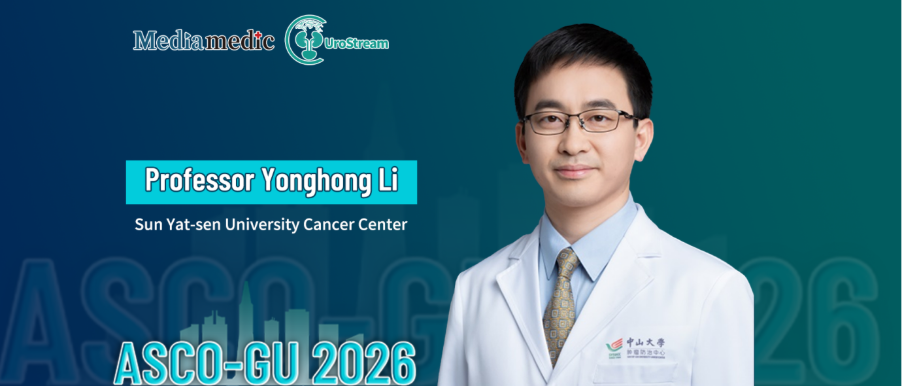
Editor’s Note: The 2026 American Society of Clinical Oncology Genitourinary Cancers Symposium (ASCO GU 2026) has successfully concluded. As a global benchmark in genitourinary oncology, this year’s meeting delivered multiple landmark studies that provide strong evidence for optimizing and innovating prostate cancer management. To help clinicians better understand these advances and their real-world clinical implications, Oncology Frontier – UroStream invited Professor Yonghong Li from Sun Yat-sen University Cancer Center to review the key developments in prostate cancer presented at this meeting, offering both a global perspective and insights relevant to clinical practice in China.
Key Highlights
The PEACE-3 study reported positive overall survival (OS) results, providing the highest level of evidence supporting radium-223 combined with enzalutamide in patients with metastatic castration-resistant prostate cancer (mCRPC) with bone metastases, and facilitating its standardized use in China.
New data on salvage radiotherapy after radical prostatectomy suggest that for patients with PSA <0.5 ng/mL, routine combination with androgen deprivation therapy (ADT) may not be necessary, although decisions should still be individualized based on factors such as PSA doubling time.
The Chinese bridging study of Lu-177-PSMA-617 confirmed its efficacy and safety in Chinese patients, with approved indications now covering both pre- and post-chemotherapy mCRPC populations. The PSMAddition study further supports moving radionuclide therapy earlier into the treatment of metastatic hormone-sensitive prostate cancer (mHSPC).
Preliminary results of Ac-225-PSMA alpha therapy are promising. China has participated in global research and enrolled the first patient worldwide, offering new hope for heavily pretreated patients.
Meanwhile, the development of non–androgen receptor (AR) pathway therapies—including EZH1/EZH2 inhibitors, antibody–drug conjugates (ADCs), and T-cell engagers (TCEs)—continues to advance, potentially overcoming AR resistance and expanding treatment options for advanced prostate cancer.
Overview of Key Advances
Professor Li noted that although no single “practice-changing revolution” emerged this year, the accumulation of evidence will significantly refine and standardize clinical decision-making.
Strengthening Evidence from Phase III Trials
Two major phase III studies presented on the opening day are expected to influence clinical practice.
The first, the highly anticipated PEACE-3 trial, reported its final OS results in patients with mCRPC and bone metastases. Previous findings had already shown that radium-223 combined with enzalutamide improved radiographic progression-free survival (rPFS). The newly confirmed OS benefit provides stronger evidence for this combination. As radium-223 is already approved in China, these findings will help guide its standardized clinical use.
The second study addressed a long-standing clinical question: whether ADT should be added to salvage radiotherapy in patients with biochemical recurrence after radical prostatectomy.
This issue is particularly relevant in China, where a higher proportion of patients present with high-risk or locally advanced disease. The results suggest that for patients with PSA levels below 0.5 ng/mL, salvage radiotherapy alone may be sufficient. However, Professor Li emphasized that this conclusion must be interpreted cautiously. Important prognostic factors, such as PSA doubling time, were not fully incorporated. For high-risk patients with rapidly rising PSA, combined ADT may still be recommended. This underscores the need for further research to refine individualized treatment strategies.
Advances in Radionuclide Therapy
Radionuclide therapy was one of the most prominent themes at the conference.
The Chinese bridging study of Lu-177-PSMA-617, based on the global VISION trial, demonstrated that despite poorer baseline characteristics, Chinese patients achieved outcomes comparable to international results. This confirms the treatment’s efficacy and safety in the Chinese population. The therapy has now been approved in China for PSMA-positive mCRPC patients both before and after chemotherapy, providing a new treatment option supported by local evidence.
The PSMAddition trial, a global phase III study, also reported important findings. It evaluates Lu-177-PSMA-617 combined with novel hormonal therapy in mHSPC, supporting the earlier use of radionuclide therapy in the disease course.
In addition, early data on Ac-225-PSMA alpha therapy were presented. This approach offers strong antitumor effects due to its high linear energy transfer and short radiation range. Preliminary results show promising responses even in heavily pretreated patients, although further validation is needed.
In terms of safety, the toxicity profile differs from beta-emitting radionuclides, with xerostomia (dry mouth) being more common and requiring careful management.
Expanding Beyond the AR Pathway
Another important direction is the development of therapies beyond the androgen receptor pathway.
Epigenetic therapies, particularly EZH1/EZH2 inhibitors, are under active development by companies such as Novartis, Pfizer, and Hengrui, spanning early- to late-phase clinical trials. These agents may provide new options for patients who have exhausted standard treatments.
At the same time, antibody–drug conjugates (ADCs) and T-cell engagers (TCEs) targeting molecules such as B7-H3 and CD3 have shown encouraging antitumor activity in early-phase studies.
Historically, prostate cancer treatment has relied heavily on AR-targeted approaches. The emergence of these new therapies represents a significant shift, offering alternative strategies for patients with AR-resistant disease.
Conclusion
The advances presented at ASCO GU 2026 strengthen the evidence base for current treatment strategies while opening new avenues for innovation.
Encouragingly, China is increasingly contributing to global research efforts. While some areas still follow international developments, others are progressing in parallel or even taking the lead. Through continued high-quality research and collaboration, the ultimate goal remains clear: to provide more effective, accessible, and personalized treatment options for patients with prostate cancer.
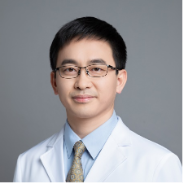
Professor Yonghong Li