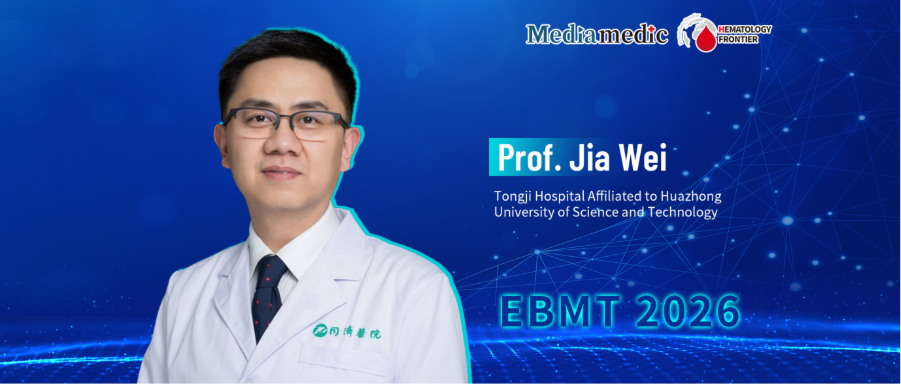
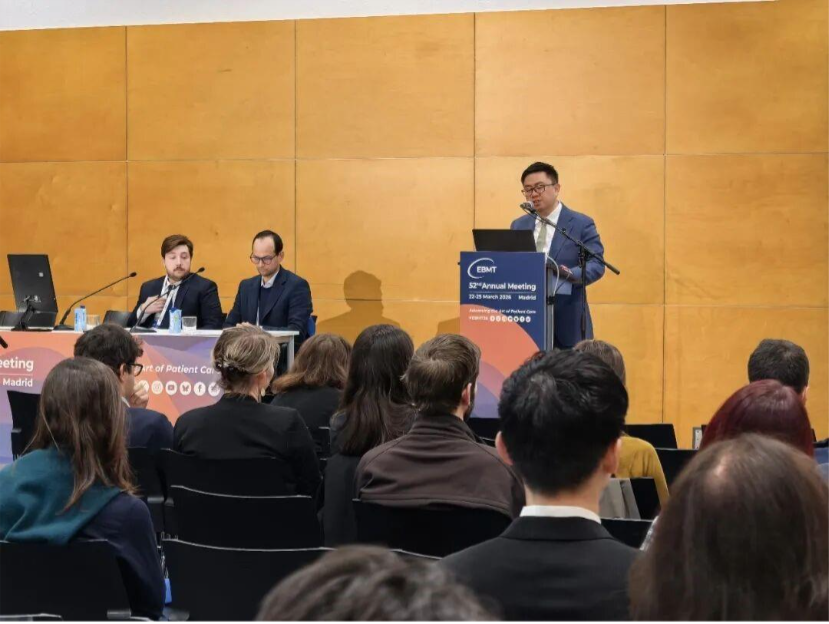
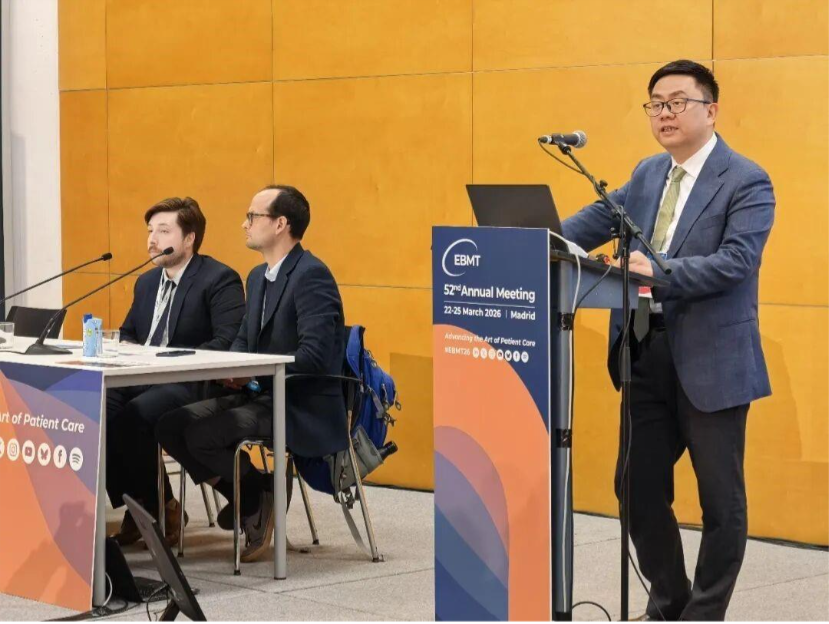
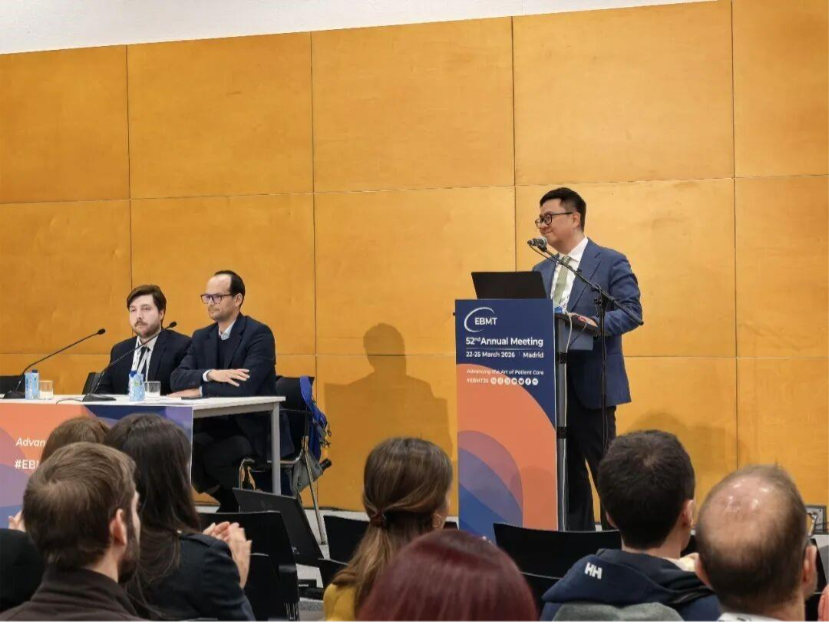
From March 22 to 25, 2026, the 52nd Annual Meeting of the European Society for Blood and Marrow Transplantation (EBMT) was held in Madrid, Spain. The congress gathered thousands of experts worldwide to discuss the latest advances in transplantation and cellular therapy, covering key topics such as optimization of transplant strategies, infection management, CAR-T therapy, and graft-versus-host disease (GVHD) management. At the meeting, the team led by Professor Jia Wei from Tongji Hospital, Tongji Medical College, Huazhong University of Science and Technology, in collaboration with the team of Professor Dehui Zou from the Lymphoma Diagnosis and Treatment Center at the Institute of Hematology, Chinese Academy of Medical Sciences, presented an oral report titled “Real-World Evidence for the Safety and Efficacy of Glofitamab Combined with CAR-T Therapy in Relapsed/Refractory B-Cell Lymphoma.”
Hematology Frontier invited Professor Wei for an in-depth discussion to interpret the key findings and their implications for clinical decision-making and long-term disease management.
Q1
CAR-T therapy has shown promising results in improving outcomes for patients with relapsed/refractory B-cell lymphoma, yet relapse remains a major challenge. What clinical observations or hypotheses led your team to explore the combination of CD20/CD3 bispecific antibodies with CAR-T therapy, and what unmet clinical needs were you aiming to address?
Professor Jia Wei: CAR-T therapy has been a milestone in the treatment of relapsed/refractory diffuse large B-cell lymphoma. However, long-term follow-up data indicate that up to 50% of patients eventually experience disease progression or relapse. The immunosuppressive tumor microenvironment and antigen escape are key contributors to CAR-T cell exhaustion and loss of effector function, representing major challenges in clinical practice.
Currently, CD20/CD3 bispecific antibodies are mainly used as salvage therapy after CAR-T failure. However, in our clinical practice, we observed that some patients receiving bispecific antibody maintenance therapy exhibited sustained persistence and detectability of CAR-T cells in vivo over a prolonged period.
Based on this observation, we hypothesized that moving the intervention window earlier—combining bispecific antibodies with CAR-T therapy upfront—could generate a synergistic effect and prolong disease remission. Through high-affinity dual binding, bispecific antibodies can bridge CAR-T cells and tumor cells, enhancing CAR-T cell recruitment and activation, alleviating immune exhaustion, and promoting long-term persistence of CAR-T cells. Ultimately, this may lead to sustained antitumor activity and improved survival outcomes.
Q2
Your study included 27 patients treated with glofitamab plus CAR-T and compared them with 34 historical controls receiving CAR-T alone. Could you highlight the key findings and their clinical implications?
Professor Jia Wei: The key findings of this study can be summarized from two perspectives: clinical benefit and tumor microenvironment remodeling.
From a clinical standpoint, despite a higher baseline tumor burden in the combination group, the outcomes were highly encouraging. The overall response rate reached 88.9%, and the median progression-free survival has not yet been reached, outperforming the CAR-T monotherapy group. Multivariate analysis further confirmed that bispecific antibody combination therapy is an independent protective factor for improved progression-free survival.
From a mechanistic perspective, single-cell transcriptomic analyses and functional studies demonstrated that the addition of bispecific antibodies enhances CAR-T antitumor activity and promotes differentiation toward memory phenotypes. This combination activates the JAK/STAT signaling pathway within CAR-T cells and upregulates anti-apoptotic gene networks.
These findings not only elucidate the molecular basis for sustained CAR-T persistence but also provide a novel combination strategy for high-risk, high-burden R/R DLBCL patients to achieve prolonged remission.
Q3
At this year’s EBMT meeting, which advances in cellular therapy impressed you the most? What major trends do you see emerging in this field?
Professor Jia Wei: From this year’s EBMT meeting, it is clear that cellular therapies such as CAR-T and CAR-NK are rapidly evolving, with a focus on overcoming relapse and reducing barriers to clinical application. Advances in gene-editing technologies are accelerating the development of universal and in vivo CAR approaches.
On one hand, to address CAR-T exhaustion and relapse, current research is leveraging technologies such as CRISPR to regulate key intracellular targets in CAR cells. Additionally, combination strategies—such as integrating bispecific antibodies—are being explored to reshape the immunosuppressive tumor microenvironment and enhance both efficacy and safety.
On the other hand, to overcome the limitations of autologous cell therapies, including long manufacturing times and high costs, there is growing interest in developing allogeneic “off-the-shelf” cell products derived from healthy donors. Furthermore, novel delivery systems enabling in vivo generation of CAR-T cells are emerging as a promising direction to expand accessibility.
Overall, improving in vivo efficacy while reducing manufacturing complexity and treatment costs represents a central direction for advancing cellular therapy in hematologic malignancies.
Expert Profile
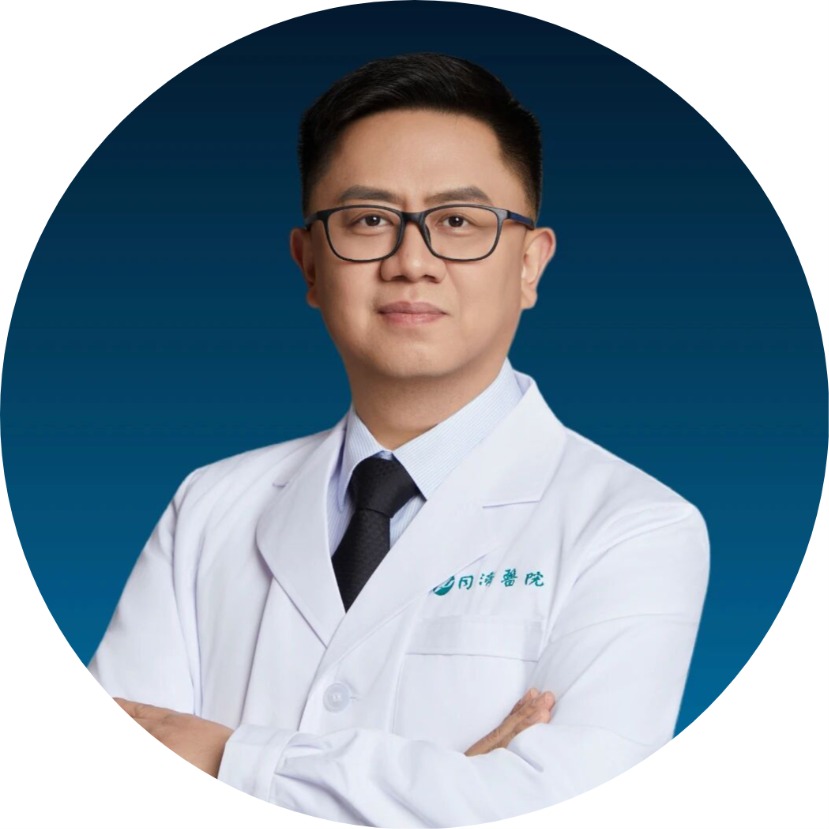
Professor Jia Wei Tongji Hospital, Tongji Medical College, Huazhong University of Science and Technology
Professor Wei is a Chief Physician and PhD supervisor, serving as Director of the Department of Hematology and Deputy Director of Internal Medicine at Tongji Hospital. He is also a Distinguished Professor under the Huazhong Excellence Scholars Program and Deputy Director of the Innovation Institute of the National Medical Center (in preparation).
He has been selected for the National “Ten Thousand Talents Program” (Young Top Talent) and recognized as an Outstanding Worker in China’s National Health System.
Professor Wei serves as a member of the Lymphocyte Disease Group and Youth Committee of the Chinese Society of Hematology, a Standing Committee Member of the Hematologic Oncology Committee of the Chinese Anti-Cancer Association, Editor-in-Chief of the Journal of Internal Critical Care Medicine, and Associate Editor of Cancer Plus.
His research focuses on hematopoietic stem cell transplantation and CAR-T therapy for hematologic malignancies. He has led multiple CAR-T clinical trials as principal investigator and has been awarded several national and provincial research grants. In recent years, he has published over 50 papers in leading international journals, including Blood, Signal Transduction and Targeted Therapy (STTT), American Journal of Hematology (AJH), Journal of Allergy and Clinical Immunology (JACI), and Journal for ImmunoTherapy of Cancer (JITC).