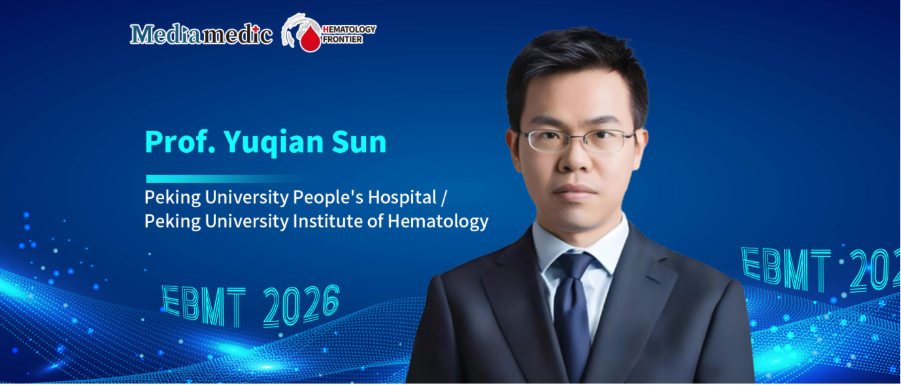
The 52nd Annual Meeting of the European Society for Blood and Marrow Transplantation (EBMT) was held from March 22 to 25, 2026, in Madrid, Spain. As one of the most influential academic events in the field, the congress brought together thousands of experts worldwide to discuss the latest advances in transplantation and cellular therapy. During the meeting, Professor Yuqian Sun from Peking University People’s Hospital / Peking University Institute of Hematology presented an oral report titled “Impact of Donor Characteristics on Outcomes of Haploidentical Hematopoietic Stem Cell Transplantation in Patients Aged ≥55 Years.” The study provides important evidence to guide donor selection strategies before transplantation. Hematology Frontier invited Professor Sun for an in-depth interview to interpret the key findings and their implications for clinical practice and future research.
Q1
Your study focuses on the impact of donor characteristics on transplant outcomes in patients aged ≥55 years. What clinical observations or unmet needs led your team to specifically investigate donor age? Could you elaborate on the key findings and their clinical significance?
Professor Yuqian Sun: With the continuous advancement and maturation of hematopoietic stem cell transplantation, the upper age limit for transplantation has gradually expanded. Today, there is no absolute age restriction, and an increasing proportion of elderly patients are undergoing transplantation. Given that hematologic diseases are more prevalent in older populations, optimizing transplant outcomes in elderly patients has become a major focus in clinical research. Data from the United States show that patients aged ≥65 years already account for 28% of all transplant recipients, and a similar upward trend is observed in China, highlighting the growing importance of this population.
Despite these advances, there is still considerable room to improve outcomes in elderly patients. Multiple factors influence transplant success, including disease status before transplantation, conditioning regimens, donor selection, graft-versus-host disease (GVHD) prevention strategies, and post-transplant maintenance therapy. Among these, donor-related factors play a particularly critical role. Therefore, his team specifically examined donor characteristics and their impact on outcomes in patients aged ≥55 years undergoing haploidentical hematopoietic stem cell transplantation.
His analysis revealed a key finding: among all donor-related factors, donor age emerged as the most important determinant of transplant outcomes. This observation is consistent with previous findings in younger transplant populations, suggesting that in elderly haploidentical transplantation, donor age may even outweigh HLA matching in importance.
Although the underlying biological mechanisms require further investigation, the clinical implications are clear. Donor age has a significant impact on outcomes in patients aged ≥55 years undergoing haploidentical transplantation. Younger donors, particularly those under 33 years of age, are associated with improved overall survival, better disease-free survival, and lower transplant-related mortality. These findings strongly support prioritizing younger donors when selecting donors for elderly patients undergoing haploidentical transplantation.

Expert Profile
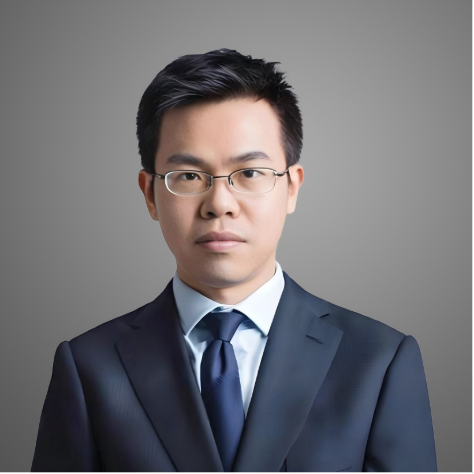
Professor Yuqian Sun Peking University People’s Hospital
Professor Sun is a Chief Physician, Associate Professor, and PhD supervisor. He serves as Director of the Shunyi Ward of the Department of Hematology at Peking University People’s Hospital.
He is a member and secretary of the Hematopoietic Stem Cell Application Group of the Chinese Society of Hematology, Vice Chair of the Mycology Committee of the Chinese Medical Education Association, and Standing Committee Member of the Infectious Diseases Committee of the same association.
He has also served as a senior visiting scholar and Global Young Ambassador of the European Society for Blood and Marrow Transplantation (EBMT).