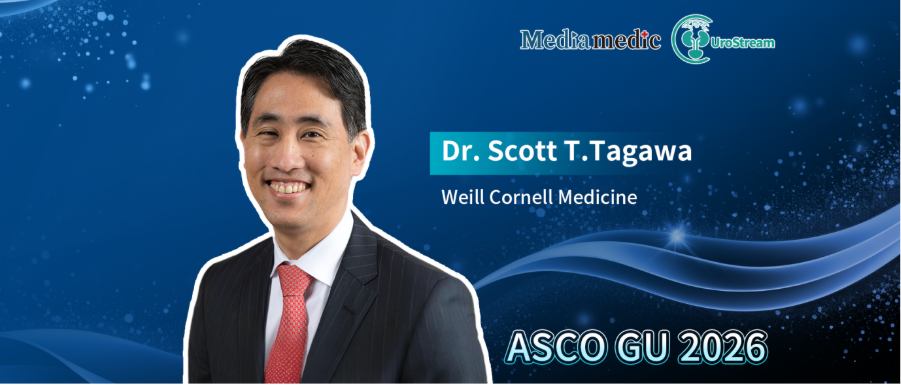

Editor’s Note: The 2026 American Society of Clinical Oncology Genitourinary Cancers Symposium (ASCO GU 2026) marked a pivotal moment in prostate cancer research, featuring updates in disease classification, major clinical trial readouts, and evolving treatment paradigms. During the meeting, Oncology Frontier – UroStream invited Professor Scott T. Tagawa from Weill Cornell Medicine to share his perspectives on the latest advances in prostate cancer and the future direction of precision therapy.
01
Oncology Frontier: What key advances in prostate cancer presented at this ASCO GU congress have attracted your attention? Which studies or trends are likely to significantly impact clinical practice?
Professor Scott T. Tagawa: Advances presented at this year’s ASCO GU can be broadly categorized into two domains: first, the final results of confirmatory clinical trials that are poised to directly influence clinical practice; and second, a range of promising early-phase studies that, while not immediately practice-changing, lay the groundwork for future breakthroughs.
One of the most important developments is the release of the Prostate Cancer Clinical Trials Working Group 4 (PCWG4) consensus. This introduces a major shift in terminology, replacing the widely used term castration-resistant prostate cancer (CRPC) with androgen pathway modulator–resistant (APMR) prostate cancer. This updated framework will influence how we interpret current and future studies.
Among clinical trials, the final survival results of the PEACE-3 study are particularly noteworthy. This phase III randomized trial enrolled predominantly ARPI-naïve patients with APMR prostate cancer. Patients were randomized to receive either enzalutamide alone or enzalutamide combined with radium-223, a well-established bone-targeted alpha-emitting therapy.
Earlier analyses had shown a progression-free survival benefit and a trend toward improved overall survival (OS), but statistical significance for OS had not been reached. At ASCO GU 2026, the final analysis confirmed a statistically significant OS benefit with the combination regimen.
With a median follow-up of 58 months, radiographic progression-free survival (rPFS) was 19.4 months in the combination group versus 16.4 months with enzalutamide alone (HR=0.69, P=0.0009). Median OS was 38.2 months versus 32.6 months, respectively (HR=0.76, P=0.0096), corresponding to a 24% reduction in the risk of death and a 5.6-month improvement in survival.
All key secondary endpoints—including time to next treatment, time to pain progression, and symptomatic skeletal events—were also improved. Grade ≥3 adverse events occurred in 65.6% of patients in the combination arm versus 55.8% in the monotherapy arm, with fatigue, anemia, thrombocytopenia, and diarrhea being the most common. Importantly, the use of bone-protective agents reduced fracture risk, and overall safety remained manageable.
This combination represents a meaningful advance, particularly for patients with bone-predominant metastatic disease, which constitutes the majority of advanced prostate cancer cases.
However, an important limitation should be acknowledged: most patients enrolled in PEACE-3 were ARPI-naïve, whereas in current practice, many patients have already received ARPI therapy. Whether similar benefits will be observed in ARPI-pretreated populations remains uncertain.
To address this gap, the ongoing DORA trial—now fully enrolled—will evaluate docetaxel alone versus docetaxel plus radium-223 in patients who have progressed after ARPI therapy. Early phase II data suggest that optimized dosing schedules may improve efficacy while reducing toxicity, and the final results are highly anticipated.
02
Oncology Frontier: What is your outlook on the future of precision therapy in prostate cancer? What are the most important research directions moving forward?
Professor Scott T. Tagawa: The field of prostate cancer is currently at a critical juncture, characterized by both opportunities and challenges. Even without entirely new drugs, we can achieve substantial improvements in patient outcomes by optimizing how existing therapies are used.
The first key direction is the precise, biomarker-driven application of current treatments. We already have multiple established therapeutic options for APMR prostate cancer, including hormonal therapies, chemotherapy, bone-targeted agents, PARP inhibitors, molecularly guided targeted therapies, and PSMA-directed treatments. Compared with a decade ago, patient survival has improved significantly.
The next step is to refine patient selection. Through predictive biomarkers, we can identify which patients benefit from early combination therapy, which patients can avoid overtreatment, and when treatment strategies should be adjusted. This level of precision has the potential to transform clinical practice even in the absence of new drugs.
The second major direction is the development of therapies with novel targets and mechanisms of action. Although more than a dozen drugs are currently approved for prostate cancer, many share similar mechanisms—particularly those targeting the androgen receptor (AR) pathway. While AR signaling remains central to disease biology, resistance inevitably develops, and having multiple agents with similar mechanisms does not necessarily translate into additional effective options for individual patients.
Future research is therefore focused on three key areas:
- Next-generation AR-targeted therapies capable of overcoming resistance through novel mechanisms.
- Cell surface–targeted therapies, including PSMA-directed radioligand therapy and ADCs, to expand the scope of precision treatment.
- Innovative immunotherapy approaches, particularly T-cell–redirecting agents such as bispecific antibodies and T-cell engagers, which may finally unlock meaningful immunotherapy efficacy in prostate cancer.
Overall, I am highly optimistic about the future of prostate cancer management. Continued innovation, combined with active participation in clinical trials, will be essential to addressing unmet clinical needs and further improving patient outcomes worldwide.
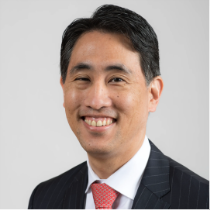
Professor Scott T. Tagawa