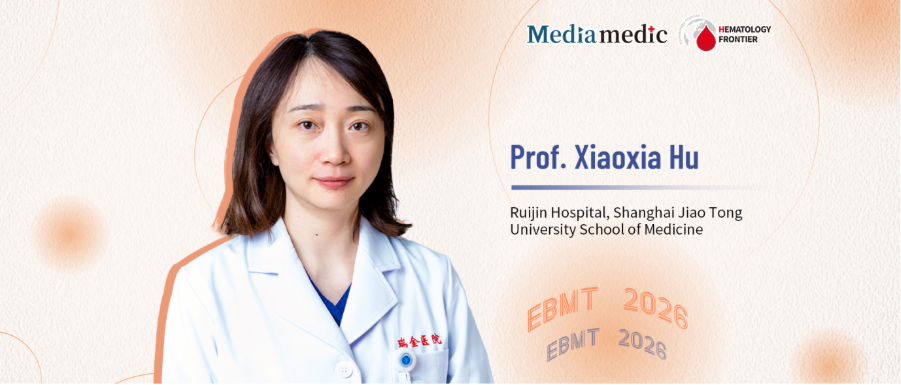
Editor’s Note: From March 22 to 25, 2026, the 52nd Annual Meeting of the European Society for Blood and Marrow Transplantation (EBMT) was held in Madrid, Spain, bringing together thousands of experts worldwide to discuss the latest advances in transplantation and cellular therapy. Key topics included optimization of transplant strategies, infection control, CAR-T therapy, and graft-versus-host disease management. Professor Xiao-Xia Hu and her team from Ruijin Hospital, Shanghai Jiao Tong University School of Medicine, presented multiple studies at the meeting. Hematology Frontier invited Professor Hu to provide an in-depth interpretation of her oral presentation, “Distinct Prognostic Patterns and Timing of Transplantation in Core Binding Factor Acute Myeloid Leukemia (CBF-AML)” (OS08-01), offering valuable insights for optimizing clinical decision-making and long-term disease management.
Q1
What clinical observations or unmet needs prompted your team to conduct an in-depth study of CBF-AML? In particular, what challenges exist in determining the optimal timing of transplantation?
Professor Xiao-Xia Hu: Core binding factor acute myeloid leukemia (CBF-AML) is traditionally classified as a favorable-risk subtype. However, the role and timing of allogeneic hematopoietic stem cell transplantation (allo-HCT) in this group remain highly controversial in clinical practice.
Although CBF-AML accounts for approximately 15% of all AML cases, there is ongoing debate between transplant-oriented and chemotherapy-oriented approaches, particularly regarding the optimal timing of transplantation. A central issue lies in whether transplant decisions should be guided by molecular measurable residual disease (MRD) or flow cytometry–based MRD. In addition, it remains unclear whether the two major fusion subtypes—RUNX1::RUNX1T1 and CBFβ::MYH11—should share the same transplant indications. Current international guidelines and domestic consensus statements do not provide clear recommendations on these issues.
To address these questions, we conducted a multicenter retrospective study involving Ruijin Hospital, the First Affiliated Hospital of Zhejiang University, Tongji Hospital in Wuhan, Peking University People’s Hospital, and the First Affiliated Hospital of Soochow University.
Our findings partly confirmed previous observations while also revealing new insights. Consistent with earlier data, patients with the CBFβ::MYH11 fusion had a higher rate of early post-transplant mortality compared with those with RUNX1::RUNX1T1. However, this increased early risk did not translate into differences in overall survival.
More importantly, we observed distinct differences in transplant indications between the two subtypes. For patients with RUNX1::RUNX1T1 who fail to achieve MRD response after two cycles of consolidation therapy (post-consolidation cycle 2, PC2), allo-HCT provides a significant survival benefit. In contrast, for patients with CBFβ::MYH11, chemotherapy alone appears sufficient, and transplantation can be deferred to second complete remission (CR2) without compromising overall outcomes compared with transplantation in CR1.
Q2
What are the key findings of your study that may influence clinical practice? How can the PWP-TT model help identify high-risk patients early?
Professor Xiao-Xia Hu: As a retrospective multicenter study, our findings are not yet sufficient to directly change clinical guidelines. However, they provide important insights that may inform the design of future prospective trials.
For patients with RUNX1::RUNX1T1, we developed a predictive scoring system based on fusion gene transcript levels at diagnosis and the presence of high-risk mutations, such as KIT D816/D822. This model can help predict whether patients are likely to achieve molecular remission after two cycles of consolidation or during the entire consolidation phase.
Such early prediction allows clinicians to initiate donor search and transplantation preparation in advance for patients who are unlikely to achieve adequate molecular response, thereby optimizing the treatment pathway.
For patients with CBFβ::MYH11, our findings suggest that the conventional strategy of determining transplant timing based on MRD assessment after the second consolidation cycle may not be appropriate. Delaying transplantation to CR2 did not result in inferior survival outcomes, offering greater flexibility in treatment planning for this subgroup.
Overall, these findings highlight meaningful biological and clinical differences between subtypes and identify key decision points that can be further explored in prospective studies.
Q3
At this year’s EBMT meeting, many studies focused on disease heterogeneity and personalized treatment strategies. Based on your experience, how do you see future research evolving in CBF-AML and AML more broadly?
Professor Xiao-Xia Hu: This year’s EBMT meeting highlighted advances in cellular therapy and transplantation. In AML, progress is increasingly driven by a deeper understanding of molecular biology and cytogenetic alterations.
For example, patients with AML harboring myelodysplasia-related gene mutations tend to have low response rates to conventional chemotherapy and high relapse rates after transplantation, with limited options for early intervention. Emerging evidence suggests that lower-intensity treatment strategies may be more beneficial, as they help patients achieve optimal disease control before transplantation. This approach may ultimately translate into improved overall survival and relapse-free survival.
More broadly, advances in AML and hematologic malignancies will be realized through improvements in transplantation and cellular therapies. Continued exploration of molecular mechanisms remains fundamental, as it underpins the evolution and refinement of treatment strategies.
Expert Profile
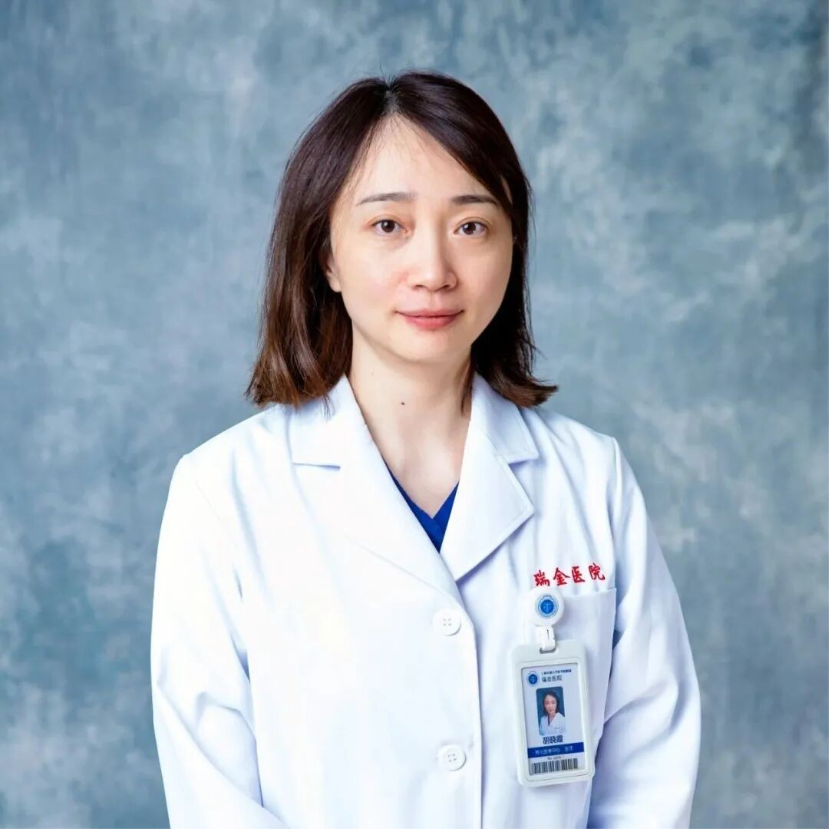
Professor Xiao-Xia Hu Ruijin Hospital, Shanghai Jiao Tong University School of Medicine
Professor Hu is a Chief Physician and PhD supervisor at the Translational Medicine Center of Ruijin Hospital. Her work focuses on both basic and clinical research in hematopoietic stem cell transplantation.
She serves as a member of the Hematologic Oncology Committee of the Chinese Anti-Cancer Association and the Hematology Physiology Committee of the Chinese Physiological Society. She has been recognized as an Outstanding Young Medical Talent and Discipline Leader in Shanghai.
Professor Hu has published more than 40 peer-reviewed articles as first or corresponding author in leading journals, including Blood, JCI, Leukemia, BCJ, JCI Insight, and AJH, and has received the First Prize of the Shanghai Science and Technology Progress Award as a key contributor.