

From March 13–16, 2026, the 41st Annual Congress of the European Association of Urology (EAU26) was held at the ExCeL International Convention Centre in London, UK. As the largest and one of the most authoritative academic events in urology worldwide, the congress brought together leading experts from over 100 countries and regions to discuss cutting-edge advances and drive innovation in the field.
At a featured scientific session, Prof. Ke Sun, representing the team led by Prof. Haixing Mai from the Chinese PLA General Hospital (301 Hospital), presented a study entitled:
“Macrolux 7.5F Single-Use Torque-Assisted Digital Ureteroscope in Treating 2–4 cm Lower Pole Renal Stones: A Prospective Multicenter Randomized Controlled Trial.”
This presentation showcased China’s latest advancements in the minimally invasive management of complex renal calculi.
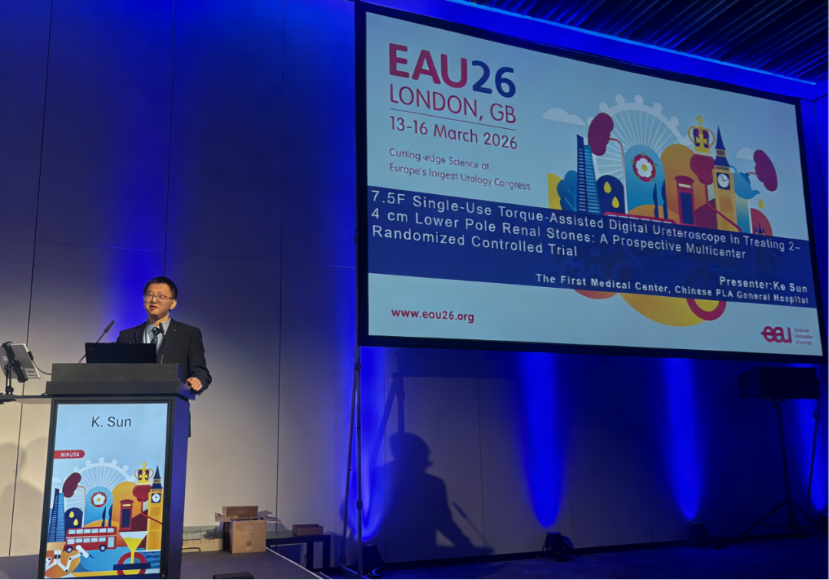
Tackling a Clinical Challenge: Large Lower Pole Stones
The study focused on a well-recognized clinical challenge—lower pole renal stones measuring 2–4 cm, which are often difficult to manage due to anatomical constraints and limited accessibility.
The team systematically presented the innovative use of a 7.5F single-use digital flexible ureteroscope (Macrolux) combined with the FANS technique, supported by results from a prospective multicenter randomized controlled trial.
The presentation provided a comprehensive overview of:
- Device optimization and technical innovation
- Rigorous study design and validation methodology
- Clinical efficacy outcomes
- Safety profiles
Prof. Sun delivered the findings with clarity and strong supporting data, highlighting the depth of clinical expertise and research capability of the 301 Hospital team. The presentation attracted considerable attention and sparked active discussion among international experts.
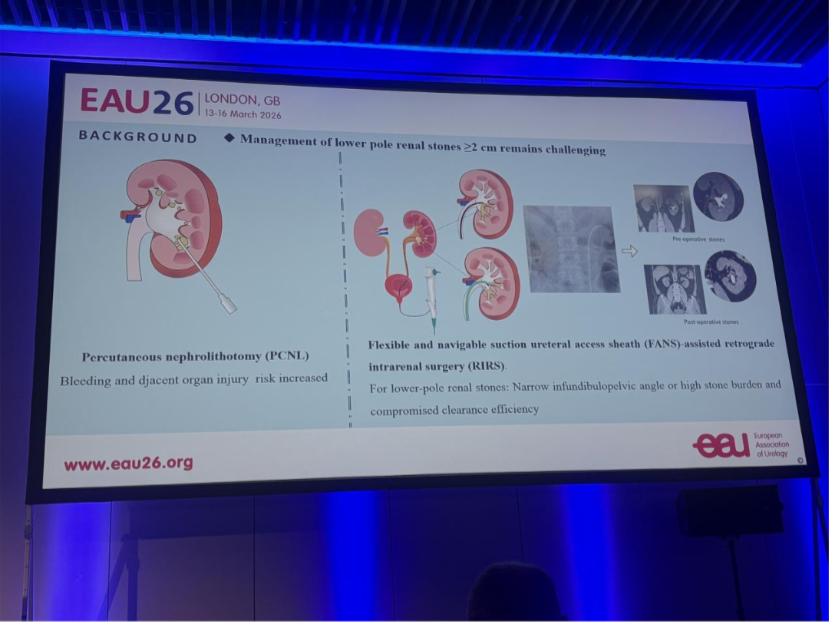
High-Level Evidence Supporting Minimally Invasive Treatment
The study was highly praised by conference reviewers, who emphasized its:
- Robust study design
- High level of evidence
- Clear clinical relevance
Experts agreed that the findings provide strong evidence-based support for minimally invasive management of 2–4 cm lower pole renal stones, offering important guidance for:
- Optimizing clinical decision pathways
- Improving outcomes in complex stone disease
International Recognition and Future Outlook
International peers expressed strong interest in the work and noted its significance in advancing global urological practice. Many also conveyed their anticipation for further breakthroughs from Prof. Mai’s team and Prof. Sun at the EAU 2027 Congress, expecting continued contributions of innovative research and original clinical solutions.
Elevating China’s Global Academic Influence
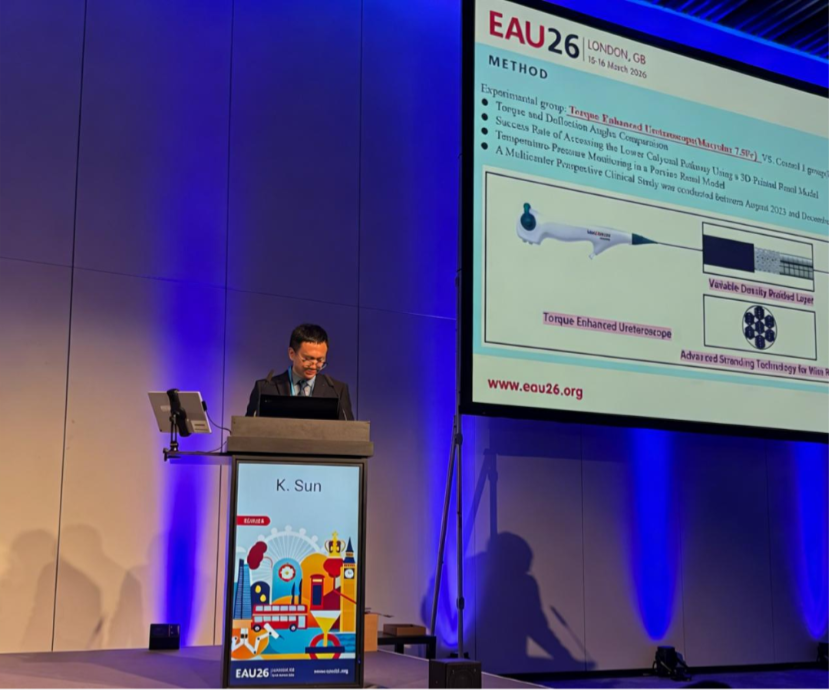
This presentation at a premier international platform reflects the 301 Hospital’s long-standing commitment to integrating clinical excellence with high-quality research, while maintaining active engagement with the global academic community.
It also signifies growing international recognition of the team’s work in minimally invasive urolithiasis management, further strengthening the global academic presence of Chinese urology.
Looking ahead, the team will continue to advance minimally invasive surgical innovation and conduct high-quality clinical research, with the goal of delivering more precise, safer, and more efficient solutions for the management of complex urinary stone disease.