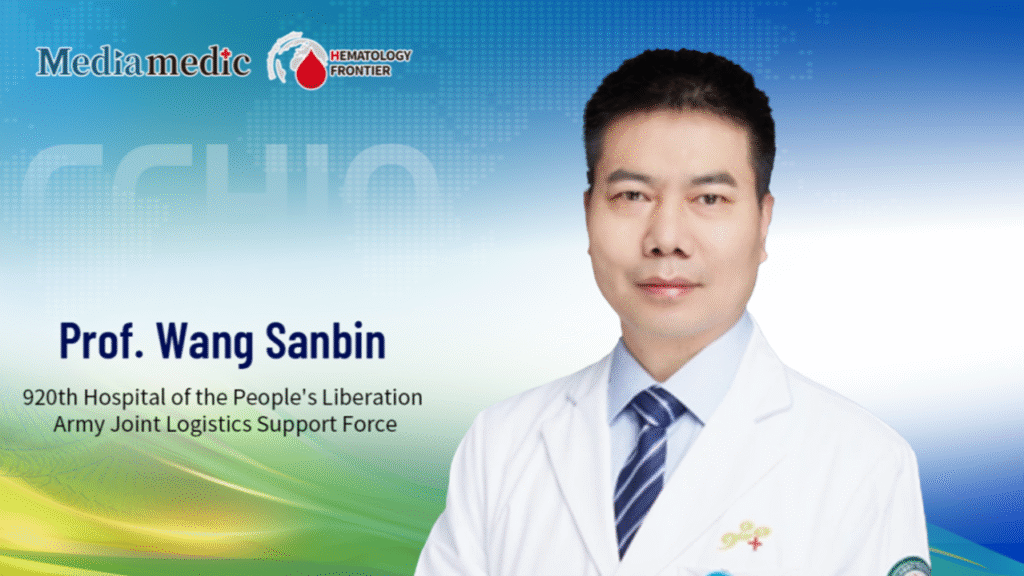
From November 6 to 9, 2025, the China Conference on Holistic and Integrative Oncology (CCHIO 2025) was grandly convened in Kunming. As one of China’s largest and most influential oncology meetings, the conference gathered many leading national and international oncology experts to explore the latest advances and future directions in cancer prevention and treatment through the lens of integrative medicine. The event provided a high-level platform for strengthening China’s cancer diagnosis and treatment system.During the meeting, Oncology Frontier – Hematology Frontier invited Professor Wang Sanbin of the 920th Hospital of the Joint Logistics Support Force of the Chinese People’s Liberation Army for an in-depth interview on three key themes: the practical implementation of integrative rehabilitation, translational challenges in CAR-T cell therapy, and improving access to high-quality hematologic oncology resources in grassroots settings.
Q1
At the CCHIO, integrative rehabilitation is consistently one of the key focus areas. This year’s conference was hosted in Yunnan, and as one of the local experts with extensive experience in diagnosing and treating hematologic diseases, could you share your view on the core value of “integrative rehabilitation”? What unique role does it play in lymphoma and other hematologic diseases? How has your team translated this concept into clinical practice?
Professor Wang Sanbin:
As the integrative rehabilitation sessions were held in Kunming this year, I had the privilege of serving as a host expert and co-organizing the lymphoma integrative rehabilitation and integrative lymphoma sub-forums.
With continuous advancements in oncology treatments, an increasing number of cancer patients are now achieving clinical cure. Yet, even after successful tumor eradication, patients face numerous rehabilitation-related challenges. Helping patients achieve comprehensive recovery has become a critical issue.
Cancer rehabilitation encompasses multiple dimensions:
1. Immune system recovery: Many patients experience poor immune reconstitution after being clinically cured, leading to infections and other complications. Thus, optimizing immune recovery is central to the rehabilitation process.
2. Vaccination planning: Post-cure vaccination strategies must be carefully tailored to patients’ physiological status.
3. Restoration of physical fitness and social reintegration: This includes the length of time required to regain strength, as well as practical issues such as returning to work.
4. Psychological rehabilitation and life planning: Patients may face challenges involving mental health, career decisions, livelihood planning, and for younger patients, issues related to marriage and fertility.
In short, cancer rehabilitation is broad and multidimensional, with psychological rehabilitation being a fundamental component. Historically, clinical practice has focused predominantly on treating the tumor itself. Now that more cancers—such as lymphoma—are curable or manageable long-term, supporting survivorship and holistic recovery is becoming an essential clinical priority.
For lymphoma specifically, many patients achieve either complete cure or long-term survival. Regardless of outcome, they face the same rehabilitation issues described above. Accordingly, rehabilitation management for lymphoma survivors is a major future direction. Current efforts include improving immune recovery, optimizing vaccination guidelines, enhancing physical fitness and nutritional status, strengthening psychological support, and facilitating social reintegration. The goal is to ensure that cancer survivors receive comprehensive, high-quality rehabilitative care.
Q2
New therapies such as CAR-T cell therapy are rapidly advancing in hematologic malignancies. In your view, what major bottlenecks need to be overcome to transition these cutting-edge therapies from clinical research into routine clinical practice? Furthermore, these treatments bring new “integration” needs — how can they be better incorporated into existing clinical systems?
Professor Wang Sanbin:
CAR-T therapy has been a transformative modality in oncology and has evolved for more than a decade. However, several major barriers remain:
1. Cost remains the primary bottleneck.
Although CAR-T therapy in China is already much cheaper than its international counterparts, costs are still prohibitive for many patients. Further reducing the economic burden is a shared aspiration in the field.
2. Policy and technological innovation must advance together.
This year, Premier Li Qiang signed the Regulations on the Clinical Research and Translational Application of New Biomedical Technologies, a landmark policy in the biomedical sector. The document specifies that technologies such as cell therapies may be used clinically under certain conditions. This policy:
· ensures safety and efficacy,
· promotes cost reduction through regulatory flexibility,
· accelerates clinical translation.
Successful implementation, however, requires coordinated efforts across multiple systems.
3. More experienced CAR-T centers are needed.
Treating CAR-T complications effectively requires mature clinical expertise. Increasing the number of qualified centers is crucial.
4. CAR-T requires multidisciplinary integration.
A fully functional CAR-T treatment framework requires coordinated efforts among:
· hematologists,
· oncologists,
· pathologists,
· intensive care specialists,
· infectious disease experts,
· dialysis and apheresis support,
· clinical pharmacists,
· regulatory affairs professionals.
Only with robust multidisciplinary collaboration can CAR-T therapy be delivered safely and efficiently.
In summary, expanding CAR-T access requires progress in payment models, policy regulation, and capacity building — enabling more patients to benefit from this pioneering therapy.
Q3
As a core expert of the CACA Hematologic Oncology Committee, you have participated in the “CACA Guideline China Tour” and carried out on-site work in regions such as Dehong. In your opinion, what are the main challenges to truly bringing high-quality hematologic oncology resources to grassroots settings? What initiatives should be prioritized in academic exchange and training to improve frontline diagnostic and treatment capabilities?
Professor Wang Sanbin:
Several challenges persist when experts provide support at the grassroots level:
1. Matching expert support with local needs
Two issues must be addressed:
· Are experts providing content that grassroots clinicians truly need?
· Are the techniques being taught too advanced for grassroots implementation?
This requires thorough communication and needs assessment before initiating support.
2. Selecting appropriate diseases and technologies
Rare diseases are mainly encountered in large hospitals — grassroots clinicians may not see even a few cases in years. Training centered solely on rare diseases offers limited practical value.
Conversely, teaching only cutting-edge therapies or expensive new drugs may not be feasible in resource-limited settings.
Thus, effective support must:
· strike a balance between professional depth and practical relevance,
· focus on common and frequently encountered diseases,
· and promote technologies suited to local medical conditions.
3. Overcoming the limitations of one-off support
A single offline session cannot solve long-term issues. However, fixed long-term stationing of experts is also not realistic.
The solution is a hybrid, multi-modal model:
· offline visits to establish connection,
· followed by continuous online engagement via:
o teleconsultation,
o video teaching,
o messaging platforms for Q&A,
o recorded procedural videos,
o practical manuals and guidelines.
This creates a sustainable empowerment mechanism, ensuring that high-quality medical resources “take root” in grassroots settings.
Expert Profile
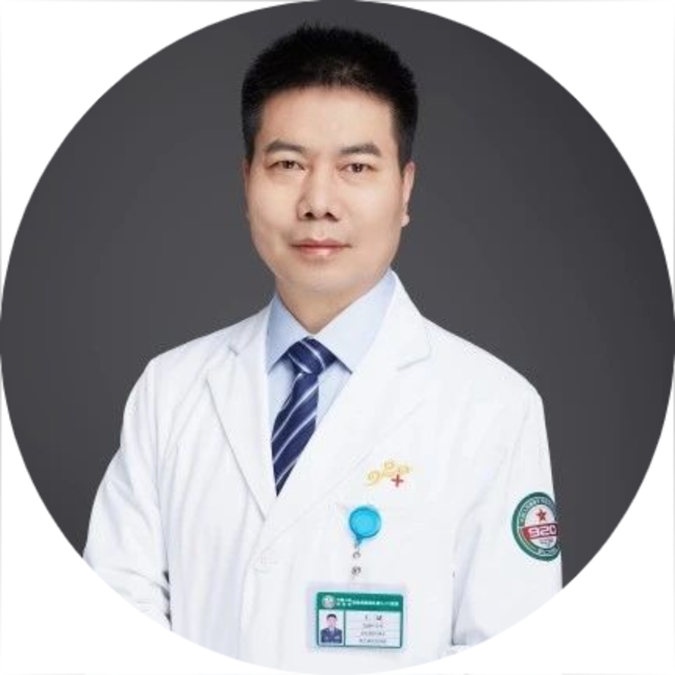
Professor Wang Sanbin 920th Hospital of the Joint Logistics Support Force of the PLA
· Chief Physician, Doctoral Supervisor
· Committee Member, Chinese Medical Doctor Association Hematology Branch
· Committee Member, Hematology Branch of the Chinese Association of Integrative Medicine
· Member, Cell Therapy Group, CACA Hematologic Oncology Committee
· Committee Member, Integrative Hematology Branch, Chinese Medical Doctor Association
· Committee Member, PLA Medical Science & Technology Committee (Hematology)
· Chair, Yunnan Hematology Society
· Vice Chair, Yunnan Medical Doctor Association Hematology Branch
Awards include the First Prize of the Chinese Association for Laboratory Animal Science, two Third-Class Yunnan Science and Technology Progress Awards, and one Kunming Science and Technology Program First Prize. He has led major biomedical projects funded by Yunnan Province and has published 40+ papers as first or corresponding author in journals such as JCO and CCR.
Primary research interests:
1. Hematopoietic stem cell transplantation
2. HIV-related hematologic diseases
3. Universal CAR-T therapy for hematologic malignancies
4. Gene therapy for transfusion-dependent β-thalassemia