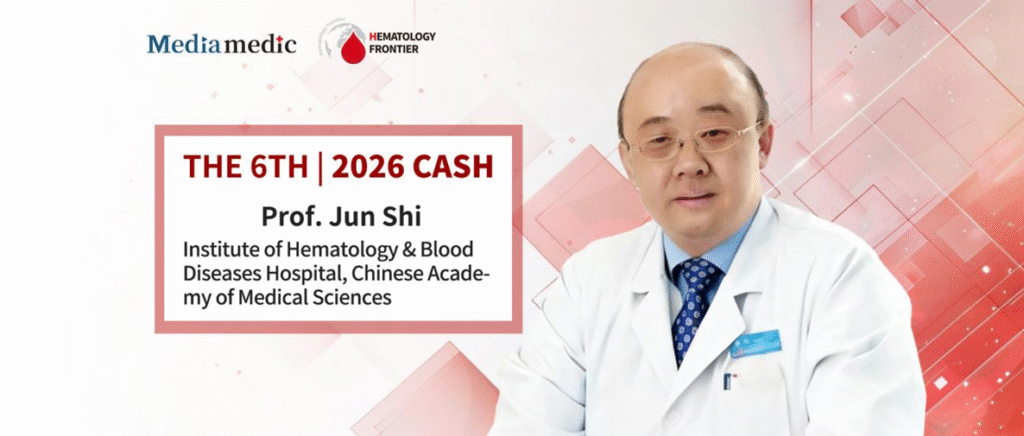
Aplastic anemia (AA) is an immune-mediated bone marrow failure syndrome that poses significant clinical challenges due to marked patient heterogeneity, a high proportion of relapsed or refractory cases, and limited options for precision-based interventions. From January 9 to 11, 2026, the 6th China Hematology Discipline Development Conference (CASH) was grandly held in Tianjin. The conference brought together leading hematology experts from China and abroad, focusing on cutting-edge scientific advances and national health strategy priorities, fostering in-depth academic exchange and exploration of future directions in the field.During the meeting, Oncology Frontier – Hematology Frontier invited Professor Jun Shi of the Institute of Hematology and Blood Diseases Hospital, Chinese Academy of Medical Sciences (Institute of Hematology, CAMS) for an in-depth discussion on recent advances in the pathophysiological mechanisms of aplastic anemia, emerging therapeutic targets, and strategies for precision diagnosis and treatment.
Oncology Frontier – Hematology Frontier:
In recent years, basic research in aplastic anemia has continued to deepen, providing new theoretical foundations for clinical management. Could you summarize the latest breakthroughs in the study of AA pathogenesis? What new potential therapeutic targets have emerged from these findings?
Professor Jun Shi:
One of the most significant recent breakthroughs in the study of aplastic anemia pathogenesis is the recognition that its immune-mediated mechanisms extend beyond T cells alone. Instead, the disease involves a complex immune regulatory network centered on T cells, incorporating macrophages, plasma cells, and other components of the mononuclear–macrophage system. Interactions within this network collectively drive the immune-mediated pathological process underlying aplastic anemia.
Based on these mechanistic insights, therapeutic strategies targeting key nodes within this immune regulatory network have gained increasing attention. Our research has identified CD38 monoclonal antibodies as a potentially clinically meaningful novel therapeutic approach, offering a promising new option for patients with refractory or relapsed aplastic anemia.
Oncology Frontier – Hematology Frontier:
With the rapid development of multi-omics technologies, the diagnosis and treatment of aplastic anemia are shifting from a “one-size-fits-all” approach toward precision medicine. In your view, which research directions currently hold the greatest promise for building a precision treatment framework and developing novel targeted therapies? How can biomarkers be leveraged to achieve individualized treatment?
Professor Jun Shi:
Emerging therapeutic targets in aplastic anemia are primarily concentrated in two areas. The first involves CD38-targeted therapies directed at mononuclear–macrophage cells and plasma cells. The second focuses on T-cell signaling pathways, particularly the Janus kinase (JAK) pathway, where JAK inhibitors offer new interventional strategies for T cell–mediated immune suppression.
With continued progress in the development of these two categories of targets—supported by both preclinical animal studies and clinical validation—we anticipate that significant breakthroughs in the clinical treatment of aplastic anemia may be achieved within the next three to five years. Beyond traditional therapies such as cyclosporine and antithymocyte globulin, novel immunosuppressive agents are expected to emerge, providing patients with a broader range of therapeutic options.
Expert Biography

Professor Jun Shi
Institute of Hematology and Blood Diseases Hospital, Chinese Academy of Medical Sciences
Professor Jun Shi serves as Deputy President of the Institute of Hematology and Blood Diseases Hospital, Chinese Academy of Medical Sciences, and is a Chief Physician and Doctoral Supervisor.
He is also Deputy Director of the National Clinical Research Center for Hematologic Diseases, and Director of the Red Blood Cell Disease Diagnosis and Treatment Center as well as the Regenerative Medicine Diagnosis and Treatment Center.
Professor Shi holds several important academic appointments, including:
- Member, Hematology Committee, Chinese Medical Association
- Deputy Head, Red Blood Cell Disease Working Group, Chinese Medical Association
Research Interests: Gene therapy for thalassemia; CAR-T cell therapy for autoimmune diseases; pathophysiological mechanisms of hematopoietic regeneration in bone marrow failure syndromes; and innovative therapeutic intervention strategies.